


What are the applications of the high-precision image measuring instrument MAX2 in plastic parts?
In today's era of increasingly stringent precision manufacturing and quality control, plastic components serve as the cornerstone of numerous industrial products. Their dimensional accuracy, surface quality, and assembly compatibility directly impact the performance and reliability of the final product. However, traditional inspection methods often face challenges when dealing with plastic parts featuring complex curved surfaces, minute deformations, and irregular structures—suffering from low efficiency, significant measurement errors, and potential damage to workpieces. The introduction of the POMEAS MAX2 High-Precision Image Measuring System delivers a revolutionary solution for comprehensive quality control throughout the entire lifecycle of plastic components. Utilizing non-contact 2D/3D composite measurement technology, it addresses these challenges with precision and reliability.

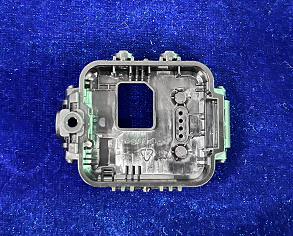
I. Precise Inspection of Three-Dimensional Morphology After Injection Molding
After plastic parts are formed through injection molding, issues such as localized sink marks, flash burrs, or surface orange peel patterns often arise due to factors like material shrinkage variations, mold wear, or insufficient holding pressure time. Traditional calipers and projectors can only measure planar dimensions and are unable to capture detailed deviations in three-dimensional features.
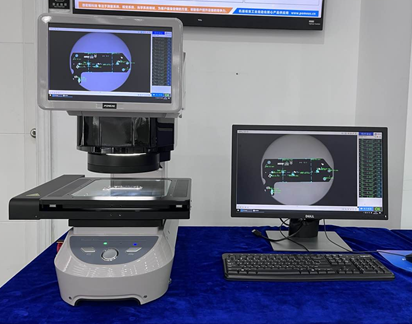
✅ MAX2 Solution:Equipped with high-resolution optical sensors and intelligent algorithms, the MAX2 performs high-speed 3D scanning of plastic parts to generate high-density point cloud data. This data visually reveals critical features such as surface undulations, fillet radii, and draft angles. For instance, in curved transition areas of phone casings, the system precisely identifies micron-level deviations between design models and physical parts. It highlights out-of-tolerance locations with color-coded annotations, enabling process engineers to swiftly pinpoint mold modification directions.
II. Efficient Verification of Assembly Fit
Many plastic components require precise fitment with other parts (such as metal brackets and electronic components). Parameters like hole spacing, snap-fit angles, and insertion/extraction force directly impact assembly yield rates. Using contact probes for point-by-point measurement is not only time-consuming but may also scratch the surface of soft materials.

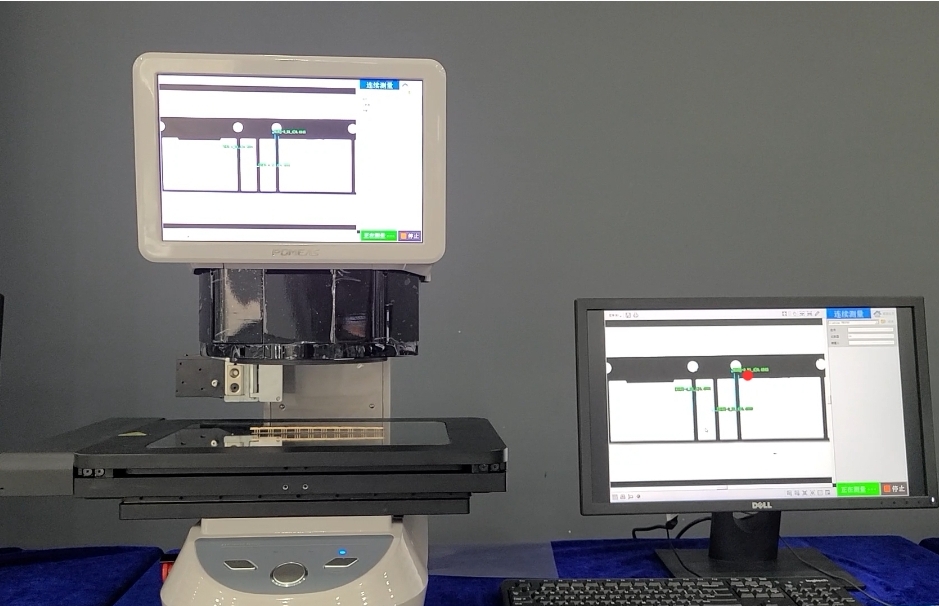
✅ MAX2 Solution:Leveraging the advantages of non-contact measurement, the MAX2 can simultaneously inspect the positional accuracy, concentricity, and perpendicularity of multiple mounting holes in a single operation, while concurrently analyzing the symmetry and clearance tolerances of snap-fit structures. For dashboard brackets in automotive interior components, the system rapidly compares the spatial coordinates of the CAD model against the physical part, ensuring perfect alignment between mounting holes and body panels to eliminate assembly interference risks during mass production.
III. Special Measurement Requirements for Thin-Walled/Transparent Parts
Plastic components such as medical consumables and optical lenses often feature thin-walled structures or transparent materials. Traditional laser displacement sensors are susceptible to interference from transmitted light, while mechanical probes may cause deformation.

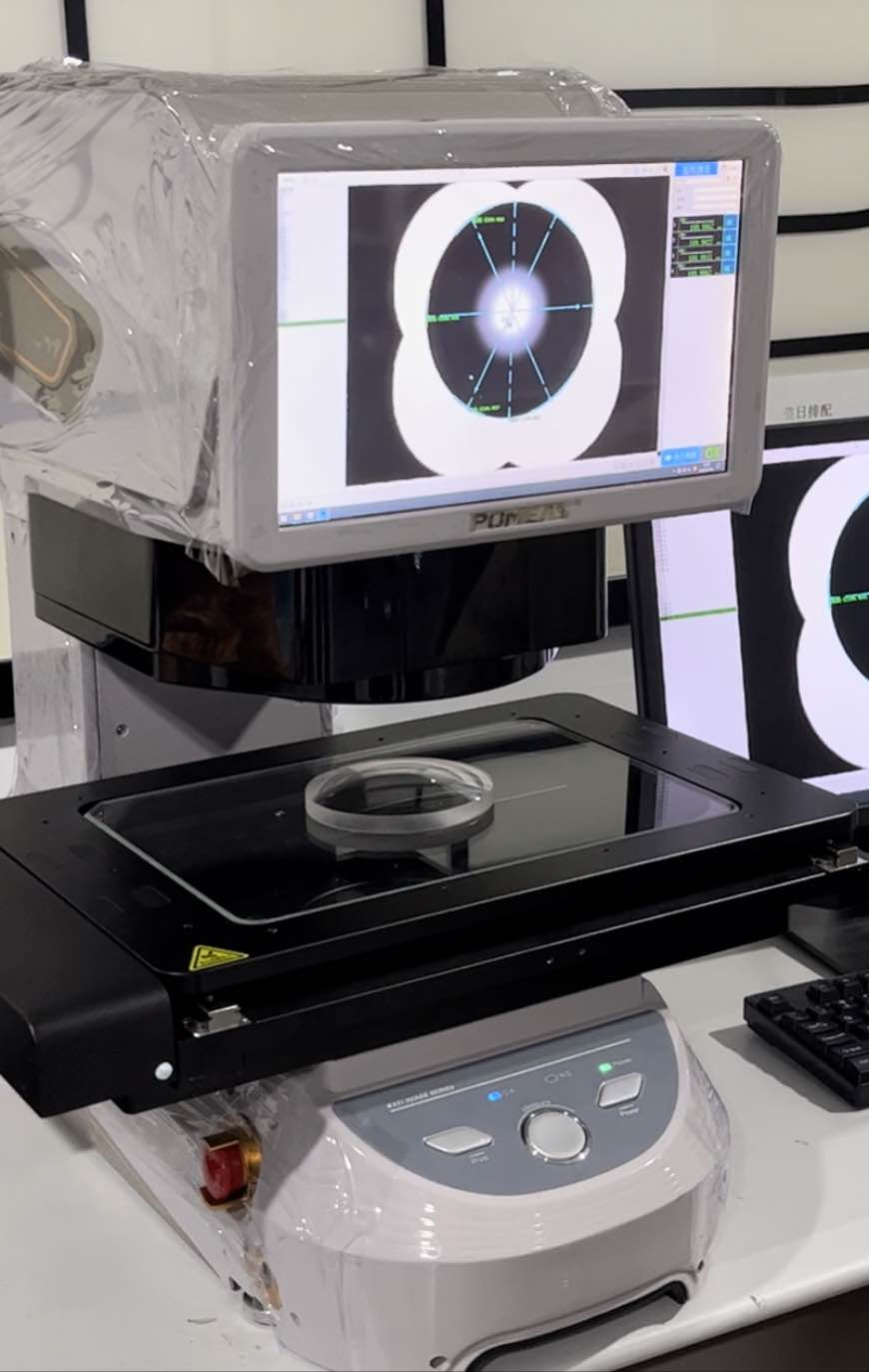
✅ MAX2 Solution:Leveraging the depth perception capabilities of spectral confocal technology, the MAX2 can penetrate sub-millimeter-thick materials without damaging the workpiece. It precisely measures the concentricity of inner and outer diameters in tubular components or evaluates the consistency of curvature along the edges of contact lenses. For testing the screw-opening torque of transparent medicine bottle caps, the system simulates the assembly process to quantify torque-angle curves, thereby optimizing structural design.
IV. Reverse Engineering and Defect Traceability
When encountering trial production failures or customer complaint returns, companies must swiftly reconstruct the geometric characteristics of defective parts to pinpoint the root cause of design flaws.
✅ MAX2 Solution:Supports one-click import of STL/STEP format drawings, automatically performing 3D comparisons between nominal dimensions and measured data to generate color difference contour maps and cross-sectional profiles. A home appliance manufacturer once utilized this feature to detect a 0.05mm cumulative error at the root of air conditioner fan blades, tracing it back to machining deviations in the mold parting line. This enabled timely prevention of a large-scale recall event.
V. Online Full Inspection of Automated Production Lines
In high-volume production scenarios such as automotive components and consumer electronics, manual sampling inspections struggle to cover all critical features, and sampling frequency is constrained.

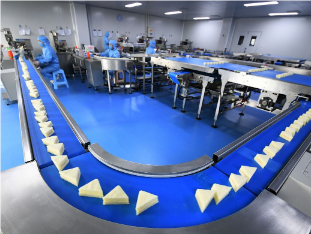
✅ MAX2 Solution:Equipped with a rotating stage and autofocus module, the MAX2 enables unattended batch measurement, reducing individual part inspection time to mere seconds. Integrated with SPC statistical process control software, the system provides real-time monitoring of production trends, issuing early warnings for dimensional drift caused by tool wear or raw material batch variations. This drives the production line toward intelligent closed-loop management.
Product recommendation
TECHNICAL SOLUTION
MORE+You may also be interested in the following information
FREE CONSULTING SERVICE
Let’s help you to find the right solution for your project!
 ASK POMEAS
  PRICE INQUIRY
  REQUEST DEMO/TEST
  FREE TRIAL UNIT
  ACCURATE SELECTION
- APPICATION CASE
- RESOURCE CENTER
- DOWNLOAD CENTER
SOLUTIONS SUPPORT
- ZOOM LENS SELECTION TOOL
- TELECENTRIC LENS SELECTION TOOL
- FA LENS SELECTION TOOL
- ZOOM RATIO TABLE
- CERTIFIED MODEL
SELECTION TOOL
- WHY POMEAS
- FAQ
- PRIVACY POLICY
- TERMS OF USE
- DELIVERY & RETURN POLICY
CUSTOMER CARE
 ADDRESS
Add.:No.68, Yongwei Road, Baizhoubian, Dongcheng District, Dongguan, China,523000
CONTACT
 Tel:+ 86-0769-2266 0867
 Fax:+ 86-0769-2266 0867
 E-mail:marketing@pomeas.com

Wechat QR code

Software Copyright :2021SR0176001 抄袭必究, 技术支持:誉新源科技