


Key Considerations for Selecting Point Spectral Confocal Sensors?
In the field of industrial measurement and inspection, point-spectrum confocal sensors are widely used in precision manufacturing, semiconductor production, and optical component processing due to their high accuracy and non-contact measurement capabilities. However, during the selection process, the trade-offs between three core parameters—resolution, measurement range, and working distance—often confuse users. Gaining a deep understanding of how these parameters interact and making reasonable trade-offs based on actual application requirements is key to selecting the appropriate sensor.

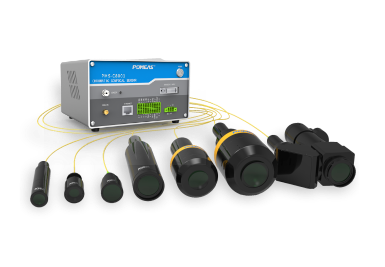
Constraints between core parameters
1. Resolution and Range: High Resolution Often Comes with a Narrow Range
Resolution refers to the smallest measurable change a sensor can detect, directly reflecting its ability to capture fine details of the measured object. Range denotes the maximum measurable value. In point-spectrum confocal sensors, these two parameters typically exhibit an inverse relationship.
Fundamentally, point-spectrum confocal sensors determine the distance to a target by measuring changes in the position of the reflected light's focal point. Achieving high resolution requires the sensor to detect minute displacements of the light spot with greater precision. This demands higher focusing accuracy and finer spectral analysis capabilities from the optical system. However, as the optical system's precision increases, its measurable range (range) is often constrained.
For example: In high-precision semiconductor manufacturing applications, measuring minute structures on chip surfaces necessitates sensors with extremely high resolution—potentially reaching sub-micron or even nanometer levels. However, such high-resolution sensors typically have a limited measurement range, often spanning only a few millimeters to tens of millimeters, making them unsuitable for larger objects. Conversely, when measuring larger objects, such as the contours of mechanical parts, sensors with a larger measurement range are required. However, this often comes at the cost of reduced resolution, which may only reach the micrometer level.
2. Working distance versus accuracy and probe volume: Longer distances either compromise accuracy or increase volume.
Working distance refers to the distance from the front end of the sensor probe to the surface of the measured object. A long working distance is essential in certain applications, such as when measuring in high-temperature, high-pressure, or hazardous environments, where maintaining a safe distance between the sensor and the object is required. Similarly, longer working distances are needed when measuring in hard-to-reach areas like deep holes or recesses. However, a long working distance also introduces certain challenges.
On one hand, a long working distance may compromise measurement accuracy. As the distance increases, phenomena like light scattering and refraction become more pronounced during propagation. This degrades the quality of the reflected light signal, affecting the sensor's precise measurement of the light spot's position and reducing overall accuracy. On the other hand, achieving a long working distance requires specialized optical system design for the sensor, which can lead to larger probe dimensions. Larger probe dimensions may prove impractical for installation or operation in certain space-constrained applications, creating difficulties in real-world deployment.
For instance, in inspecting aerospace components with complex geometries, measurements must be conducted at a safe distance. This necessitates sensors with extended working distances. However, to maintain measurement accuracy, such sensors often require more complex optical designs and larger probe sizes. This not only increases costs but may also impose limitations on installation and operational flexibility.
Select based on primary needs
1. Applications Prioritizing Resolution
When an application demands extremely high measurement accuracy and requires capturing minute details of the object being measured, resolution should be the primary consideration in selection. For instance, in semiconductor manufacturing, circuit line widths on chip surfaces may measure only a few nanometers. Even minor errors can degrade chip performance or cause failure. Consequently, extremely high-resolution point-scanning confocal sensors are essential, despite their limited measurement range and short working distance. In such cases, specialized measurement fixtures or multi-point measurement stitching techniques can address range and working distance limitations.
2. Applications Prioritizing Measurement Range
When measuring larger objects or performing wide-area scanning, measurement range becomes the critical selection criterion. For instance, in automotive manufacturing, measuring vehicle body contours requires sensors with extended ranges due to the large dimensions involved. While such sensors may offer relatively lower resolution, overall measurement system accuracy can be enhanced through data processing algorithms to meet specific precision requirements. Simultaneously, when selecting sensors with large measurement ranges, their operational distance must also be evaluated to ensure it meets practical application requirements.
3. Applications Prioritizing Operational Distance
In specialized environments—such as high-temperature, high-pressure, hazardous conditions, or confined spaces—operational distance becomes a critical selection factor. For instance, in equipment inspection at nuclear power plants, measurements must be taken from a safe distance to prevent radiation exposure to both sensors and personnel. In such cases, sensors with extended operating distances should be chosen, even if their resolution and measurement range are somewhat compromised. To mitigate this, optimizing optical designs and employing high-precision signal processing technologies can maximize sensor resolution and measurement accuracy.
The resolution, measurement range, and working distance of point-spectrum confocal sensors are mutually constrained parameters. During actual selection, users should reasonably balance these three parameters based on specific application scenarios and primary requirements to choose the most suitable sensor for their application, ensuring the accuracy and reliability of measurement results.
Product recommendation
TECHNICAL SOLUTION
MORE+You may also be interested in the following information
FREE CONSULTING SERVICE
Let’s help you to find the right solution for your project!
 ASK POMEAS
  PRICE INQUIRY
  REQUEST DEMO/TEST
  FREE TRIAL UNIT
  ACCURATE SELECTION
- APPICATION CASE
- RESOURCE CENTER
- DOWNLOAD CENTER
SOLUTIONS SUPPORT
- ZOOM LENS SELECTION TOOL
- TELECENTRIC LENS SELECTION TOOL
- FA LENS SELECTION TOOL
- ZOOM RATIO TABLE
- CERTIFIED MODEL
SELECTION TOOL
- WHY POMEAS
- FAQ
- PRIVACY POLICY
- TERMS OF USE
- DELIVERY & RETURN POLICY
CUSTOMER CARE
 ADDRESS
Add.:No.68, Chongwei Road, Baizhoubian, East district, Dongguan, China, 523000
CONTACT
 Tel:+ 86-0769-2266 0867
 Fax:+ 86-0769-2266 0867
 E-mail:marketing@pomeas.com

Wechat QR code

Software Copyright :2021SR0176001 抄袭必究, 技术支持:誉新源科技