


First Question When Selecting an FA Lens: How to Choose the Lens Circle Based on Camera Sensor Size?
When selecting FA lenses for industrial vision systems, “mismatched image circle and sensor size” is the most common pitfall. Many novice engineers end up with images featuring darkened edges and severe vignetting despite choosing high-resolution, large-aperture lenses—all because they overlook this fundamental matching principle. To avoid this pitfall, you must first understand: What exactly is an “image circle”?

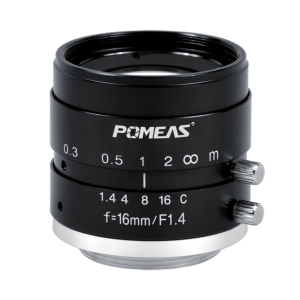
In layman's terms: The image circle is the circular area of light formed on the imaging plane after the lens focuses the light. We can compare this process to shining a flashlight on a wall: the flashlight acts like an FA lens, the wall resembles the camera's image sensor, and the circular light spot projected on the wall is the “bokeh circle.” The size of this light spot directly determines how much of the wall surface can be illuminated—corresponding to the lens, the bokeh circle's size dictates how much of the sensor it can cover.
Once you grasp the concept of the image circle, the core matching principle becomes clear: the lens's image circle must fully cover the camera's sensor size, ideally with some margin. Why emphasize “full coverage”? Consider the flashlight analogy: if your wall (sensor) is larger than the flashlight's beam (image circle), the edges of the wall will remain unlit and appear black. If the beam just covers the wall, the light intensity at the edges will be weaker than at the center, resulting in noticeable vignetting. Both scenarios are critical in industrial vision inspection—vignetting causes insufficient brightness and detail loss at image edges, preventing accurate identification of object edge features. This directly impacts detection accuracy and can even cause the entire vision project to fail.
Here we need to correct a common misconception in lens selection: some users believe that “the image circle just needs to match the sensor size.” However, in practical use, some lenses exhibit significantly degraded image quality at the edges of their nominal image circle—such as reduced resolution and insufficient light transmission. Therefore, a more reliable approach is to adhere to the principle that “the lens's nominal image circle size must be ≥ the diagonal size of the camera's sensor.” It is even recommended to select a lens with an image circle one size larger. This ensures that every pixel on the sensor receives uniform and sufficient light coverage, preventing vignetting while guaranteeing consistent image quality across the entire frame.
How exactly should this be implemented? Remember these three steps:
Step 1: Check Specifications: First, determine the core dimensions of the camera sensor, focusing on the “sensor diagonal length” (common specifications include 1/1.8-inch, 2/3-inch, 1-inch, 1.2-inch, etc., with each specification corresponding to a fixed diagonal length—e.g., a 2/3-inch sensor has a diagonal of approximately 11mm, while a 1-inch sensor measures about 25.4mm).
Step 2: Match Specifications: Check the nominal image circle (or target plane size; in industrial lenses, “target plane size” typically corresponds directly to image circle size) of the FA lens to ensure the lens's target plane specification is no smaller than the sensor's. For example, a 1/1.8-inch sensor (diagonal approx. 9mm) requires a lens with a target plane ≥ 1/1.8-inch; do not select a lens with a smaller 1/2.5-inch target plane.
Step 3: Pitfall Warning: Avoid forcing small-image-circle lenses onto large sensors. For instance, mounting a lens designed only for a 2/3-inch sensor onto a 1-inch sensor camera will inevitably cause severe vignetting. Even if forced to mount via an adapter ring, insufficient light coverage remains unresolved and may damage the device interface.
Product recommendation
TECHNICAL SOLUTION
MORE+You may also be interested in the following information
FREE CONSULTING SERVICE
Let’s help you to find the right solution for your project!

 ASK POMEAS
  PRICE INQUIRY
  REQUEST DEMO/TEST
  FREE TRIAL UNIT
  ACCURATE SELECTION
- APPICATION CASE
- RESOURCE CENTER
- DOWNLOAD CENTER
SOLUTIONS SUPPORT
- ZOOM LENS SELECTION TOOL
- TELECENTRIC LENS SELECTION TOOL
- FA LENS SELECTION TOOL
- ZOOM RATIO TABLE
- CERTIFIED MODEL
SELECTION TOOL
- WHY POMEAS
- FAQ
- PRIVACY POLICY
- TERMS OF USE
- DELIVERY & RETURN POLICY
CUSTOMER CARE
 ADDRESS
Add.:No.68, Chongwei Road, Baizhoubian, East district, Dongguan, China, 523000
CONTACT
 Tel:+ 86-0769-2266 0867
 Fax:+ 86-0769-2266 0867
 E-mail:marketing@pomeas.com

Wechat QR code

Software Copyright :2021SR0176001 抄袭必究, 技术支持:誉新源科技