


In the field of microscopic imaging, rapid and precise focusing of samples is fundamental to acquiring high-quality images. However, traditional microscopes rely on mechanical movement or visual judgment for focusing, which is not only inefficient but also prone to errors when dealing with dynamic samples or complex surfaces.

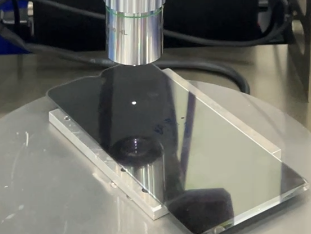
Q1 What is a laser autofocus microscope system?
A: A laser autofocus microscope system is a type of microscope that employs laser technology for automatic focusing. It projects a laser beam onto the sample surface and receives the reflected light signal. By measuring changes in the optical path length, it calculates the sample height, thereby achieving real-time automatic focusing.
1. Laser projection and reflection: The system emits a narrow-linewidth laser beam (typically visible or near-infrared light) precisely projected onto the sample surface;
2. Optical Path Signal Acquisition: A highly sensitive photodetector receives the reflected light, analyzes its phase or time delay, and calculates the relative distance between the sample surface and the objective lens;
3. Automatic Focusing Execution: Distance data is transmitted to the control system, driving millisecond-level adjustments to the stage or objective lens until image sharpness reaches its optimal value.
Q2 What are the advantages of the laser autofocus microscopy system?
A: It enhances the precision and efficiency of microscopic imaging by enabling faster, more accurate autofocusing, reducing human operational errors, and supporting real-time dynamic sample inspection.
1. Ultra-high-speed focusing, a quantum leap in efficiency: The laser autofocus system utilizes real-time optical signal feedback to reduce focusing time to millisecond levels.
2. Non-contact measurement, preventing sample damage: Laser focusing eliminates the need for mechanical probes to contact samples, making it particularly suitable for observing living cells, soft biological tissues, or ultra-thin materials.
3. Dynamic Tracking Capability, Capturing Instantaneous Changes: For rapidly moving or deforming samples (e.g., flowing blood cells, vibrating micro-mechanical structures), the laser autofocus system maintains continuous focus lock. Combined with high-speed cameras, it achieves thousands of frames per second of clear imaging.
4. Strong anti-interference capability for complex environments: The laser beam's directionality and concentrated energy minimize interference from ambient light or sample surface reflections. The system operates stably even with highly reflective metal surfaces or low-contrast transparent samples.
Q3: What industries is the laser autofocus microscope system suitable for? What types of inspections does it perform?
A: It is suitable for cell inspection, biological tissue research, semiconductor inspection, high-precision material analysis, and other fields, significantly improving work efficiency and imaging quality.
1. Life Sciences
2. Semiconductor Manufacturing
3. Materials Science
4. Industrial Quality Control

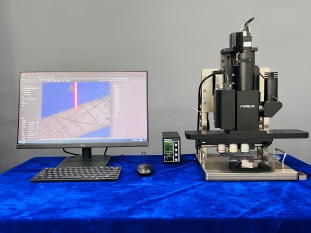
As a pioneer in laser microscopy technology, POMEAS not only boasts its flagship LFS series of laser autofocus microscopy systems but has also developed a comprehensive solution encompassing digital microscopy systems and intelligent image analysis software. With over a decade of expertise in optical research, its R&D team has secured more than 50 core technology patents and established collaborations with leading global research institutions, ensuring its technology consistently stays one step ahead of the industry.
Product recommendation
TECHNICAL SOLUTION
MORE+You may also be interested in the following information
FREE CONSULTING SERVICE
Let’s help you to find the right solution for your project!
 ASK POMEAS
  PRICE INQUIRY
  REQUEST DEMO/TEST
  FREE TRIAL UNIT
  ACCURATE SELECTION
- APPICATION CASE
- RESOURCE CENTER
- DOWNLOAD CENTER
SOLUTIONS SUPPORT
- ZOOM LENS SELECTION TOOL
- TELECENTRIC LENS SELECTION TOOL
- FA LENS SELECTION TOOL
- ZOOM RATIO TABLE
- CERTIFIED MODEL
SELECTION TOOL
- WHY POMEAS
- FAQ
- PRIVACY POLICY
- TERMS OF USE
- DELIVERY & RETURN POLICY
CUSTOMER CARE
 ADDRESS
Add.:No.68, Chongwei Road, Baizhoubian, East district, Dongguan, China, 523000
CONTACT
 Tel:+ 86-0769-2266 0867
 Fax:+ 86-0769-2266 0867
 E-mail:marketing@pomeas.com

Wechat QR code

Software Copyright :2021SR0176001 抄袭必究, 技术支持:誉新源科技