


Three-Step Method for Selecting Telephoto Lenses: Workpiece Size, Precision, and Budget!
Selecting a telecentric lens isn't as complicated as it seems. Focus on three core factors: workpiece dimensions, measurement accuracy, and project budget. Break it down step by step, and you'll quickly find the right model. Today, I'm sharing this highly practical “three-step method” with you—all actionable insights. Plus, I've included a real-world application case study of a POMEAS telecentric lens to help you understand.

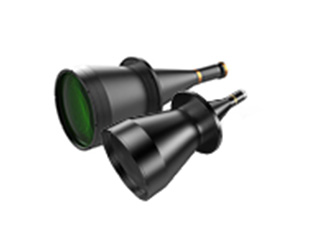
Step 1: Define the field of view based on the workpiece dimensions and lock the basic lens range.


The first step in selecting a model is to clearly define the actual dimensions of the workpiece, then determine the required field of view (FOV) based on these dimensions. A key principle here is that the FOV must fully cover the maximum dimensions of the workpiece while allowing a 10%–20% margin to prevent edge detection failures caused by workpiece placement deviations. A common mistake made by beginners is selecting an FOV that precisely matches the workpiece dimensions, which frequently leads to incomplete detection in practical applications.
Calculation method: FOV width = 1.1–1.2 × maximum workpiece width; FOV height = 1.1–1.2 × maximum workpiece height. For example, when inspecting a 50mm × 30mm part with a 10% margin, select an FOV of 55mm × 33mm. If significant placement deviations are expected in the working conditions, allow 20% and select a 60mm × 36mm field of view.
Once the field of view is determined, the lens magnification range can be preliminarily narrowed down. Since the field of view and lens magnification are inversely proportional, the formula is: Magnification = Camera Sensor Size / Field of View Size. Note that the camera sensor size is fixed (e.g., a 1-inch sensor is approximately 28.3mm wide). Knowing the FOV allows calculation of the approximate magnification required. For example, using a 1-inch sensor camera to cover a 60mm FOV yields a magnification of 28.3/60≈0.47x. Subsequently, focus on telecentric lenses around 0.5x magnification.
Note: Working Distance (WD) — The distance from the lens front to the workpiece must meet actual application requirements. When inspecting stepped parts or using large illumination devices, select lenses with longer working distances to prevent interference between the lens, workpiece, and light source.
Step 2: Define parameters based on measurement accuracy to screen core lens performance


Three core parameters affect accuracy: telecentricity, distortion rate, and resolution. All three must simultaneously meet requirements.
1. Telecentricity: This is the “key indicator” determining measurement accuracy, describing the parallelism between the principal ray and the optical axis. Lower values are better. For high-precision measurements (e.g., tolerances ≤0.01mm), opt for a double-sided telecentric lens with telecentricity <0.1°. For rough inspections (e.g., verifying part integrity without missing corners), a subject-side telecentric lens with telecentricity <0.5° suffices. Insufficient telecentricity causes magnification shifts from minor workpiece displacement, leading to measurement errors. For example, when inspecting a 10mm diameter shaft part, a 0.5° telecentric lens may introduce a 0.05mm error, directly affecting inspection results.
2. Distortion Rate: Telecentric lenses exhibit significantly lower distortion rates than standard industrial lenses. High-precision models typically feature distortion <0.05%, while <0.1% is generally sufficient for most measurement scenarios. Excessive distortion distorts shape measurements—e.g., measuring a square part as a trapezoid. Strict distortion control is essential when inspecting slender parts or precision electronic components.
3. Resolution: Measured in line pairs per millimeter (lp/mm), this indicates the lens's ability to reproduce minute details. Higher precision requirements demand greater resolution. The calculation formula is “Required lens resolution = 1/(2 × measurement accuracy)”. For example, if the required measurement accuracy is 0.01mm, the lens resolution must be ≥50 lp/mm (i.e., capable of resolving 50 black-and-white line pairs per millimeter). Note that resolution must also match the camera's pixel size to avoid “insufficient sampling”.
Step 3: Balance the budget and finalize the model selection.

The core principle is “no wasted performance, no compromise on core requirements.”
Telecentric lenses vary significantly in price based on different parameters. For example, dual-side telecentric lenses cost more than object-side telecentric lenses, and those with 0.02° telecentricity are pricier than 0.1° models. If budget is limited, non-critical parameters can be appropriately relaxed while still meeting core precision requirements. For example, if inspection accuracy requires 0.02mm, and two models with 0.02° and 0.05° telecentricity both satisfy this requirement, the lower-priced 0.05° model can be selected.
However, core parameters must never be compromised. For instance, if measurement accuracy requires 0.01mm, never opt for a 40lp/mm resolution lens to save costs. Doing so would prevent identification of minute details, leading to inaccurate measurements and higher rework costs later. Additionally, prioritize brands with strong market reputation and robust technical support, such as POMEAS. This ensures access to professional solutions for future operational adjustments or parameter optimizations—representing hidden cost savings.
Case Study: Full Inspection Project for Mobile Phone Screen Components

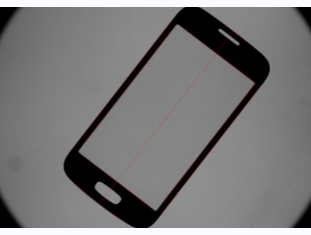
【Project Requirements】
Inspecting screen-printed glass components for mobile phones requires measuring both large dimensions (maximum size 80mm × 60mm), such as overall length/width and inner dimensions, as well as small dimensions (minimum size 2mm × 1mm), including the length/width and positional accuracy of the earpiece and infrared sensor window. Measurement accuracy must be ≤0.02mm. Full inspection is performed on the production line, demanding fast measurement speed with a working distance ≥100mm.
【Selection Process】
Step 1: Define Field of View Large size: 80mm × 60mm, with 10% margin reserved, requiring a field of view of 88mm × 66mm. Small size: 2mm × 1mm, with 20% margin reserved, requiring a field of view of 2.4mm × 1.2mm. The challenge here lies in the extreme size disparity between large and small dimensions, which a single magnification lens cannot accommodate simultaneously. Therefore, a dual-magnification telecentric lens is initially selected.
Step 2: Define Parameters: Precision requirement ≤0.02mm necessitates a lens telecentricity <0.1°, distortion rate <0.05%, and resolution ≥50lp/mm (1/(2×0.02)=25lp/mm; selecting higher resolution ensures margin). Simultaneously, the working distance requirement of ≥100mm eliminates models with shorter working distances.
Step 3: Budget Balancing: After comparing several dual-magnification telecentric lenses, the POMEAS LDTC-016/07-120 high-precision dual-magnification, dual-side telecentric lens was selected. This lens offers two magnifications: 0.16x and 0.7x. At 0.16x, the field of view reaches 80mm × 60mm, perfectly covering the large dimensions of smartphone screen glass. At 0.7x, the field of view is 18.3mm × 13.7mm, sufficient for small-size inspection requirements. Its 120mm working distance meets operational conditions. Key specifications include a telecentricity of <0.02°, distortion rate of 0.02%, and a center MTF@70lp/mm >60, fully meeting the 0.02mm precision requirement while staying within the project budget.
【Application Effect】
Equipped with a POMEAS 1200W monochrome CCD camera and green parallel-bottom illumination, it achieves rapid magnification switching for inspection: low magnification enables swift large-area screening, while high magnification delivers precise measurement of small details. Single-piece inspection time is controlled within 300ms, fully meeting the requirements for 100% inspection on production lines. Measurement error remains stable between 0.005 and 0.015 mm, significantly exceeding project specifications. Customer feedback confirms no quality issues arising from detection errors during subsequent mass production.
Product recommendation
TECHNICAL SOLUTION
MORE+You may also be interested in the following information
FREE CONSULTING SERVICE
Let’s help you to find the right solution for your project!
 ASK POMEAS
  PRICE INQUIRY
  REQUEST DEMO/TEST
  FREE TRIAL UNIT
  ACCURATE SELECTION
- APPICATION CASE
- RESOURCE CENTER
- DOWNLOAD CENTER
SOLUTIONS SUPPORT
- ZOOM LENS SELECTION TOOL
- TELECENTRIC LENS SELECTION TOOL
- FA LENS SELECTION TOOL
- ZOOM RATIO TABLE
- CERTIFIED MODEL
SELECTION TOOL
- WHY POMEAS
- FAQ
- PRIVACY POLICY
- TERMS OF USE
- DELIVERY & RETURN POLICY
CUSTOMER CARE
 ADDRESS
Add.:No.68, Chongwei Road, Baizhoubian, East district, Dongguan, China, 523000
CONTACT
 Tel:+ 86-0769-2266 0867
 Fax:+ 86-0769-2266 0867
 E-mail:marketing@pomeas.com

Wechat QR code

Software Copyright :2021SR0176001 抄袭必究, 技术支持:誉新源科技