


In the fields of precision manufacturing and quality control, detecting microscopic scratches has long been a major challenge for the industry. This is especially true when the width of a scratch is as small as 0.1 mm, making the selection of an appropriate FA lens critical. So, just how high a resolution is required in an FA lens to detect such tiny scratches? Let’s take a closer look.

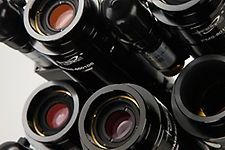
Why is resolution so critical for scratch detection?

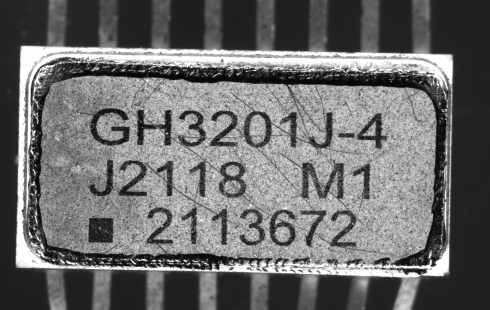
The level of resolution directly determines the level of detail a lens can capture. For a 0.1mm scratch, the resolution must be high enough to detect such a minute defect. Specifically, resolution is closely related to the number of pixels in the lens, the field of view, and the shooting distance.
For example: If you need to clearly distinguish a 0.1mm scratch within a certain field of view, you must ensure that the scratch spans at least several pixels in width within the image. It is generally recommended to use an industrial camera with a resolution of 2 million (2MP) pixels or higher, paired with a high-quality FA lens.
How to Choose a High-Resolution FA Lens?

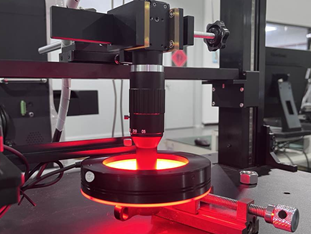
1. Determine the Field of View (FOV) Requirements: When inspecting scratches, the design FOV must be calculated based on the actual size of the target object and the working distance. For example, if the target object is 10 mm wide, a 0.1 mm scratch accounts for only 1% of the target’s width; the lens must have sufficient resolution within this FOV to distinguish such a minute defect.
2. Select a High-Resolution Lens: FA lenses currently available on the market range in resolution from 1MP to 12MP. For detecting 0.1mm scratches, it is recommended to select an FA lens with a resolution of at least 5MP to ensure clear rendering of image details.
3. Consider optical image quality: Optical distortion, depth of field, and chromatic aberration can all affect the accuracy of scratch detection. When purchasing an FA lens, ensure that its optical design minimizes these issues as much as possible.
The resolution requirements for detecting 0.1mm scratches with an FA lens should not be underestimated. Choosing the right FA lens can not only enhance product quality control but also effectively reduce production costs.
If you are facing similar quality inspection challenges, please feel free to contact us to discuss your inspection needs, and we will tailor the most suitable solution for you. What other factors do you think might affect the results of scratch detection?
Product recommendation
TECHNICAL SOLUTION
MORE+You may also be interested in the following information
FREE CONSULTING SERVICE
Let’s help you to find the right solution for your project!

 ASK POMEAS
  PRICE INQUIRY
  REQUEST DEMO/TEST
  FREE TRIAL UNIT
  ACCURATE SELECTION
- APPICATION CASE
- RESOURCE CENTER
- DOWNLOAD CENTER
SOLUTIONS SUPPORT
- ZOOM LENS SELECTION TOOL
- TELECENTRIC LENS SELECTION TOOL
- FA LENS SELECTION TOOL
- ZOOM RATIO TABLE
- CERTIFIED MODEL
SELECTION TOOL
- WHY POMEAS
- FAQ
- PRIVACY POLICY
- TERMS OF USE
- DELIVERY & RETURN POLICY
CUSTOMER CARE
 ADDRESS
Add.:No.68, Chongwei Road, Baizhoubian, East district, Dongguan, China, 523000
CONTACT
 Tel:+ 86-0769-2266 0867
 Fax:+ 86-0769-2266 0867
 E-mail:marketing@pomeas.com

Wechat QR code

Software Copyright :2021SR0176001 抄袭必究, 技术支持:誉新源科技