


The Evil Cultist's Guide to Selecting Lenses: How to Choose a Line-Scan Lens?
In the world of industrial vision, choosing a line-scan camera always leaves people feeling overwhelmed by “orthodox tutorials”—with a barrage of parameters and complex formulas, you can spend ages looking at them and still have no idea which one to pick. Today, we’re cutting through the nonsense. I’ll show you a shortcut: strictly follow these three steps—first, master the orthodox basics; then, apply some unconventional tricks; and finally, take the shortcut to easily nail down your line-scan camera selection. Even beginners can get the hang of it in no time!

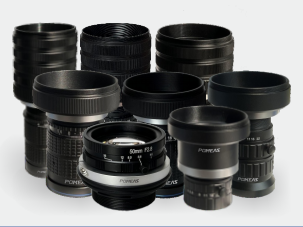
I. Standard Training: Quickly Master the Definition and Selection Process of Line Scan Lenses

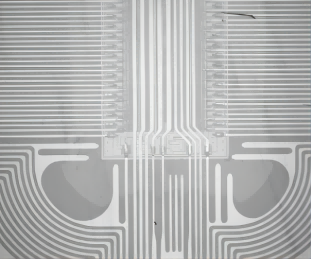
What is a line-scan lens?
A line-scan lens is essentially an “industrial eyepiece” designed specifically for line-scan cameras. Its core function is to precisely image a linear section of an object's surface onto the camera sensor, and then, through the uniform movement of the part or the lens, stitch together countless line pixels to form a complete image. Its greatest advantage is its ability to overcome format limitations and achieve “infinite-length” imaging, which is also the most fundamental difference between it and area-scan lenses.
Selection Steps:
-
Define inspection requirements: First, establish three core metrics—inspection accuracy (the size of defects or features that must be detectable), scanning speed (the speed of the production line), and inspection area (the width or length of the object). These form the basis for selecting the appropriate system.
-
Match camera parameters: The lens mount (typically C-mount) and supported sensor size must be fully compatible with the line scan camera; otherwise, issues such as black borders or blurred images may occur.
-
Screen lens parameters: Focus on four key factors—focal length (determines scan width and working distance), distortion rate (must be ≤0.1% for precision inspection), resolution (must be ≥camera resolution), and image plane illuminance (ensures uniform and clear images)
-
Adapt to the on-site environment: Consider the working distance (to prevent the lens from colliding with the object), ambient lighting, and whether there are harsh conditions such as high temperatures or vibrations; select a lens with the appropriate protection rating and structural design
The orthodox method is certainly reliable, but its drawbacks are also obvious: the steps are cumbersome, the parameters are interdependent, and beginners often get stuck on “parameter matching,” spending hours researching and calculating correspondences only to end up choosing the wrong model—which is when the unconventional method comes to the rescue!
II. Best Practices: Focus on the Essentials, Eliminate the Superfluous, and Apply Solutions Directly Based on the Specific Context


The Core Logic Behind Choosing a Dark Cult:Forget about “memorizing parameters and mechanically applying formulas.” Instead, focus on the three key characteristics of line-scan lenses, apply them to your specific inspection scenarios, and match them directly—no need to consult manuals or ask senior colleagues. This approach doubles your efficiency and helps you avoid pitfalls.
First, memorize the three key characteristics of line-scan lenses (this is crucial for advanced users—memorize them thoroughly!):
-
High resolution + low distortion—accurately captures object details, ideal for precision inspection of small parts, PCBs, and similar applications;
-
High-speed scanning + uniform illumination—designed for high-speed assembly lines, capable of quickly capturing moving objects with consistent imaging without brightness variations, suitable for inspecting thin films, steel plates, and similar materials;
-
Long working distance + flexible scan width — Scan width can be adjusted based on focal length; the long working distance helps avoid interference, making it suitable for special environments such as high-temperature and high-contamination settings.
Next up is the core of the “Evil Practice” method: the Scene-Matching Technique (just match the categories directly—no need to overthink it). Combined with the four main types of tracking shots, this allows for precise matching, so even beginners can make the right choice in one step:
Scenario 1: Inspection of large-area flexible materials (e.g., 1-meter-wide films, fabrics, lithium-ion battery separators) — Select a short-focus line-scan lens (focal length 8mm–16mm)
Key Benefits: Short-focus lenses offer a wide scanning width and high scanning speed, enabling full coverage of wide surfaces in a single pass without the need for lateral lens movement. They are compatible with high-speed production lines operating at 30 m/min to 60 m/min, perfectly aligning with the requirements of “high-speed scanning + flexible coverage,” and delivering exceptional value for money.
Scenario 2: Inspection of long, narrow metal sheets or plates (e.g., steel plates, aluminum profiles, 0.3–0.8 meters wide) — Select a standard line-scan lens (focal length 25–50 mm)
Key Matching Points: With a moderate focal length, this lens ensures “high resolution” while providing good coverage of the inspection area. It can detect fine scratches and oxidation spots as small as 0.05 mm, making it the most commonly used type in industrial applications and suitable for most standard wide-area inspection needs.
Scenario 3: Narrow-area precision part inspection (e.g., PCBs, optical fibers, width ≤ 0.3 m) — —Select a long-focus line-scan lens (focal length 75mm–150mm)
Key Features: Long-focus lenses offer extremely high resolution, capable of detecting ultra-fine defects as small as 0.02mm. With a long working distance (1–3 meters), they prevent contamination of precision parts, perfectly meeting the requirements of “high resolution + long working distance.”
Scenario 4: Long-range precision measurement (e.g., dimensional inspection of long parts) — Select low-distortion line-scan lenses (focal length 16 mm–75 mm, distortion rate ≤0.1%)
Key Matching Points: Low distortion ensures error-free dimensional measurement, balancing scan width and precision. This is ideal for scenarios requiring high dimensional accuracy, eliminating the need for post-processing image correction and saving both time and effort.
A quick reminder from Xiexiu: When selecting industrial cameras, practicality matters more than “maxing out the specs”! Don’t get bogged down trying to find the “best” specs—as long as the camera’s features align with your inspection scenario and meet your core accuracy and speed requirements, it’s the right choice for you.
III. Take the shortcut to selecting the right linear scanner—POMEAS Customer Service will help you get it right the first time


If you find the trial-and-error approach too cumbersome—and don’t want to memorize product specifications or match models—go straight to the most efficient option: contact POMEAS customer service. In just five minutes, we’ll understand your needs and budget, and in one minute, we’ll provide you with a precise model recommendation and quote. This is 10 times faster than researching and calculating specifications on your own, and it completely avoids common pitfalls—making the process both hassle-free and efficient.
Why are we so confident in making such a bold claim? Because POMEAS has been deeply involved in the industrial optics sector for many years. We have a thorough understanding of the selection criteria and application scenarios for line-scan cameras, and we offer a comprehensive range of line-scan camera products (covering short-focus, standard, long-focus, and low-distortion models) that can precisely meet all your inspection needs. Plus, we offer a host of advantages:
-
You don’t need to understand technical specifications: No need to memorize focal lengths or calculate distortion. Simply tell our customer service team your inspection scenario (what you’re measuring, conveyor speed, and accuracy requirements), and they’ll directly match you with the appropriate line-scan lens;
-
You don’t need to calculate a budget: Simply specify your budget range, and our customer service team will recommend the most cost-effective solution within your budget, ensuring you don’t overspend while balancing practicality and affordability;
-
You don’t need to worry about risks: POMEAS line scan cameras feature high-precision optical structures, offering low distortion, high resolution, and uniform illumination. They are designed to withstand various harsh industrial environments. After selection, we provide professional technical support to ensure rapid deployment and seamless operation.
The ultimate goal of industrial product selection is to get things up and running quickly and solve real-world inspection problems. Instead of spending hours struggling through standard tutorials, why not spend just six minutes contacting POMEAS customer service to get your line-scan camera selection sorted out in one go? Save your time and energy for more critical production tasks—that’s the “ultimate secret” of the “unconventional” approach to product selection!
Product recommendation
TECHNICAL SOLUTION
MORE+You may also be interested in the following information
FREE CONSULTING SERVICE
Let’s help you to find the right solution for your project!
 ASK POMEAS
  PRICE INQUIRY
  REQUEST DEMO/TEST
  FREE TRIAL UNIT
  ACCURATE SELECTION
- APPICATION CASE
- RESOURCE CENTER
- DOWNLOAD CENTER
SOLUTIONS SUPPORT
- ZOOM LENS SELECTION TOOL
- TELECENTRIC LENS SELECTION TOOL
- FA LENS SELECTION TOOL
- ZOOM RATIO TABLE
- CERTIFIED MODEL
SELECTION TOOL
- WHY POMEAS
- FAQ
- PRIVACY POLICY
- TERMS OF USE
- DELIVERY & RETURN POLICY
CUSTOMER CARE
 ADDRESS
Add.:No.68, Chongwei Road, Baizhoubian, East district, Dongguan, China, 523000
CONTACT
 Tel:+ 86-0769-2266 0867
 Fax:+ 86-0769-2266 0867
 E-mail:marketing@pomeas.com

Wechat QR code

Software Copyright :2021SR0176001 抄袭必究, 技术支持:誉新源科技