


How to Choose Between Standard FA Lenses, Dual-Telecentric Lenses, and Object-Side Telecentric Lense
In industrial automation applications such as visual inspection and machine vision positioning, lenses serve as core optical components that directly determine imaging quality and detection accuracy. Standard FA lenses, object-side telecentric lenses, and dual telecentric lenses are currently the three most widely used types of industrial lenses. However, many practitioners often confuse them during selection.
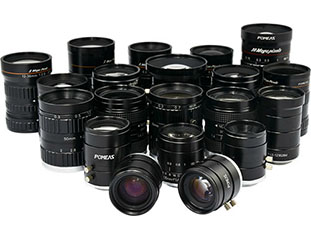
I. First, clarify the core selection criteria: These three requirement dimensions are key.
Before selecting an industrial lens, there's no need to rush into debating lens types. Clarifying three core requirements will narrow down your options: First, the required inspection accuracy—whether it's millimeter-level coarse positioning or micrometer-level precision measurement. Second, working distance and object distance variations—such as whether inspected objects have thickness differences or if object distances fluctuate during inspection. Third, the application environment and cost budget—such as whether it involves highly reflective scenes and the project's tolerance for lens costs. These three dimensions directly determine lens compatibility and serve as the core criteria for distinguishing the application boundaries of the three lens categories.
II. Core Differences Between Industrial Lens Categories: From Optical Principles to Core Advantages
1. Standard FA Lens
Standard FA lenses are the most fundamental universal lenses in industrial settings. Their optical design resembles that of consumer lenses, with core characteristics including compact size, lightweight construction, low cost, and compatibility with most industrial camera interfaces. From a technical perspective, the field of view of standard FA lenses changes with object distance, exhibiting perspective distortion where “near objects appear larger than distant ones.” This is the most fundamental difference between them and telecentric lenses.
In terms of performance, standard FA lenses offer resolutions ranging from hundreds of thousands to tens of millions of pixels, meeting most non-precision inspection requirements. However, due to perspective distortion, they cannot guarantee measurement accuracy as the object distance changes. Additionally, they exhibit weak glare resistance in bright light or highly reflective environments. Their advantage lies in their versatility, making them suitable for various basic applications such as electronic component appearance inspection, packaging integrity checks, and simple positioning. They are the preferred choice for cost-sensitive projects.
2. Telecentric Lens
Telecentric lenses are specialized lenses designed for scenarios involving fluctuating object distances. Their core optical design places the aperture diaphragm on the lens's image-side focal plane, allowing only rays parallel to the optical axis to enter the lens for imaging. This design directly eliminates perspective distortion where objects appear larger up close and smaller at a distance, ensuring the size of the object's image on the image plane remains constant regardless of changes in object distance.
Compared to standard FA lenses, object-side telecentric lenses offer higher detection accuracy. They are particularly suited for scenarios involving objects with varying thicknesses (e.g., sheets, films) or where object distances may fluctuate during inspection (e.g., workpiece misalignment on automated assembly lines). Additionally, they exhibit some suppression of surface reflections, enhancing imaging stability. However, it should be noted that object-side telecentric lenses are typically larger and more expensive than standard FA lenses, with relatively fixed working distances. They are not suitable for basic scenarios with limited space or cost-sensitive requirements.
3. Double-telecentric Lens
The dual-telecentric lens represents an advanced optical design built upon the foundation of object-side telecentric lenses. It not only positions the aperture diaphragm at the image-side focal plane but also achieves image-side telecentricity through a specialized optical structure, ensuring that the imaging rays exit parallel to the optical axis. This design endows the double-telecentric lens with the advantages of both object-side and image-side telecentricity. It not only completely eliminates perspective distortion but also effectively suppresses imaging errors caused by camera sensor tilt or mounting deviations.
Among the three lens types, double telecentric lenses offer the highest measurement accuracy, meeting micron-level or even sub-micron precision requirements for applications such as small-part dimensional measurement, chip pin pitch inspection, and high-precision geometric profile measurement. Additionally, it offers the strongest glare and reflection resistance, making it ideal for precision inspection of highly reflective materials like metals and glass. However, dual telecentric lenses are the largest, heaviest, and most expensive option, with strict requirements for installation space and working distance. Consequently, they are typically reserved for high-end precision inspection scenarios demanding ultimate accuracy.
III. Quick Lens Selection for Specific Scenarios: Choose the Right Lens for Your Needs
1. For basic automation scenarios—such as inspecting cosmetic defects on electronic components (without precise dimensional requirements), checking for packaging leaks, or performing rough positioning of workpieces—where project costs are limited and installation space is constrained, prioritize standard FA lenses.
2. For dimensional measurement where inspected objects vary in thickness or subject-to-object distance fluctuates—e.g., sheet material thickness inspection or assembly line workpiece screening—with entry-level micron-level accuracy requirements, opt for rectilinear telecentric lenses.
3. For high-end precision measurement scenarios—such as high-accuracy dimensional inspection of micro-parts or quality control of precision electronic components like chips—where micron-level or higher precision is required and objects are often highly reflective, opt for double telecentric lenses.
The core of industrial lens selection lies in “precision matching requirements and scenario-adaptive design”: Standard FA lenses excel in versatility and cost-effectiveness, while object-side telecentric lenses address fluctuations in working distance. Dual-telecentric lenses are engineered for extreme precision measurement.
Product recommendation
TECHNICAL SOLUTION
MORE+You may also be interested in the following information
FREE CONSULTING SERVICE
Let’s help you to find the right solution for your project!
 ASK POMEAS
  PRICE INQUIRY
  REQUEST DEMO/TEST
  FREE TRIAL UNIT
  ACCURATE SELECTION
- APPICATION CASE
- RESOURCE CENTER
- DOWNLOAD CENTER
SOLUTIONS SUPPORT
- ZOOM LENS SELECTION TOOL
- TELECENTRIC LENS SELECTION TOOL
- FA LENS SELECTION TOOL
- ZOOM RATIO TABLE
- CERTIFIED MODEL
SELECTION TOOL
- WHY POMEAS
- FAQ
- PRIVACY POLICY
- TERMS OF USE
- DELIVERY & RETURN POLICY
CUSTOMER CARE
 ADDRESS
Add.:No.68, Chongwei Road, Baizhoubian, East district, Dongguan, China, 523000
CONTACT
 Tel:+ 86-0769-2266 0867
 Fax:+ 86-0769-2266 0867
 E-mail:marketing@pomeas.com

Wechat QR code

Software Copyright :2021SR0176001 抄袭必究, 技术支持:誉新源科技