


How to Choose the Right Image Dimensions Measuring Instrument for Your Needs?
Faced with image dimension measurement instruments on the market ranging in price from tens of thousands to hundreds of thousands of yuan, many users are unsure which model is right for their business. Choosing a model with insufficient specifications may fail to meet measurement requirements, while opting for one with excessive specifications could result in wasted investment. The key lies in clearly defining your specific needs and finding the best solution within your budget. Here is a practical guide to help you make the right choice.

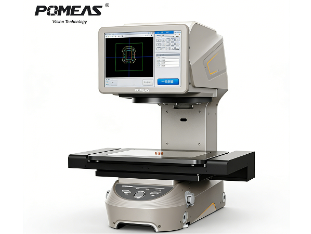
Step 1: Identify Core Measurement Requirements
1. Workpiece Dimensions and Measurement Range: What are the maximum length, width, and height of the workpieces you need to measure? This will determine the required table travel and machine size.
2. Critical Dimensions and Accuracy Requirements: What is the smallest feature size you need to measure? What are the tolerance requirements in micrometers (μm)? For example, measuring a line width of 0.1 mm with a tolerance of ±5 μm versus measuring a hole diameter of 10 mm with a tolerance of ±50 μm places vastly different demands on the equipment’s resolution and accuracy grade. The equipment’s accuracy (such as indication error) should be better than 1/3 to 1/10 of your tolerance band.
3. Measurement Feature Types: Are you primarily measuring two-dimensional planar dimensions (length, width, diameter, spacing, angle), or do you also need to measure simple step heights? Is it necessary to inspect for surface defects?
4. Inspection Cycle Time and Batch Size: Is the system intended for laboratory spot checks or first-article inspection, or for high-volume 100% inspection on a production line? The latter requires extremely high measurement speed and a high degree of automation.
Step 2: Determine the Necessary Functionality
Based on your needs, determine which features are required:
1. Manual vs. Automatic: Manual models rely on handwheels for movement, are more affordable, and are suitable for flexible measurement in R&D and laboratory settings involving small batches and a wide variety of parts. Automatic (CNC) models are motor-driven and capable of programmable, automated operation. They are ideal for high-volume, repetitive inspections on production lines, offering high efficiency and eliminating human operator variation.
2. Optical Configuration: Select the appropriate lens magnification (typically equipped with a ZOOM LENS to balance field of view and precision) and camera resolution based on the workpiece size and detail. For reflective parts or complex contours, consider configuring a multi-angle, programmable LED light source.
3. Software Features: Are advanced features such as autofocus, batch programming, SPC statistical analysis, and automatic report generation required? Is the software easy to learn and use?
Step 3: Evaluate the Budget and Long-Term Value
Within your budget, prioritize core accuracy and stability. A device with inconsistent accuracy is nothing more than a castle in the air, no matter how many features it has. Consider scalability: Will you need to upgrade to an automated model in the future? Will you need to add sensors such as lasers or contact probes? Choose a brand with a well-designed modular architecture to leave room for future expansion. At the same time, you must consider the supplier’s technical support and service capabilities, including installation training, routine maintenance, calibration services, and software updates.
Based on the above analysis, the following typical scenarios can generally be identified:
1. Scenario A: R&D, laboratories, and small-batch production of multiple product varieties → Choose a high-precision manual model or an entry-level automated model. Key considerations include optical clarity, software usability, and basic accuracy.
2. Scenario B: In-line or near-line production lines, high-volume 100% inspection → A highly stable, fully automated model is required. Key considerations include measurement speed, repeatability, resistance to environmental interference, and automation integration interfaces (e.g., loading/unloading).
3. Scenario C: Extremely high precision requirements (sub-micron level), complex measurements → High-end fully automatic models are required, potentially equipped with high-precision glass scale rulers, closed-loop control, temperature compensation systems, and advanced algorithm software.
There is no such thing as the “best” equipment—only the “most suitable” equipment. A professional supplier does not simply push the most expensive models; instead, they gain a deep understanding of your products and processes. Brands like POMEAS offer value by providing a complete product lineup—ranging from economical manual stations and standard automated machines to high-precision fully automated machines. Leveraging their professional expertise, they help you analyze your needs and provide the most cost-effective configuration solutions, ensuring your investment is targeted precisely where it matters most and effectively solving real-world quality inspection challenges.
Product recommendation
TECHNICAL SOLUTION
MORE+You may also be interested in the following information
FREE CONSULTING SERVICE
Let’s help you to find the right solution for your project!
 ASK POMEAS
  PRICE INQUIRY
  REQUEST DEMO/TEST
  FREE TRIAL UNIT
  ACCURATE SELECTION
- APPICATION CASE
- RESOURCE CENTER
- DOWNLOAD CENTER
SOLUTIONS SUPPORT
- ZOOM LENS SELECTION TOOL
- TELECENTRIC LENS SELECTION TOOL
- FA LENS SELECTION TOOL
- ZOOM RATIO TABLE
- CERTIFIED MODEL
SELECTION TOOL
- WHY POMEAS
- FAQ
- PRIVACY POLICY
- TERMS OF USE
- DELIVERY & RETURN POLICY
CUSTOMER CARE
 ADDRESS
Add.:No.68, Chongwei Road, Baizhoubian, East district, Dongguan, China, 523000
CONTACT
 Tel:+ 86-0769-2266 0867
 Fax:+ 86-0769-2266 0867
 E-mail:marketing@pomeas.com

Wechat QR code

Software Copyright :2021SR0176001 抄袭必究, 技术支持:誉新源科技