


How to Choose an Electric ZOOM LENS Suitable for Precision Dimensional Measurement Applications
In the field of precision manufacturing, dimensional measurement serves as the final line of defense in quality control. When your inspection solution needs to transition from manual observation to automated, high-precision smart measurement, motorized ZOOM LENSes become the central hub of the system.
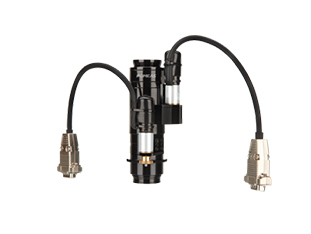
However, with such a wide variety of optical products on the market, how do you choose the right motorized ZOOM LENS for your precision dimensional measurement solution?
Point 1: Key Metric: Can accuracy reach 0.01 mm?
The ultimate goal of any precision measurement is data accuracy. When selecting a motorized ZOOM LENS, the first factor to consider is its ability to control optical distortion.
For measurement tasks requiring accuracy down to 0.01 mm, the lens’s resolution must perfectly match the camera’s pixel count. We recommend prioritizing 4K HD ZOOM LENSes. 4K resolution means a higher pixel density within the same field of view, enabling the capture of even the slightest edge changes. Only when the lens’s optical resolution is sufficient to support 4K image quality can software algorithms achieve precise positioning, ensuring that the final measurement repeatability remains within 0.01 mm.
Point 2: Image Quality: Three Key Factors for High-Definition Imaging
“If you can’t see clearly, you can’t measure accurately”—this is an ironclad rule in the metrology industry. A high-quality ZOOM LENS for an imaging measuring machine must meet the following three criteria:
-
Apochromatic Technology: Standard lenses are prone to purple fringing or chromatic aberration at high magnifications, which can cause pixel-level errors in edge detection. High-end lenses require special glass materials to achieve apochromatic correction, ensuring that red, green, and blue light converge at the same focal point—a fundamental requirement for high-definition imaging.
-
High Contrast and Sharpness: Images must not only be large but also “crisp.” The more abrupt the transition between black and white at the edges, the more precise the measurement software’s detection will be.
-
Coaxial Illumination Compatibility: When measuring deep holes or highly reflective metal parts (such as bearings or contacts), standard annular lighting can cause glare. In such cases, selecting a product that supports coaxial high-definition ZOOM LENSes is crucial. These LENSes project light vertically, illuminating the bottom of deep holes like a “flashlight,” making previously elusive features impossible to hide.
Point 3: Automation and Compatibility: Can it be seamlessly integrated?
Since this is intended for “precision dimensional measurement solutions,” automation is a must. Traditional manual ZOOM LENSes can no longer keep pace with the cycle times of modern production lines.
-
Electric Control: A true motorized ZOOM LENS should support remote control via RS232 or Ethernet interfaces. Whether it’s switching magnification, focusing, or adjusting the aperture, these functions should be integrated into your host software to enable one-click measurement.
-
Image Sensor Compatibility: Since 4K performance is the goal, the lens must have a sufficiently large optical format. Ensure the selected lens is compatible with 2/3-inch or even 1-inch 4K industrial camera sensors to avoid vignetting at the edges, which would waste the 4K camera’s resolution.
Point 4: Practical Scenarios: Selection Priorities for Different Workpieces
Scenario A: Mobile Phone Mid-Frames and Precision Structural Components
These workpieces are large and feature-rich, typically requiring low magnification for alignment and high magnification for inspecting tiny holes. In such cases, the wide zoom range (e.g., 7.8:1 or higher) of a 4K HD auto-ZOOM LENS allows you to balance efficiency and precision.
Scenario B: Wafers and Lenses (Transparent/Mirrored Objects)
This is the scenario that most rigorously tests a lens’s capabilities. You must select a coaxial high-definition ZOOM LENS equipped with a coaxial light interface. By utilizing coaxial light to eliminate reflections, you can clearly capture the edges of coatings, thereby achieving coating thickness measurements with a precision of up to 0.01 mm.
Product recommendation
TECHNICAL SOLUTION
MORE+You may also be interested in the following information
FREE CONSULTING SERVICE
Let’s help you to find the right solution for your project!
 ASK POMEAS
  PRICE INQUIRY
  REQUEST DEMO/TEST
  FREE TRIAL UNIT
  ACCURATE SELECTION
- APPICATION CASE
- RESOURCE CENTER
- DOWNLOAD CENTER
SOLUTIONS SUPPORT
- ZOOM LENS SELECTION TOOL
- TELECENTRIC LENS SELECTION TOOL
- FA LENS SELECTION TOOL
- ZOOM RATIO TABLE
- CERTIFIED MODEL
SELECTION TOOL
- WHY POMEAS
- FAQ
- PRIVACY POLICY
- TERMS OF USE
- DELIVERY & RETURN POLICY
CUSTOMER CARE
 ADDRESS
Add.:No.68, Chongwei Road, Baizhoubian, East district, Dongguan, China, 523000
CONTACT
 Tel:+ 86-0769-2266 0867
 Fax:+ 86-0769-2266 0867
 E-mail:marketing@pomeas.com

Wechat QR code

Software Copyright :2021SR0176001 抄袭必究, 技术支持:誉新源科技