


In the field of precision measurement, flash profilometers and imaging profilometers are two common types of measuring equipment. However, in terms of price, flash profilometers are significantly more expensive than imaging profilometers. While an affordable imaging profilometer can be purchased for as little as 40,000 to 50,000 yuan, the price of a flash profilometer ranges from over 100,000 to 400,000 yuan. Even so, most manufacturers still prioritize flash profilometers when selecting equipment. What are the reasons behind this?


I. Programming Difficulty: Varying Levels of Ease of Learning


Image Analyzers: Complex Operation, Tedious Programming
Most image analyzers present a high learning curve. For beginners, even a full day of training is often insufficient to master the operational techniques. Furthermore, whenever a different product needs to be measured, the programming process must start from scratch. Not only that, but the exact positioning of the test object on the platform must also be readjusted. This series of complex operations makes the programming process for imaging systems extremely cumbersome, not only consuming a significant amount of time but also placing high demands on the operator’s professional skills and experience.
Flash Measuring System: User-Friendly Design, Easy to Learn
The Flash Measuring System’s programming design fully addresses the challenges beginners face when getting started. For fixed measurement elements, it offers a simple and intuitive operating method; at the same time, it provides thoughtful step-by-step textual guidance. Typically, after about two hours of training, beginners can independently write measurement programs for multiple products. Even more convenient is that regardless of where the test object is placed on the measurement platform, the Flash Tester can accurately locate it and complete the measurement when the program starts, eliminating the need for additional position adjustments and significantly improving programming efficiency and convenience.
II. Measurement Efficiency: Significant Differences in Time Costs


Image measuring machines: Inefficient and requiring frequent adjustments
Anyone who has used an imaging system knows that it typically takes 30 seconds to 2 minutes to measure a single product, with the exact duration depending on the number of measurement points. During the actual measurement process, because different objects vary in shape and size, frequent adjustments to the measurement position are often required, which undoubtedly further reduces measurement efficiency. For manufacturers that need to measure large quantities of different products, this inefficient measurement method can severely impact production schedules and increase time costs.
Flash Measuring Instrument: Efficient and Fast, No Adjustments Required
The flash measuring instrument excels in measurement efficiency. Generally, it can complete measurements of all product dimensions within 30 seconds. Even when switching to a different test object mid-process, no position adjustments are required, and work efficiency remains unaffected. This high-efficiency measurement capability enables the flash measuring instrument to meet the demands of large-scale production, helping manufacturers complete more measurement tasks in less time, thereby improving production efficiency and reducing production costs.
III. Measurement Accuracy: The devil is in the details

Image measuring machines: Limited accuracy, unable to meet high standards
The measurement accuracy of imaging systems generally hovers around 0.01 mm. In applications where measurement accuracy is not a top priority, this level of precision may suffice. However, for industries that maintain strict quality control and require high-precision measurements, the accuracy of imaging systems falls short. For example, in fields such as aerospace and precision manufacturing, even minute measurement errors can lead to serious consequences, necessitating the use of higher-precision measurement equipment.
Flash Measuring Instrument: Exceptional Accuracy for Precision Measurement
The Flash Measuring Instrument achieves a measurement accuracy of 1 μm or higher. This exceptional precision enables it to meet the demands of various applications requiring extremely high measurement accuracy. In addition, the Flash Measuring Instrument offers unique advantages in high-volume measurement and the measurement of large objects through stitching. During high-volume measurements, it ensures the accuracy and consistency of every result; for the assembly and measurement of large objects, it provides complete and accurate measurement data through precise alignment and measurement, offering robust support for precision measurement.

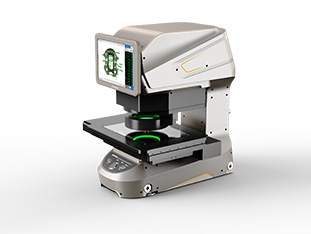
Although flash testers are relatively expensive, they offer clear advantages in terms of programming complexity, measurement efficiency, and measurement accuracy. For most manufacturers, while choosing a flash tester requires a greater initial investment, it can improve production efficiency and ensure product quality in the long run, ultimately yielding greater economic benefits for the company.
Product recommendation
TECHNICAL SOLUTION
MORE+You may also be interested in the following information
FREE CONSULTING SERVICE
Let’s help you to find the right solution for your project!
 ASK POMEAS
  PRICE INQUIRY
  REQUEST DEMO/TEST
  FREE TRIAL UNIT
  ACCURATE SELECTION
- APPICATION CASE
- RESOURCE CENTER
- DOWNLOAD CENTER
SOLUTIONS SUPPORT
- ZOOM LENS SELECTION TOOL
- TELECENTRIC LENS SELECTION TOOL
- FA LENS SELECTION TOOL
- ZOOM RATIO TABLE
- CERTIFIED MODEL
SELECTION TOOL
- WHY POMEAS
- FAQ
- PRIVACY POLICY
- TERMS OF USE
- DELIVERY & RETURN POLICY
CUSTOMER CARE
 ADDRESS
Add.:No.68, Chongwei Road, Baizhoubian, East district, Dongguan, China, 523000
CONTACT
 Tel:+ 86-0769-2266 0867
 Fax:+ 86-0769-2266 0867
 E-mail:marketing@pomeas.com

Wechat QR code

Software Copyright :2021SR0176001 抄袭必究, 技术支持:誉新源科技