


In scientific research, industrial inspection, and the biomedical field, microscopes are indispensable tools for exploring the microscopic world. As a specialized type of optical microscope, the zoom microscope, with its unique zoom capability, is the ideal choice for observing objects of varying sizes.

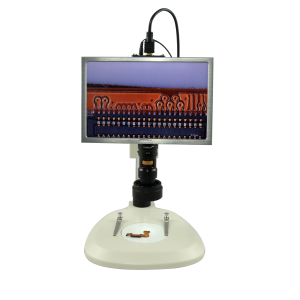
The Core Principle of Zoom Microscopes

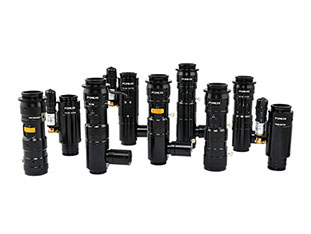
The magnification of traditional microscopes is typically determined by a fixed combination of objective and eyepiece lenses. Changing the magnification requires manually swapping lenses, which is cumbersome and may disrupt the continuity of observation. Zoom microscopes overcome this limitation through their core component—the ZOOM LENS—which consists of a set of precision-engineered lenses. By adjusting the distance between these lenses mechanically or electrically, the system achieves a continuous, stepless change in magnification.
This process is similar to adjusting a camera’s Vari-focal lenses: when the lens groups move closer together, the angle of light refraction increases, raising the magnification; conversely, it decreases. The magnification range of a ZOOM LENS microscope typically spans from a few times to hundreds of times (e.g., 0.7×–4.5×, 2×–16×, etc.), allowing users to switch quickly as needed without repeatedly disassembling the lenses.
The Three Major Advantages of Variable-Magnification Microscopes
-
Highly efficient and flexible: The continuous zoom function allows users to transition from a macro overview to micro-details without interrupting their work.
-
User-Friendly Operation: Motorized zoom models support remote control via software or a remote control. When paired with a digital imaging system, they enable automated observation and data recording.
-
Wide Range of Applications: From biological sections and metallic materials to semiconductor wafers, zoom microscopes are compatible with a variety of sample types and are particularly well-suited for scenarios requiring multi-scale analysis.
Typical Use Cases

-
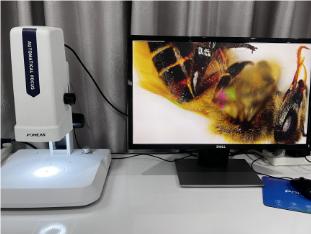
Biomedical Applications: At low magnification, the distribution of cell clusters can be observed, while high magnification allows for the analysis of the structure of individual organelles.
-
Industrial Manufacturing: When inspecting the surface of precision parts for scratches or measuring the size of holes, the zoom function enables rapid localization of defects and assessment of their severity.
-
Education: By dynamically adjusting the magnification, students can intuitively understand the inverse relationship between magnification and field of view.
A zoom microscope is a type of optical microscope that provides a continuous range of magnification by adjusting its zoom optical components, making it suitable for observing objects of various sizes.
Product recommendation
TECHNICAL SOLUTION
MORE+You may also be interested in the following information
FREE CONSULTING SERVICE
Let’s help you to find the right solution for your project!

 ASK POMEAS
  PRICE INQUIRY
  REQUEST DEMO/TEST
  FREE TRIAL UNIT
  ACCURATE SELECTION
- APPICATION CASE
- RESOURCE CENTER
- DOWNLOAD CENTER
SOLUTIONS SUPPORT
- ZOOM LENS SELECTION TOOL
- TELECENTRIC LENS SELECTION TOOL
- FA LENS SELECTION TOOL
- ZOOM RATIO TABLE
- CERTIFIED MODEL
SELECTION TOOL
- WHY POMEAS
- FAQ
- PRIVACY POLICY
- TERMS OF USE
- DELIVERY & RETURN POLICY
CUSTOMER CARE
 ADDRESS
Add.:No.68, Chongwei Road, Baizhoubian, East district, Dongguan, China, 523000
CONTACT
 Tel:+ 86-0769-2266 0867
 Fax:+ 86-0769-2266 0867
 E-mail:marketing@pomeas.com

Wechat QR code

Software Copyright :2021SR0176001 抄袭必究, 技术支持:誉新源科技