


地基打好了,但项目往往不是垮在地基上,而是倒在那些没人提醒的细节里。结合这些年踩过的坑,我总结了几条远心镜头选型中极易被忽视的错误,供各位参考。
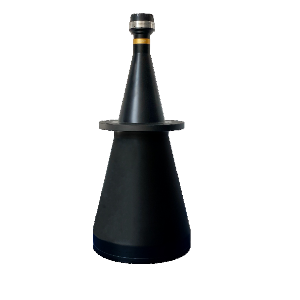
1. Lack of Awareness Regarding Light Source Selection
Many industry peers select telecentric lenses and cameras but pair them with a random ring light. As a result, once the system is set up, the image edges appear blurry and the measurement data fluctuates constantly. The core principle of a telecentric lens is that it “only accepts parallel light.” If the light source is divergent, most of the light cannot enter the lens, resulting in vignetting or blurred edges. When measuring the edges of metal parts or objects with thickness, it is recommended to prioritize a telecentric parallel light source to obtain the sharpest contours using transmitted light. This is not for show, but to ensure that the measurement algorithm can reliably capture the edges.
2. Focusing Only on Magnification While Ignoring Depth of Field and Aperture
Some users, in pursuit of high precision, select lenses with excessively high magnification. As a result, even a 0.5-millimeter height difference in the workpiece causes the edges to appear sharp while the top becomes blurry. The aperture of a telecentric lens is typically fixed, and depth of field is inversely proportional to magnification. When selecting a lens, verify that the height variations of the measured object fall within the lens’s depth of field. If the workpiece has steps, assess whether to appropriately reduce the magnification or consider a dual-telecentric design, sacrificing some magnification for greater depth of field tolerance.
3. Being Misled by “Maximum Field of View”
Sometimes, when inspecting a 50-millimeter disk, one might select a lens with a 60-millimeter field of view, assuming it is more than sufficient. However, this overlooks mechanical positioning errors and the wobble of the rotating mechanism. If the disk’s edge moves out of the field of view as it rotates on the turntable, data acquisition will be interrupted. When selecting a lens, we recommend allowing a 10%–20% margin in the field of view specifically to accommodate mechanical positioning errors. This will make the project run much more smoothly.
Ultimately, selecting a telecentric lens is a collaborative effort involving optics, mechanics, and algorithms. Visiting the site frequently and listening to feedback from production line operators is far more reliable than simply reviewing the spec sheet.
Product recommendation
TECHNICAL SOLUTION
MORE+You may also be interested in the following information
FREE CONSULTING SERVICE
Let’s help you to find the right solution for your project!
 ASK POMEAS
  PRICE INQUIRY
  REQUEST DEMO/TEST
  FREE TRIAL UNIT
  ACCURATE SELECTION
- APPICATION CASE
- RESOURCE CENTER
- DOWNLOAD CENTER
SOLUTIONS SUPPORT
- ZOOM LENS SELECTION TOOL
- TELECENTRIC LENS SELECTION TOOL
- FA LENS SELECTION TOOL
- ZOOM RATIO TABLE
- CERTIFIED MODEL
SELECTION TOOL
- WHY POMEAS
- FAQ
- PRIVACY POLICY
- TERMS OF USE
- DELIVERY & RETURN POLICY
CUSTOMER CARE
 ADDRESS
Add.:No.68, Chongwei Road, Baizhoubian, East district, Dongguan, China, 523000
CONTACT
 Tel:+ 86-0769-2266 0867
 Fax:+ 86-0769-2266 0867
 E-mail:marketing@pomeas.com

Wechat QR code

Software Copyright :2021SR0176001 抄袭必究, 技术支持:誉新源科技