


In machine vision inspection projects, telecentric lenses are often our first choice whenever high-precision measurement is required. However, in my more than a decade in the industry, I’ve seen far too many projects fail to pass acceptance testing despite repeated on-site debugging—all because of a minor oversight during the lens selection process. Today, let’s discuss the three key factors you must consider when selecting a lens.
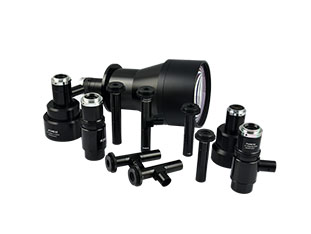
First, the magnification determines the lower limit of measurement.
Many engineers immediately ask, “What is the field of view?” In reality, for telecentric lenses, magnification is the more critical factor. The theoretical resolution limit of a telecentric lens is determined by its magnification. If you need to inspect defects as small as 10 microns but choose a lens with low magnification, those details simply won’t be visible—no matter how high-quality the camera is.
Key Point: Determine the required optical resolution based on the customer’s maximum precision requirements, and then establish the magnification. Typically, the feature being measured should occupy at least 3–5 pixels to ensure reliable results.
Second, the working distance cannot be adjusted arbitrarily.
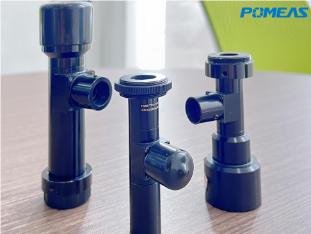
This is completely different from FA lenses. The working distance of a telecentric lens is a fixed design value; although there is a certain depth of field range, if the object distance changes, the magnification will change, and the measurement will become invalid. I’ve encountered customers who raised the lens by 2 centimeters themselves to avoid mechanical interference, only to end up with a blurry image and completely inaccurate magnification.
Key point: Mechanical design must strictly adhere to the “working distance” specified on the lens; it must not be treated as a Vari-focal lens.
Third, target surface alignment is the aspect most often overlooked.
If you choose a camera with a 1-inch sensor but pair it with a telecentric lens designed for a 2/3-inch sensor, the resulting image will have black borders all around it. Only the central area supported by the lens will be usable, resulting in a reduced field of view and a change in magnification. Conversely, while a small-format camera paired with a large-format lens is technically usable, it results in wasted lens size and cost. It is essential to ensure that the lens’s maximum supported sensor size is greater than or equal to the camera’s sensor size.
These three points form the foundation of the selection process; if the foundation is unstable, any further efforts will be in vain. In the next post, we’ll talk about those seemingly minor details that can actually derail a project.
Product recommendation
TECHNICAL SOLUTION
MORE+You may also be interested in the following information
FREE CONSULTING SERVICE
Let’s help you to find the right solution for your project!
 ASK POMEAS
  PRICE INQUIRY
  REQUEST DEMO/TEST
  FREE TRIAL UNIT
  ACCURATE SELECTION
- APPICATION CASE
- RESOURCE CENTER
- DOWNLOAD CENTER
SOLUTIONS SUPPORT
- ZOOM LENS SELECTION TOOL
- TELECENTRIC LENS SELECTION TOOL
- FA LENS SELECTION TOOL
- ZOOM RATIO TABLE
- CERTIFIED MODEL
SELECTION TOOL
- WHY POMEAS
- FAQ
- PRIVACY POLICY
- TERMS OF USE
- DELIVERY & RETURN POLICY
CUSTOMER CARE
 ADDRESS
Add.:No.68, Chongwei Road, Baizhoubian, East district, Dongguan, China, 523000
CONTACT
 Tel:+ 86-0769-2266 0867
 Fax:+ 86-0769-2266 0867
 E-mail:marketing@pomeas.com

Wechat QR code

Software Copyright :2021SR0176001 抄袭必究, 技术支持:誉新源科技