


An Introduction to the Basics of Coaxiality: Definition, Applications, Effects, Measurement
I. What Is Coaxiality?

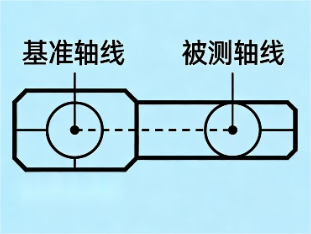
Coaxiality is a positioning tolerance that refers to the degree of alignment between the measured axis and the reference axis. Essentially, it measures the deviation of multiple axes on a part—which are intended to lie on the same line—from an ideal straight line, ultimately manifesting as the centers of the cross-sections being out of concentricity. Its tolerance zone is defined as a cylindrical surface coaxial with the reference axis and having a diameter equal to the tolerance value t; the tolerance value must be preceded by the symbol “Φ”. Note that coaxiality applies only to rotary parts; it cannot be measured on non-rotary parts.
II. Which Samples Require Coaxiality Measurement
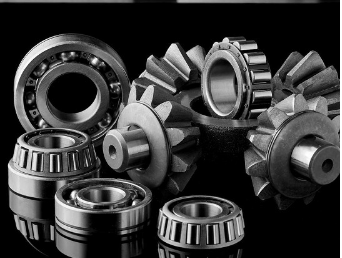
Coaxiality must be measured for any rotating parts that require multiple axes to coincide or align with a reference axis. Key applications include: shaft-type parts (such as stepped shafts and motor shafts), bore-type parts (such as bearing housings and differential housings), complex precision assemblies (such as aerospace components and robotic joint shafts), and assembled subassemblies (such as gearbox shaft systems). The purpose is to ensure assembly accuracy and operational stability.
III. The Impact of Coaxiality on Products
The impact of concentricity deviations extends throughout the entire product lifecycle:
1. Causes assembly difficulties and interference; forced assembly shortens service life;
2. Exacerbates equipment vibration and noise, reducing operational stability;
3. Reduces transmission efficiency, increasing energy consumption and component wear;
4. In critical sectors (aerospace, rail transportation), it may lead to catastrophic failures, resulting in safety incidents and economic losses.
IV. Equipment for Rapid Coaxiality Measurement

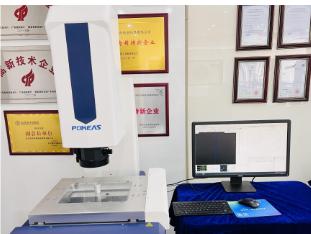
Mainstream rapid measurement equipment includes: runout gauges + dial indicators (for rapid in-shop inspections; low cost, moderate accuracy), rapid inspection systems for shaft-type workpieces (specialized, high accuracy; suitable for 100% inspection of batches), coordinate measuring machines (non-contact; suitable for small, precision parts), and laser interferometers (dynamic inspection, suitable for high-end applications), high-precision image measuring machines (flash measurement systems), and Telecentric Measurement Systems, which can be selected based on accuracy requirements and application scenarios.
V. Challenges in Measuring Coaxiality
The difficulty of measurement depends on the sample structure, precision requirements, and equipment. Coaxiality is a key indicator of the precision of rotary parts; its inspection requires selecting appropriate equipment based on the specific application to minimize measurement errors. Inspection of low- to medium-precision parts is straightforward, while high-precision and complex parts require specialized support. Scientific inspection is essential for ensuring product quality.
Product recommendation
TECHNICAL SOLUTION
MORE+You may also be interested in the following information
FREE CONSULTING SERVICE
Let’s help you to find the right solution for your project!

 ASK POMEAS
  PRICE INQUIRY
  REQUEST DEMO/TEST
  FREE TRIAL UNIT
  ACCURATE SELECTION
- APPICATION CASE
- RESOURCE CENTER
- DOWNLOAD CENTER
SOLUTIONS SUPPORT
- ZOOM LENS SELECTION TOOL
- TELECENTRIC LENS SELECTION TOOL
- FA LENS SELECTION TOOL
- ZOOM RATIO TABLE
- CERTIFIED MODEL
SELECTION TOOL
- WHY POMEAS
- FAQ
- PRIVACY POLICY
- TERMS OF USE
- DELIVERY & RETURN POLICY
CUSTOMER CARE
 ADDRESS
Add.:No.68, Chongwei Road, Baizhoubian, East district, Dongguan, China, 523000
CONTACT
 Tel:+ 86-0769-2266 0867
 Fax:+ 86-0769-2266 0867
 E-mail:marketing@pomeas.com

Wechat QR code

Software Copyright :2021SR0176001 抄袭必究, 技术支持:誉新源科技