


Industrial cameras are the core imaging components of machine vision systems and can be classified into various types based on their imaging principles, spectral ranges, and application scenarios. Each category offers distinct advantages in terms of resolution, frame rate, and imaging methods, and is widely used in smart manufacturing applications such as industrial inspection, dimensional measurement, defect detection, and automated positioning.

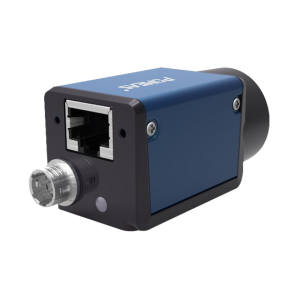
Main categories: line scan cameras, area scan cameras, infrared cameras, multispectral cameras, and 3D cameras, among others. Different types of industrial cameras are suitable for different applications.

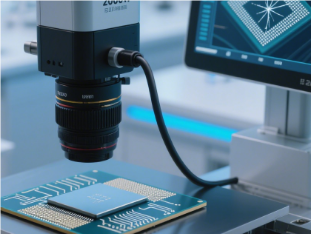
1. By Imaging Structure
Area-scan cameras capture an entire two-dimensional image in a single shot and are the most commonly used type. They are suitable for dimensional measurement, defect detection, and positioning and recognition; line-scan cameras scan and capture images line by line, making them suitable for continuously moving objects (such as rolls, tubes, and printed materials) and large-format, high-precision inspection.
2. By Spectral Band
- Visible-light cameras are the most versatile option for use under normal lighting conditions.
- Infrared cameras (near-infrared, short-wave infrared, and thermal infrared) are used for high-temperature measurement, fog penetration, and internal inspection of semiconductors, glass, and plastics.
- Multispectral and hyperspectral cameras capture images by wavelength band and are used for agricultural product sorting, waste sorting, and material analysis.
- Ultraviolet cameras are used for coating inspection, crack detection, and contaminant detection.
3. By 3D Imaging Method
Laser 3D cameras (line laser profilers), structured light 3D cameras, and stereo vision cameras are commonly used for volume measurement, random object picking, and thickness/deformation/guided assembly.
4. By Interface and Data Transmission
USB 3.0 / USB 3 Vision, GigE (Gigabit Ethernet) cameras, and Camera Link / CoaXPress differ primarily in terms of speed, transmission distance, and stability.
5. By Special Feature
- High-speed cameras: Capture fast-moving objects, splashes, explosions, and other dynamic processes
- Global shutter / rolling shutter cameras: Determine whether to capture motion without motion blur
- Short-wave infrared (SWIR) cameras: Penetrate fog, water vapor, and certain plastics
Product recommendation
TECHNICAL SOLUTION
MORE+You may also be interested in the following information
FREE CONSULTING SERVICE
Let’s help you to find the right solution for your project!
 ASK POMEAS
  PRICE INQUIRY
  REQUEST DEMO/TEST
  FREE TRIAL UNIT
  ACCURATE SELECTION
- APPICATION CASE
- RESOURCE CENTER
- DOWNLOAD CENTER
SOLUTIONS SUPPORT
- ZOOM LENS SELECTION TOOL
- TELECENTRIC LENS SELECTION TOOL
- FA LENS SELECTION TOOL
- ZOOM RATIO TABLE
- CERTIFIED MODEL
SELECTION TOOL
- WHY POMEAS
- FAQ
- PRIVACY POLICY
- TERMS OF USE
- DELIVERY & RETURN POLICY
CUSTOMER CARE
 ADDRESS
Add.:No.68, Chongwei Road, Baizhoubian, East district, Dongguan, China, 523000
CONTACT
 Tel:+ 86-0769-2266 0867
 Fax:+ 86-0769-2266 0867
 E-mail:marketing@pomeas.com

Wechat QR code

Software Copyright :2021SR0176001 抄袭必究, 技术支持:誉新源科技