


Quickly Understand the Difference Between HDMI and Standard Industrial Cameras
In the field of industrial imaging, industrial cameras are indispensable pieces of equipment that provide essential imaging support for production, inspection, and research across a wide range of industries. With the continuous advancement of technology, industrial cameras have evolved into various types, with HDMI industrial cameras and conventional industrial cameras being the most common. Each has its own unique features and application scenarios; below, we will take an in-depth look at the differences between them.

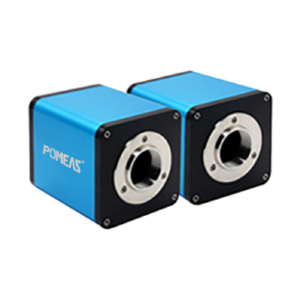
Output Methods and System Architecture
HDMI industrial cameras output high-definition video signals directly via an HDMI interface, eliminating the need for a host computer. They can be connected to display devices such as monitors using an HDMI cable, which simplifies the system architecture and reduces both setup costs and space requirements. Conventional industrial cameras require a computer, an image capture card, and related software to process and display images, resulting in a complex system with numerous cables and stringent installation requirements.

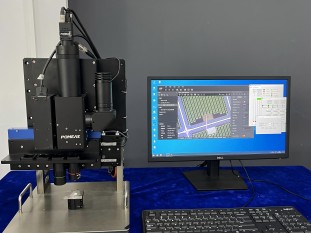
Real-Time Performance and Latency
HDMI industrial cameras support low-latency output, offering significant advantages in scenarios with high real-time performance requirements, such as production inspection and PCB/SMT inspection. For example, in PCB inspection on high-speed production lines, they can provide real-time image feedback, helping operators adjust parameters promptly. Conventional industrial cameras, however, experience latency because data must be processed and transmitted via a computer; this latency becomes more pronounced when processing large amounts of data or running complex algorithms, affecting accuracy in scenarios such as the detection of high-speed moving objects.
Resolution and Image Quality
HDMI industrial cameras support high-definition resolutions, enabling clear visualization of object details in fields such as medical imaging and microscopic observation. While conventional industrial cameras offer high-resolution models, their image quality is subject to computer performance and software limitations, potentially resulting in stuttering or blurring.
Ease of Use
HDMI industrial cameras are simple to operate, requiring no complex computer operations or software configurations, making them user-friendly for those unfamiliar with computers. Conventional industrial cameras are complex to use, requiring the installation and configuration of capture cards and the adjustment of software parameters, as well as on-the-fly optimization based on the application scenario, which demands a high level of technical proficiency from the operator.
Application Scenarios
HDMI industrial cameras are suitable for applications that demand high image stability and accuracy and require direct connection to a monitor for real-time viewing, such as production inspection. Conventional industrial cameras have a broader range of applications; in fields such as machine vision and intelligent transportation, they can be integrated with computers and software to perform advanced image analysis and recognition functions.
Product recommendation
TECHNICAL SOLUTION
MORE+You may also be interested in the following information
FREE CONSULTING SERVICE
Let’s help you to find the right solution for your project!
 ASK POMEAS
  PRICE INQUIRY
  REQUEST DEMO/TEST
  FREE TRIAL UNIT
  ACCURATE SELECTION
- APPICATION CASE
- RESOURCE CENTER
- DOWNLOAD CENTER
SOLUTIONS SUPPORT
- ZOOM LENS SELECTION TOOL
- TELECENTRIC LENS SELECTION TOOL
- FA LENS SELECTION TOOL
- ZOOM RATIO TABLE
- CERTIFIED MODEL
SELECTION TOOL
- WHY POMEAS
- FAQ
- PRIVACY POLICY
- TERMS OF USE
- DELIVERY & RETURN POLICY
CUSTOMER CARE
 ADDRESS
Add.:No.68, Chongwei Road, Baizhoubian, East district, Dongguan, China, 523000
CONTACT
 Tel:+ 86-0769-2266 0867
 Fax:+ 86-0769-2266 0867
 E-mail:marketing@pomeas.com

Wechat QR code

Software Copyright :2021SR0176001 抄袭必究, 技术支持:誉新源科技