


Image dimension measuring instrument for measuring the inner diameter of metal round holes
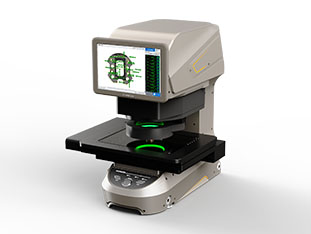
In manufacturing sectors such as automotive components and precision aerospace parts, even millimeter-level deviations in the inner diameter of metal holes can lead to systemic failures. While traditional contact-based measurement methods (such as calipers and coordinate measuring machines) offer reliable accuracy, they suffer from low efficiency and the risk of damaging workpieces. Image-based dimensional measurement systems are ideally suited for automated inspection of metal bore diameters on production lines. Their core advantage lies in their ability to seamlessly integrate into production processes, enabling automated, high-precision inspection and real-time control of bore diameters. This not only addresses the shortcomings of traditional manual inspection but also meets the production line’s demands for efficient and consistent inspection, making these systems essential equipment for the automation upgrade of metal processing production lines.

Overcoming the Four Major Challenges of Metal Round Hole Inspection
1. Inspection Interference Caused by the Characteristics of the Workpiece Itself
Metal workpieces are typically made of hard materials, and burrs and chamfers often form on the edges of circular holes during machining. These irregularities can obscure the true edges of the holes, leading to measurement errors; Additionally, the smooth surface of metals is prone to reflections, and oil residues adhering during production can obscure the circular hole’s outline. This is particularly problematic for micro-apertures at the millimeter scale or smaller, where edge contours are inherently difficult to capture. The aforementioned interferences further reduce inspection accuracy and may even lead to misjudgments.
2. Inspection challenges caused by production line operating conditions
When production lines operate at high speeds, slight misalignments and vibrations inevitably occur during workpiece conveyance. Traditional contact-based measurement methods (such as calipers and micrometers) require manual positioning and operation, making it impossible to achieve non-intrusive automated inspection and difficult to match the production line’s cycle time. Furthermore, contact-based measurement involves direct contact with the workpiece surface, which can easily cause scratches on metal workpieces, compromising product precision and failing to meet the quality requirements of precision machining.
3. Quality Control Pressures in Mass Production
In mass production, tolerance requirements for the inner diameters of metal round holes are typically extremely stringent, often reaching the micrometer level, placing extremely high demands on the stability of inspection accuracy. Manual inspection is subject to subjective factors such as visual fatigue, operator proficiency, and sense of responsibility, making it impossible to consistently control tolerance ranges. Not only is inspection efficiency low and unable to meet the demands of high-volume production, but it is also prone to missed or false inspections, making it impossible to achieve standardized quality control for large-scale production.
Advantages of Using an Image-Based Dimension Measuring Instrument to Measure the Inner Diameter of Metal Holes
1. Interference-Resistant Accuracy: Overcoming inspection challenges posed by the workpiece itself
2. Non-Destructive and High-Efficiency: Adapting to the high-speed operation of production lines
3. Inspection Consistency: Eliminating human error to achieve standardized control
4. Adaptability and Compatibility: Meeting the complex scenarios and integration requirements of production lines
Product recommendation
TECHNICAL SOLUTION
MORE+You may also be interested in the following information
FREE CONSULTING SERVICE
Let’s help you to find the right solution for your project!
 ASK POMEAS
  PRICE INQUIRY
  REQUEST DEMO/TEST
  FREE TRIAL UNIT
  ACCURATE SELECTION
- APPICATION CASE
- RESOURCE CENTER
- DOWNLOAD CENTER
SOLUTIONS SUPPORT
- ZOOM LENS SELECTION TOOL
- TELECENTRIC LENS SELECTION TOOL
- FA LENS SELECTION TOOL
- ZOOM RATIO TABLE
- CERTIFIED MODEL
SELECTION TOOL
- WHY POMEAS
- FAQ
- PRIVACY POLICY
- TERMS OF USE
- DELIVERY & RETURN POLICY
CUSTOMER CARE
 ADDRESS
Add.:No.68, Yongwei Road, Baizhoubian, Dongcheng District, Dongguan, China,523000
CONTACT
 Tel:+ 86-0769-2266 0867
 Fax:+ 86-0769-2266 0867
 E-mail:marketing@pomeas.com

Wechat QR code

Software Copyright :2021SR0176001 抄袭必究, 技术支持:誉新源科技