


How to Solve Focusing Issues with Samples That Have Significant Height Differences
In the fields of precision manufacturing and electronic assembly, solder joints and stepped samples have long posed a significant challenge in microscopic inspection due to the substantial height differences on their surfaces. When dealing with such samples featuring large height differences, traditional microscopes often require the operator to repeatedly adjust the focus ring manually, searching back and forth between high and low areas to find a clear image. This is not only inefficient but also highly prone to missed defects due to human judgment errors. So, how can this challenge be effectively overcome? Autofocus video microscopes offer a practical solution.

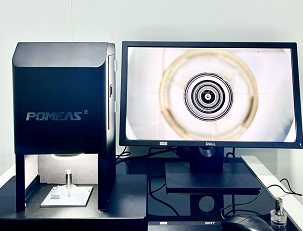
Challenges in inspection: The samples vary in depth due to height differences, making manual focusing difficult.
Typical features of samples such as solder joints and stepped structures are characterized by surfaces that are not flat two-dimensional planes, but rather exhibit height variations ranging from tens of micrometers to several millimeters.
For example, there is a significant height difference between the center and edges of solder joints on a PCB, while stepped structures on mechanical components form sharp discontinuities. When observed with a standard microscope, the limited depth of field means the operator can only see a clear image at a specific height—focusing on the top of a solder joint blurs the bottom edge;
if the focus is set on the base plane, the top of the solder joint becomes a blurry image. To fully assess the sample’s morphology, defects, or dimensions, the operator must frequently rotate the focus knob manually, repeatedly searching for the focal plane across multiple height levels.
For batch inspection tasks, this “focus—observe—refocus” cycle significantly slows down the process, and prolonged work can easily lead to visual fatigue and misjudgments.
Testing Solution: Autofocus Video Microscope Delivers Clear Images with a Single Click
Addressing the challenges of focusing on samples with significant height differences, the new generation of autofocus video microscopes offers an efficient and intelligent solution.
1. One-click autofocus algorithm: The device features a built-in high-speed image processing chip and a precision motor drive system. With a simple click of the mouse, the microscope automatically drives the lens to achieve rapid focusing within a preset range.
2. Adjustable multi-angle lighting system: Samples with significant height differences often present issues such as glare, shadows, or uneven diffuse reflection—dark areas on stepped surfaces and highly reflective regions on solder joint tops can easily interfere with focusing accuracy. The autofocus video microscope is typically equipped with a ring light, allowing the operator to flexibly adjust the illumination intensity based on the sample’s material and morphology. For example, low-angle side lighting can be used to highlight the contour features of solder joint edges, or coaxial lighting can be used to eliminate specular reflections on stepped surfaces, thereby providing the autofocus algorithm with stable, high-contrast raw images that significantly improve focus success rates and repeatability.
Advantages of the Solution: Comprehensive Improvements in Efficiency, Accuracy, and Ease of Use
1. Significantly improves inspection efficiency: A single “one-click focus” typically takes less than 1 second and requires no manual intervention.
2. Eliminates human error for more reliable results: Manual focusing habits vary among operators, which can lead to discrepancies in height measurements or defect classifications for the same solder joint. The autofocus system consistently applies the same algorithm to achieve stable focus, ensuring high data repeatability. This is particularly suitable for scenarios requiring strict quantitative evaluation (such as solder joint height and step flatness).
3. Lower the learning curve and reduce labor intensity: New employees can get started without extensive training; simply place the sample and click the mouse to obtain a clear image.
4. Compatibility with complex sample geometries: Thanks to adjustable lighting and multi-focus surface fusion technology, the autofocus system operates reliably even when the sample surface features high reflectivity, deep grooves, or steep steps.
Product recommendation
TECHNICAL SOLUTION
MORE+You may also be interested in the following information
FREE CONSULTING SERVICE
Let’s help you to find the right solution for your project!
 ASK POMEAS
  PRICE INQUIRY
  REQUEST DEMO/TEST
  FREE TRIAL UNIT
  ACCURATE SELECTION
- APPICATION CASE
- RESOURCE CENTER
- DOWNLOAD CENTER
SOLUTIONS SUPPORT
- ZOOM LENS SELECTION TOOL
- TELECENTRIC LENS SELECTION TOOL
- FA LENS SELECTION TOOL
- ZOOM RATIO TABLE
- CERTIFIED MODEL
SELECTION TOOL
- WHY POMEAS
- FAQ
- PRIVACY POLICY
- TERMS OF USE
- DELIVERY & RETURN POLICY
CUSTOMER CARE
 ADDRESS
Add.:No.68, Yongwei Road, Baizhoubian, Dongcheng District, Dongguan, China,523000
CONTACT
 Tel:+ 86-0769-2266 0867
 Fax:+ 86-0769-2266 0867
 E-mail:marketing@pomeas.com

Wechat QR code

Software Copyright :2021SR0176001 抄袭必究, 技术支持:誉新源科技