


Against the backdrop of rapid advancements in modern manufacturing toward high precision, high efficiency, and automation, Telecentric Measurement Systems serve as critical equipment for controlling product quality and enhancing production efficiency. The appropriateness of the system selection directly impacts the smooth operation of production processes and the stability of product quality. Therefore, when purchasing a Telecentric Measurement System, decisions should not be made blindly based on a single parameter or price alone. Instead, a comprehensive and detailed evaluation must be conducted across multiple dimensions—including hardware performance, software functionality, and automation integration capabilities—to ensure that the selected equipment precisely meets actual production requirements.

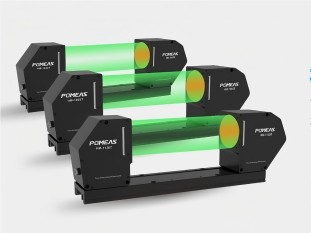
I. Key Considerations for Selecting Hardware Specifications
1. Measurement Range and Field of View
The measurement range must be fully compatible with the actual dimensions of the workpiece to be measured. Careful consideration should be given to the workpiece’s maximum and minimum dimensions to ensure that the equipment can fully cover the workpiece’s measurement area. Additionally, a 10%–20% operational margin should be reserved to prevent measurement failures caused by workpiece dimensional deviations. The field of view should be selected based on the workpiece’s maximum measurement dimensions. For workpieces exceeding the field of view, equipment with automatic stitching capabilities can eliminate errors caused by manual workpiece repositioning, thereby improving measurement efficiency for large-sized workpieces.
2. Accuracy and Repeatability
Accuracy is the core metric for evaluating a measuring instrument’s precision; it determines how closely the measured results align with the true values. In industries with extremely high precision requirements, such as aerospace and automotive parts manufacturing, equipment capable of micrometer-level accuracy is typically required. Repeatability reflects the consistency of measurement results under identical conditions; the smaller the repeatability error, the higher the reliability of the measurement data. Generally, repeatability errors must be controlled within a narrow range—such as ±0.001 mm—to ensure the stability of measurement results during mass production.
3. Resolution and Magnification
Resolution determines a device’s ability to detect minute dimensional changes; high-resolution devices can capture finer details of workpiece features. For measuring precision parts such as electronic components and micro-hardware, a high-resolution camera is required, while for standard parts, the resolution can be selected based on specific needs to balance accuracy and cost. Magnification must balance measurement accuracy with field of view. High-magnification modes are suitable for measuring features such as micro-apertures and fine lines at the 0.1 mm level, while low-magnification modes allow for rapid, comprehensive inspection of large workpieces without frequent equipment switching.
4. Measurement Speed and Efficiency
In continuous production line operations, measurement speed directly impacts overall production efficiency. High-quality Telecentric Measurement Systems achieve rapid image acquisition and data processing by optimizing hardware architecture—such as using high-performance image sensors and high-speed data transmission modules—combined with efficient image processing algorithms. This reduces the time required for each measurement and ensures the system can keep pace with the production line’s rhythm.
II. Considerations Regarding Software Functionality
1. Measurement Programming Efficiency
Efficient measurement programming can significantly reduce setup time, which is particularly important for standardized parts in mass production. High-quality software should feature an intuitive, user-friendly programming interface that supports various methods, such as graphical programming and automatic programming. Operators do not need advanced programming knowledge; they can quickly create measurement programs through simple drag-and-drop and click operations. Additionally, the software should support saving measurement templates, allowing users to directly recall them when measuring the same workpieces in the future, thereby avoiding repetitive programming.
2. Data Analysis and Reporting Capabilities
As the “brain” of an online projection measuring system, the software is responsible for data acquisition, analysis, processing, and transmission. The strength of its capabilities directly impacts the efficiency of the measurement process and the extraction of value from the data. Choose a software system that supports exporting to multiple data formats, offers comprehensive statistical analysis functions, and provides a wide range of report templates.
3. Automation Integration Capabilities
In modern smart manufacturing environments, measurement equipment must integrate seamlessly with other production line devices. Select a measurement system that supports standard communication protocols (such as Modbus and TCP/IP) and features robust open interfaces to facilitate automated data acquisition and process control.
III. Application Scenario Matching
-
Small precision parts: Such as tiny components in smartphone camera modules, chip pins, and accessories for medical micro-instruments, which require extremely high precision and call for equipment with a moderate measurement range but exceptional accuracy.
-
Medium-sized parts: Such as standard hardware components and plastic parts, which require a balance between field of view and accuracy, necessitating equipment with a wide measurement range and moderate precision.
-
Large parts or large-area measurements: Such as automotive components and large molds, which require models with an extra-wide field of view. Although accuracy is relatively lower, these models still provide reliable results in the context of large-scale measurements.
IV. Summary of the Product Selection Decision-Making Process
1. Define measurement requirements: Determine key metrics such as the size range of the workpieces to be measured, accuracy requirements, and measurement cycle time.
2. Evaluate hardware specifications: Match key parameters such as measurement range, accuracy, resolution, and speed to the requirements.
3. Assess software capabilities: Evaluate programming ease, data analysis capabilities, and system integration.
4. Consider environmental adaptability: Ensure the equipment can operate stably in the actual working environment.
5. Balance performance and cost: Select the solution with the best cost-performance ratio while meeting technical requirements.
6. Validation and testing: Arrange prototype testing whenever possible to verify equipment performance under actual operating conditions.
Product recommendation
TECHNICAL SOLUTION
MORE+You may also be interested in the following information
FREE CONSULTING SERVICE
Let’s help you to find the right solution for your project!
 ASK POMEAS
  PRICE INQUIRY
  REQUEST DEMO/TEST
  FREE TRIAL UNIT
  ACCURATE SELECTION
- APPICATION CASE
- RESOURCE CENTER
- DOWNLOAD CENTER
SOLUTIONS SUPPORT
- ZOOM LENS SELECTION TOOL
- TELECENTRIC LENS SELECTION TOOL
- FA LENS SELECTION TOOL
- ZOOM RATIO TABLE
- CERTIFIED MODEL
SELECTION TOOL
- WHY POMEAS
- FAQ
- PRIVACY POLICY
- TERMS OF USE
- DELIVERY & RETURN POLICY
CUSTOMER CARE
 ADDRESS
Add.:No.68, Yongwei Road, Baizhoubian, Dongcheng District, Dongguan, China,523000
CONTACT
 Tel:+ 86-0769-2266 0867
 Fax:+ 86-0769-2266 0867
 E-mail:marketing@pomeas.com

Wechat QR code

Software Copyright :2021SR0176001 抄袭必究, 技术支持:誉新源科技