


What are the advantages of spectral confocal displacement sensors?
In the field of precision measurement, spectral confocal displacement sensors—advanced measurement devices based on the principle of wavelength modulation—are rapidly gaining widespread adoption in industries such as precision manufacturing, semiconductors, and healthcare, thanks to a range of unique advantages.

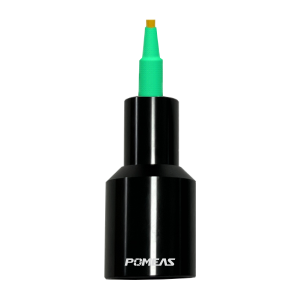
The advantages of spectral confocal displacement sensors stem from their unique operating principle: by utilizing the axial chromatic aberration of optical lenses, light of different wavelengths is focused at different heights; by analyzing the wavelengths of light reflected back to the spectrometer, the absolute distance is calculated. This mechanism naturally endows the sensor with numerous characteristics that traditional sensors struggle to achieve.

Advantages of Spectral Confocal Displacement Sensors
1. True non-contact measurement: zero damage and high cleanliness
The sensor detects by focusing a light spot, making no physical contact with the workpiece whatsoever. This fundamentally eliminates the risk of scratches, deformation from pressure, or secondary contamination. This is crucial for sensitive surfaces such as precision optical components and semiconductor wafers, making it an ideal choice for cleanroom environments.
2. Ultra-high precision and exceptional linearity
Thanks to spectral wavelength resolution, the sensor achieves nanometer-level resolution. At the same time, it offers excellent measurement linearity, providing highly reliable absolute distance data across the entire measurement range without the need for complex nonlinear calibration tables, making it highly suitable for motion platforms requiring closed-loop feedback control.
3. Adaptability to Multiple Materials
This is one of the most significant advantages over traditional laser displacement sensors. Spectral confocal displacement sensors are insensitive to surface materials; whether dealing with mirror-like reflections, transparent glass, rough metal, or dark rubber, stable signals can be obtained without the need for recalibration or powder coating. This characteristic gives it an irreplaceable role in glass thickness measurement and the scanning of multi-layered transparent materials.
4. Compact Probe Design for Access to Tight Spaces
The sensor’s optical probe can be made very small and is typically separated from the controller via an optical fiber. This compact design facilitates integration into robotic arm end-effectors or narrow workstations, and allows for measurements inside tiny holes or deep grooves using extension probes.
5. Unobstructed coaxial optical path design
The optical path is perfectly coaxial with the measurement axis, completely eliminating the shadowing effects and obstruction issues commonly found in triangulation sensors. This advantage plays a decisive role in applications such as deep hole depth measurement and scanning the contours at the base of steps.
6. Easy Integration into Automated Measurement Applications
Thanks to its compact size, high-speed sampling capability, and standardized communication interfaces, the spectral confocal displacement sensor can be seamlessly integrated into automated production lines, dedicated inspection machines, and robotic systems, serving as a core component of in-line quality control.
Product recommendation
TECHNICAL SOLUTION
MORE+You may also be interested in the following information
FREE CONSULTING SERVICE
Let’s help you to find the right solution for your project!

 ASK POMEAS
  PRICE INQUIRY
  REQUEST DEMO/TEST
  FREE TRIAL UNIT
  ACCURATE SELECTION
- APPICATION CASE
- RESOURCE CENTER
- DOWNLOAD CENTER
SOLUTIONS SUPPORT
- ZOOM LENS SELECTION TOOL
- TELECENTRIC LENS SELECTION TOOL
- FA LENS SELECTION TOOL
- ZOOM RATIO TABLE
- CERTIFIED MODEL
SELECTION TOOL
- WHY POMEAS
- FAQ
- PRIVACY POLICY
- TERMS OF USE
- DELIVERY & RETURN POLICY
CUSTOMER CARE
 ADDRESS
Add.:No.68, Yongwei Road, Baizhoubian, Dongcheng District, Dongguan, China,523000
CONTACT
 Tel:+ 86-0769-2266 0867
 Fax:+ 86-0769-2266 0867
 E-mail:marketing@pomeas.com

Wechat QR code

Software Copyright :2021SR0176001 抄袭必究, 技术支持:誉新源科技