


Key Considerations for Selecting Industrial Line-Scan Cameras: Image Sensor and Focal Length
Line-scan imaging technology is widely used in continuous industrial inspection. As a critical optical component, the lens directly determines image quality and inspection accuracy; selecting the right lens is key to enhancing the stability of vision systems.
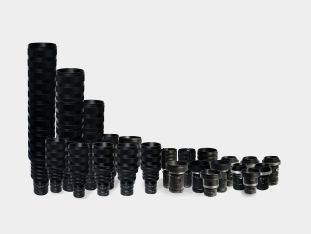

During the selection process, the first step is to match the camera’s sensor size with the lens’s focal length, and then calculate the magnification based on the working distance and field of view to ensure that the target area is fully captured. Second, prioritize line-scan lenses with low distortion and high uniformity, particularly for long-distance, wide-area inspection scenarios, as uniform imaging can significantly reduce the complexity of image processing. Additionally, the lens features an adjustable aperture, allowing for flexible adaptation to varying lighting conditions and ensuring stable exposure during high-speed scanning.
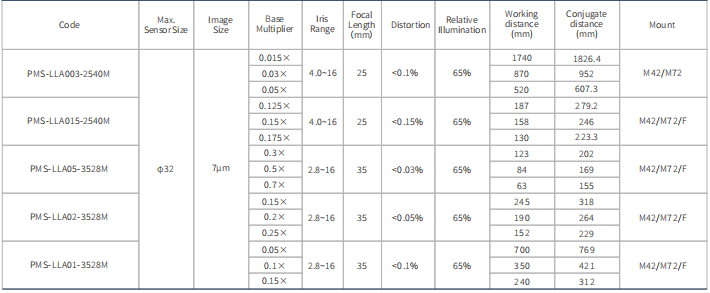
Industrial line-scan lenses utilize a multi-element optical design to optimize light transmission, reduce stray light interference, and ensure consistent image quality from the center to the edges. They are suitable for inspecting continuous roll materials such as paper, film, metal sheets, textiles, and photovoltaic wafers, as well as for defect detection in long components, rail transit parts, and printed materials. With a compact design and easy installation, these cameras offer strong compatibility and can be quickly integrated into various line-scan vision systems. Their stable and reliable optical performance meets the demands of high-precision, high-speed, and continuous inspection in industrial production.
Product recommendation
TECHNICAL SOLUTION
MORE+You may also be interested in the following information
FREE CONSULTING SERVICE
Let’s help you to find the right solution for your project!
 ASK POMEAS
  PRICE INQUIRY
  REQUEST DEMO/TEST
  FREE TRIAL UNIT
  ACCURATE SELECTION
- APPICATION CASE
- RESOURCE CENTER
- DOWNLOAD CENTER
SOLUTIONS SUPPORT
- ZOOM LENS SELECTION TOOL
- TELECENTRIC LENS SELECTION TOOL
- FA LENS SELECTION TOOL
- ZOOM RATIO TABLE
- CERTIFIED MODEL
SELECTION TOOL
- WHY POMEAS
- FAQ
- PRIVACY POLICY
- TERMS OF USE
- DELIVERY & RETURN POLICY
CUSTOMER CARE
 ADDRESS
Add.:No.68, Yongwei Road, Baizhoubian, Dongcheng District, Dongguan, China,523000
CONTACT
 Tel:+ 86-0769-2266 0867
 Fax:+ 86-0769-2266 0867
 E-mail:marketing@pomeas.com

Wechat QR code

Software Copyright :2021SR0176001 抄袭必究, 技术支持:誉新源科技