


A 360° internal wall inspection lens is not what we commonly refer to as an endoscope. Although both can be used to view the interior of objects, there are fundamental differences between them in terms of imaging principles and practical applications—one is like ‘taking a panoramic photograph’, whilst the other is like ‘examining a surface point by point with a probe’.

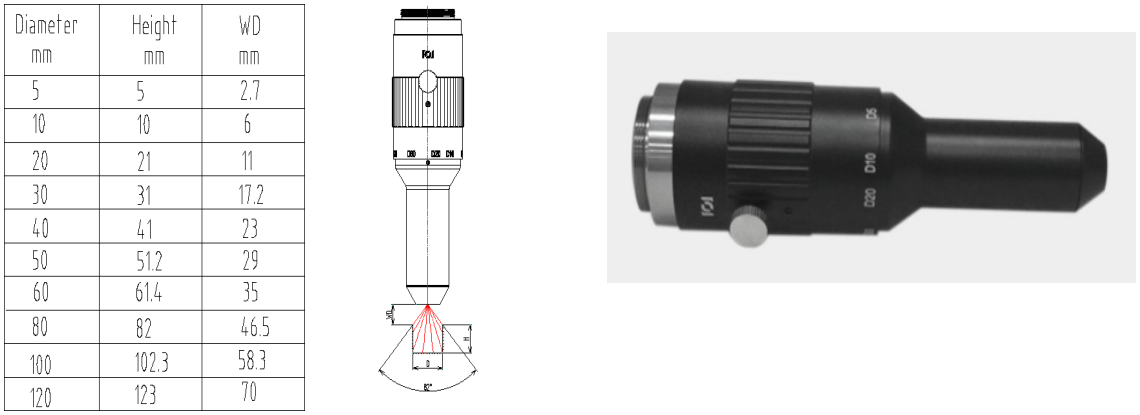
Differences In Working Principles
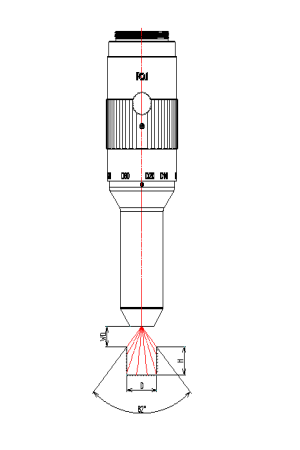
The secret behind the 360° internal wall inspection lens lies in its specialised optical design. It typically utilises components such as conical reflectors and panoramic ring lenses to converge the entire circumferential view of the internal wall of a pipe or cavity onto the image sensor in a single pass, forming a ring-shaped image which is then ‘unwrapped’ by software to create a complete flat rectangular image. In other words, simply by inserting the inspection probe, it is possible to capture high-definition images of the entire circumference of the inner wall within milliseconds, without any rotation, leaving no blind spots or omissions.

An endoscope, on the other hand, is more like a flexible probe equipped with its own light source and a miniature camera. Its lens is usually either straight-view or side-view, with a limited field of view that allows observation of only a small area directly in front of it. To examine the area around the tube wall, the probe must be rotated manually, or the swivel mechanism must be operated to alter the viewing angle incrementally. The entire process involves sequential observation; the images are fragmented and rely on the operator’s experience and patience.
Differences In Practical Application
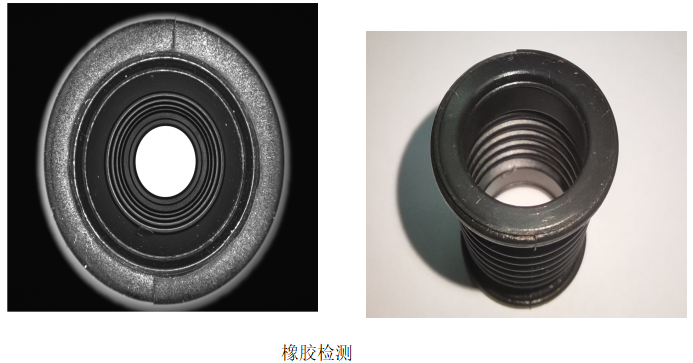
The 360° internal wall inspection lens is designed for speed and comprehensiveness. On automated production lines, when inspecting the internal walls of engine cylinder bores, hydraulic valve bodies, precision bearings and similar components, the workpiece is fed to the workstation and a full-view image is captured the moment the lens extends. The software immediately analyses the image to detect any sand holes, scratches or burrs. The cycle time is extremely fast, and the generated unfolded image facilitates dimensional measurement, archiving and traceability. It is equally suitable for applications such as gun barrels and deep-bore components, where panoramic scanning is required and no defects can be overlooked.

The advantages of endoscopes lie in their flexibility and accessibility. When dealing with curved, narrow passages with complex internal structures—such as turbine blades in aircraft engines, weld seams in industrial pipes, or the inspection of carbon deposits inside motor vehicles—the flexible insertion tube of an endoscope can manoeuvre around obstacles, reach close to the target area, and use a side-view lens to examine the surface in detail. Although less efficient than panoramic lenses, endoscopes can access complex cavities that panoramic probes cannot reach, making them an indispensable aid for fault diagnosis and borescope inspection.
Product recommendation
TECHNICAL SOLUTION
MORE+You may also be interested in the following information
FREE CONSULTING SERVICE
Let’s help you to find the right solution for your project!
 ASK POMEAS
  PRICE INQUIRY
  REQUEST DEMO/TEST
  FREE TRIAL UNIT
  ACCURATE SELECTION
- APPICATION CASE
- RESOURCE CENTER
- DOWNLOAD CENTER
SOLUTIONS SUPPORT
- ZOOM LENS SELECTION TOOL
- TELECENTRIC LENS SELECTION TOOL
- FA LENS SELECTION TOOL
- ZOOM RATIO TABLE
- CERTIFIED MODEL
SELECTION TOOL
- WHY POMEAS
- FAQ
- PRIVACY POLICY
- TERMS OF USE
- DELIVERY & RETURN POLICY
CUSTOMER CARE
 ADDRESS
Add.:No.68, Yongwei Road, Baizhoubian, Dongcheng District, Dongguan, China,523000
CONTACT
 Tel:+ 86-0769-2266 0867
 Fax:+ 86-0769-2266 0867
 E-mail:marketing@pomeas.com

Wechat QR code

Software Copyright :2021SR0176001 抄袭必究, 技术支持:誉新源科技