


Testing Requirements
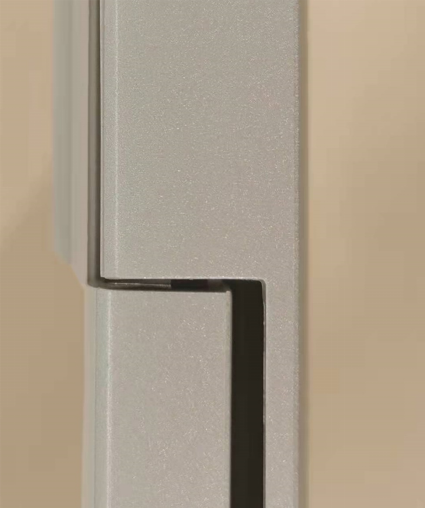
During the laptop manufacturing process, the uniformity of side gaps and the precise control of surface unevenness are critical factors that affect both the product’s aesthetic quality and overall performance. Excessively wide side gaps not only compromise the device’s appearance but may also affect its seal integrity and the stability of internal components; meanwhile, surface unevenness can result in a rough exterior, negatively impacting the user experience. Therefore, precise inspection of laptop side gaps and surface unevenness is of paramount importance.
Testing Protocol
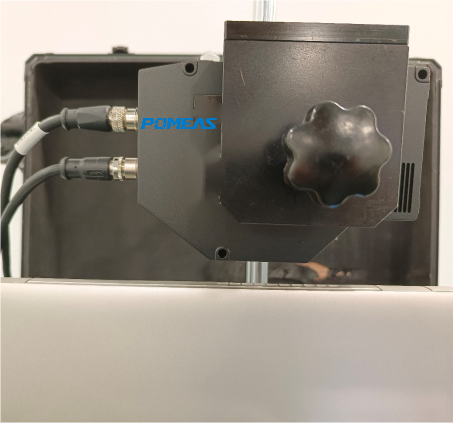
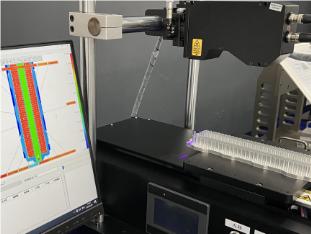
The solution employs a 3D laser profile sensor for inspection. The sensor is mounted at the upper workstation, and the product moves horizontally beneath it. The sensor emits a line laser to scan the product’s surface and capture real-time surface profile data. Given the characteristics of gaps along the sides of laptops and surface irregularities, the system precisely identifies gap areas and flat surfaces requiring inspection during the scanning process, thereby providing accurate target areas for subsequent data processing.
Methods for Detecting Gaps and Surface Discontinuities
-
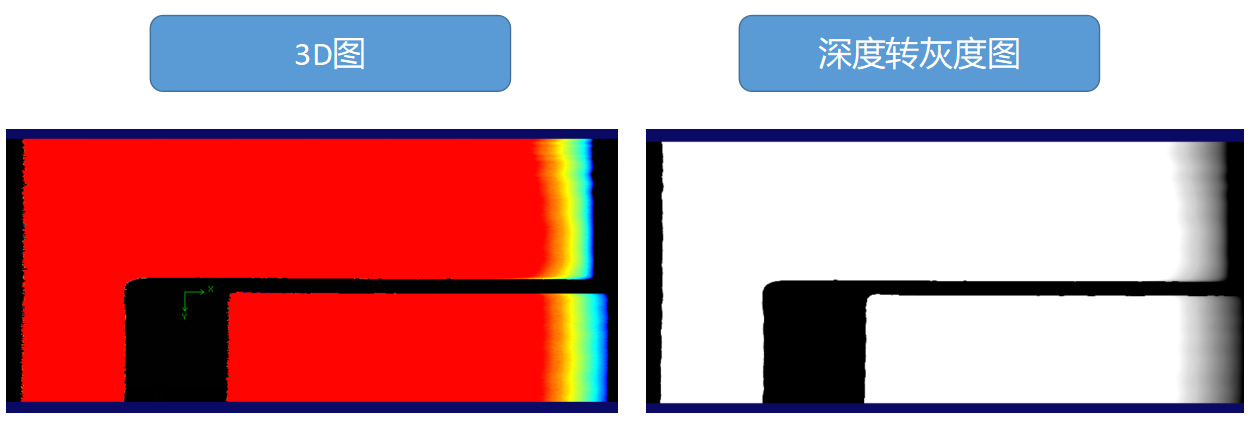
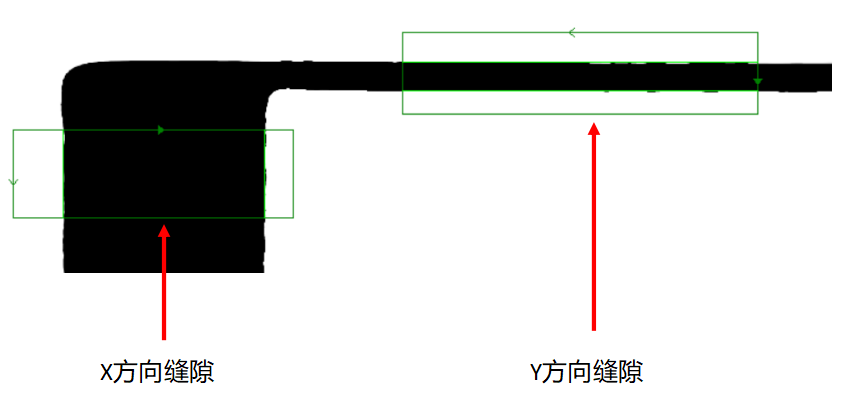
Gap Detection:Using image processing tools, the depth map captured by the sensor is converted into a grayscale image. Median filtering is then applied to optimize the grayscale image, effectively removing noise interference and making the edge contours clearer. Finally, the caliper tool in the program is used to precisely measure the width of the gap on the optimized image.
-
Detection of Level Differences:Within the selected planar area, a reference plane is fitted using an appropriate algorithm. Using the 3D elevation measurement tool, the elevation differences between each point in the planar area and the reference plane are measured, thereby accurately calculating the elevation difference across the plane.
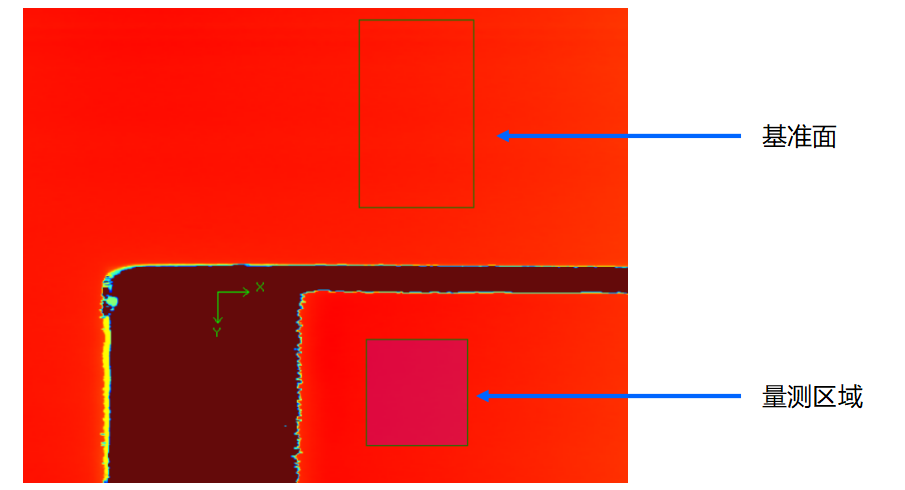
Data Feedback Guide
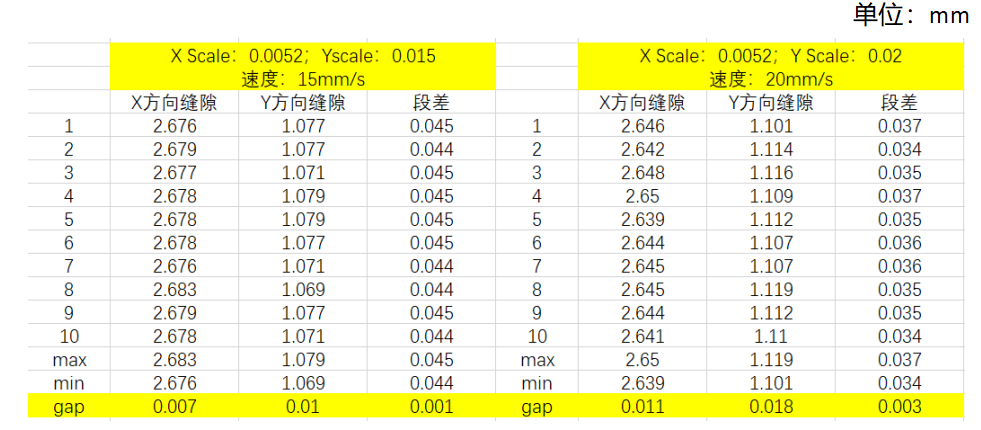
Analysis of the measurement data from 10 static measurements shows that this testing method achieves a repeatability of within 0.02 mm for gap width measurements and within 0.01 mm for surface level differences, demonstrating exceptional measurement stability and accuracy.
Advantages of the Testing Protocol
-
High-Precision Measurement: Combining advanced image processing and measurement algorithms, the line laser profile sensor enables micron-level measurement of gaps and surface unevenness in laptops, meeting the stringent quality control requirements of high-end laptop production.
-
Non-Contact Inspection: Since the sensor does not require direct contact with the product, it avoids scratches or damage that may result from traditional contact-based inspection. Additionally, measurement results are not affected by contact force, ensuring the objectivity and accuracy of the inspection.
-
High Efficiency and Speed: Products are scanned as they move horizontally beneath the sensor. The highly automated inspection process completes product checks in a short time, thereby improving production efficiency.
-
High Data Reliability: Verified through multiple static measurements, the system offers high repeatability, providing reliable data support for quality control during production. This helps identify issues promptly and facilitates timely adjustments.
Product recommendation
TECHNICAL SOLUTION
MORE+You may also be interested in the following information
FREE CONSULTING SERVICE
Let’s help you to find the right solution for your project!
 ASK POMEAS
  PRICE INQUIRY
  REQUEST DEMO/TEST
  FREE TRIAL UNIT
  ACCURATE SELECTION
- APPICATION CASE
- RESOURCE CENTER
- DOWNLOAD CENTER
SOLUTIONS SUPPORT
- ZOOM LENS SELECTION TOOL
- TELECENTRIC LENS SELECTION TOOL
- FA LENS SELECTION TOOL
- ZOOM RATIO TABLE
- CERTIFIED MODEL
SELECTION TOOL
- WHY POMEAS
- FAQ
- PRIVACY POLICY
- TERMS OF USE
- DELIVERY & RETURN POLICY
CUSTOMER CARE
 ADDRESS
Add.:No.68, Chongwei Road, Baizhoubian, East district, Dongguan, China, 523000
CONTACT
 Tel:+ 86-0769-2266 0867
 Fax:+ 86-0769-2266 0867
 E-mail:marketing@pomeas.com

Wechat QR code

Software Copyright :2021SR0176001 抄袭必究, 技术支持:誉新源科技