


As demand for microscopic observation continues to grow, electric zoom autofocus microscopes—thanks to their combination of efficiency, precision, and ease of use—are gradually replacing traditional manual equipment and becoming the mainstream choice in fields such as industrial manufacturing, scientific research, and education. Their core advantages can be summarized in the following five points:

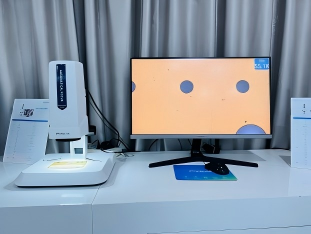
Reason 1: Multiple Focusing Modes, Suitable for a Variety of Observation Scenarios
The device supports three focusing modes—manual, one-touch, and autofocus—which can be flexibly switched according to observation needs. For detailed observation of precision samples, manual focusing enables micron-level fine-tuning to precisely control the focal plane; For rapid screening of bulk samples, one-touch focusing instantly locks onto the observation target, significantly reducing the time spent on focusing; for moving samples or continuous observation scenarios, autofocus tracks the focal plane in real time, ensuring consistently clear imaging. This multi-mode focusing system not only meets the precision requirements of detailed research but also accommodates the efficiency demands of industrial production lines, offering greater versatility.
Reason 2: Four-zone light source for clearer microscopic observation

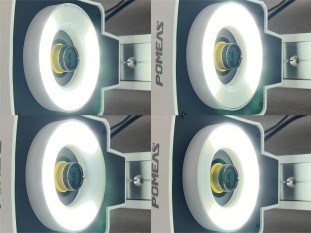
Equipped with four independently controllable light sources, it allows for separate adjustment of brightness and illumination angles in different zones, effectively addressing issues such as glare, shadows, and insufficient contrast commonly associated with traditional single-light-source systems. When examining samples made of different materials—such as metal workpieces, circuit boards, and transparent films—zoned illumination eliminates surface glare, revealing the sample’s true morphology, texture, and structural details. This significantly enhances image clarity and depth, resulting in more accurate and reliable observation results.
Reason 3: Built-in motorized zoom lens with a wide optical zoom range

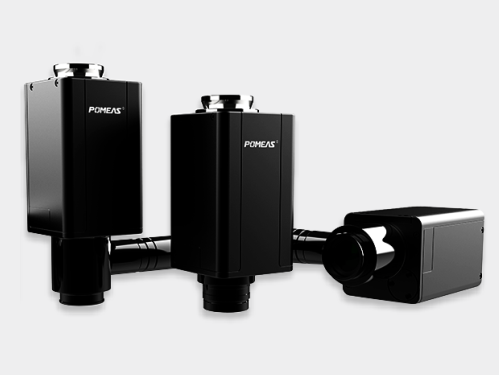
Equipped with a built-in motorized zoom lens, there is no need to manually rotate the lens barrel to adjust the magnification; continuous zoom is achieved through electronic control, making operation more convenient and ensuring higher magnification accuracy. The device offers a wide range of optical magnification, enabling seamless switching from low-magnification panoramic views to high-magnification detailed observations. Additionally, the motorized zoom provides excellent repeatability and consistent magnification during batch inspections, eliminating errors caused by manual adjustment and making it particularly well-suited for standardized industrial inspection scenarios.
Reason 4: Comes with built-in basic measurement software, integrating observation and analysis

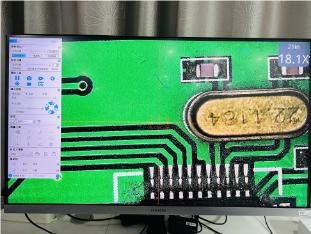
The device comes equipped with built-in basic measurement software, eliminating the need for an additional professional measurement system. It allows users to measure and annotate basic dimensions—such as length, angle, area, and radius—while simultaneously capturing images. Data can be read and recorded directly, streamlining the traditional “observation—recording—calculation” process. This not only reduces additional equipment costs but also improves work efficiency in scenarios such as production line spot checks and educational demonstrations.
Reason 5: All-in-one design, suitable for all industry scenarios

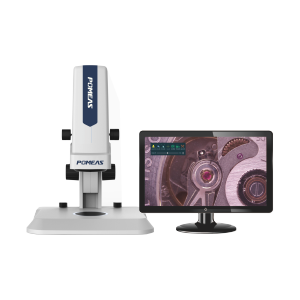
Featuring a monolithic, integrated design that combines the objective lens, light source, imaging system, and measurement software into a single unit, this system is easy to deploy and requires no complex assembly or calibration. Whether for observing biological samples or analyzing material structures in research and education, or for quality inspection of precision parts, PCB board inspection, and semiconductor visual screening in industrial manufacturing, it can be quickly adapted for use. With its high versatility, it meets the microscopic observation needs of a wide range of industries.
Overall, the motorized zoom and autofocus microscope balances operational efficiency, imaging accuracy, and versatility across various applications, making it a cost-effective choice for upgrading microscopic observation equipment.

TECHNICAL SOLUTION
MORE+You may also be interested in the following information

FREE CONSULTING SERVICE
Let’s help you to find the right solution for your project!
 ASK POMEAS
 PRICE INQUIRY
 REQUEST DEMO/TEST
 FREE TRIAL UNIT
 ACCURATE SELECTION

- APPICATION CASE
- RESOURCE CENTER
- DOWNLOAD CENTER
SOLUTIONS SUPPORT
- ZOOM LENS SELECTION TOOL
- TELECENTRIC LENS SELECTION TOOL
- FA LENS SELECTION TOOL
- ZOOM RATIO TABLE
- CERTIFIED MODEL
SELECTION TOOL
- WHY POMEAS
- FAQ
- PRIVACY POLICY
- TERMS OF USE
- DELIVERY & RETURN POLICY
CUSTOMER CARE
 ADDRESS
Add.:No.68, Yongwei Road, Baizhoubian, Dongcheng District, Dongguan, China,523000
CONTACT
 Tel:+ 86-0769-2266 0867
 Fax:+ 86-0769-2266 0867
 E-mail:marketing@pomeas.com

Wechat QR code

Software Copyright :2021SR0176001 抄袭必究, 技术支持:誉新源科技