


How do I choose between a black-and-white camera and a color camera?
The previous article covered case studies and common pitfalls; this one focuses specifically on the practical applications of black-and-white and color cameras, as well as the easily overlooked mistakes made when selecting lenses.

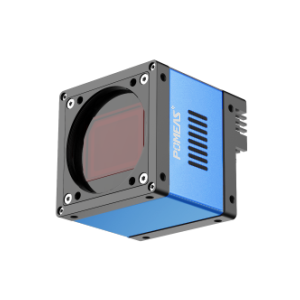
Let’s start with monochrome cameras. Many experienced engineers know that when it comes to dimensional measurement, defect detection, and laser scanning, monochrome is the top choice. Why? Because monochrome cameras lack Bayer filters, offering high sensitivity, lossless resolution, and superior edge sharpness. Take lithium-ion electrode defect detection, for example: with wide fields of view and high speeds, only a monochrome line-scan camera paired with a high-intensity line light source can capture micron-level coating defects. Another example is 3D laser profilometry. When paired with a narrow-band filter, a monochrome camera can precisely extract the laser line without interference from ambient light—color cameras simply cannot compete in this regard.
Now let’s discuss color cameras. Their core value lies in color information. Color-coded resistance rings on electronic components, color differentiation in automotive wiring harnesses, and color discrepancies in food packaging printing—these applications absolutely require color cameras. However, it’s important to note that color cameras have a sensitivity 1.5 to 2 stops lower than monochrome cameras of the same model, and they suffer from interpolation loss at image edges. Therefore, if your application doesn’t rely on color, don’t choose a color camera just because you think “it might come in handy later”—doing so will sacrifice accuracy and stability.
Next is the most common mistake made when selecting lenses. I’ve seen far too many people using high-resolution cameras paired with standard lenses, resulting in images so soft they look like “seeing through a fog.” The lens’s resolution must match the camera’s specifications, and ideally, there should be some margin for improvement. POMEAS’s high-resolution industrial lenses excel in this regard, allowing high-pixel cameras to perform to their full potential.
Another common mistake is ignoring distortion. In measurement applications, people often use non-telecentric lenses and rely on post-processing software for correction. As a result, measurement values fluctuate whenever the position of the workpiece changes. Although telecentric lenses are a bit more expensive, they are essential for precision measurement.
Then there’s mount compatibility. C-mount, F-mount, M42… Many people only realize after purchasing that the lens won’t fit, or that the flange distance is incorrect, making it impossible to focus. Be sure to confirm the mount and sensor size before selecting a lens.
Finally, there’s the aperture. Many people open the aperture all the way, thinking that more light is always better. The result is a shallow depth of field and blurry edges. For industrial lenses, the aperture should be adjusted based on depth-of-field requirements, not on a hunch.
Selecting the right equipment is a systematic process; the camera, lens, light source, and algorithms are all interconnected. Avoiding these pitfalls means your project is already halfway to success.
Product recommendation
TECHNICAL SOLUTION
MORE+You may also be interested in the following information
FREE CONSULTING SERVICE
Let’s help you to find the right solution for your project!
 ASK POMEAS
  PRICE INQUIRY
  REQUEST DEMO/TEST
  FREE TRIAL UNIT
  ACCURATE SELECTION
- APPICATION CASE
- RESOURCE CENTER
- DOWNLOAD CENTER
SOLUTIONS SUPPORT
- ZOOM LENS SELECTION TOOL
- TELECENTRIC LENS SELECTION TOOL
- FA LENS SELECTION TOOL
- ZOOM RATIO TABLE
- CERTIFIED MODEL
SELECTION TOOL
- WHY POMEAS
- FAQ
- PRIVACY POLICY
- TERMS OF USE
- DELIVERY & RETURN POLICY
CUSTOMER CARE
 ADDRESS
Add.:No.68, Yongwei Road, Baizhoubian, Dongcheng District, Dongguan, China,523000
CONTACT
 Tel:+ 86-0769-2266 0867
 Fax:+ 86-0769-2266 0867
 E-mail:marketing@pomeas.com

Wechat QR code

Software Copyright :2021SR0176001 抄袭必究, 技术支持:誉新源科技