


Key Considerations for Selecting and Implementing ZOOM LENSes in Visual Inspection
After spending so many years in the machine vision industry, I’ve come to realize one thing more and more clearly: the choice of optical system often determines the upper limit of an entire inspection project. No matter how well the algorithms are tuned in the early stages of a project, if the wrong optical components are selected, it’s nearly impossible to make up for it later on. And among all optical components, I believe ZOOM LENSes are the type of product that most truly tests an engineer’s experience.

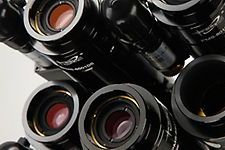
First, let’s discuss the fundamental problem that ZOOM LENSES solve. In visual inspection, “field of view” and “resolution” are always at odds. If you want a wide field of view, you have to accept lower resolution; if you want to see fine details clearly, you have to sacrifice the field of view.
The traditional approach involves installing multiple cameras—one wide-angle for positioning and one high-magnification for inspection—but this is not only costly but also introduces errors from coordinate transformations. The core value of a ZOOM LENS lies in its ability to perform both “locating” and “inspecting” functions simultaneously at the same workstation without moving the product.

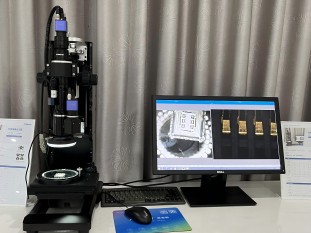
Essential Tips for Product Selection:
First, during the process flow, the camera is set to low magnification to quickly locate the product’s reference points or areas of interest using a wide field of view. This step does not require high precision; it is sufficient to simply frame the target.
Once positioning is complete, the system automatically switches to the preset high magnification for detailed measurement or defect detection of the specific area. The entire process is smooth and seamless, saving on hardware costs for an additional workstation while also eliminating repositioning errors caused by moving the product between different stations.
Note: ZOOM LENSes are not plug-and-play.
Many engineers new to the field tend to overlook the issue of calibration. At different magnifications, a lens’s distortion characteristics and pixel equivalence vary. If you calibrate only once at high magnification and then switch to low magnification for measurement, the results will inevitably show significant deviations. My approach is to calibrate each commonly used magnification during system initialization and create a magnification-to-pixel-equivalence mapping table. During measurement, the system automatically applies the corresponding parameters based on the current magnification, ensuring measurement consistency across the entire magnification range.
Another often-overlooked issue is repeatability. With manual zoom, it’s difficult to ensure that the same magnification is achieved every time based solely on feel. With motorized zoom, mechanical backlash in the structure can cause variations. I typically implement unidirectional control in the program—for example, always adjusting from low magnification to high magnification—and only begin measurement after reaching the target magnification. This effectively eliminates mechanical errors. POMEAS products are particularly robust in this regard; as long as calibration is performed properly, long-term operational stability is guaranteed.
ZOOM LENSes are particularly well-suited for inspection scenarios involving numerous product specifications and frequent model changes. Consumer electronics, automotive components, and precision hardware are all typical application areas.
Product recommendation
TECHNICAL SOLUTION
MORE+You may also be interested in the following information
FREE CONSULTING SERVICE
Let’s help you to find the right solution for your project!
 ASK POMEAS
  PRICE INQUIRY
  REQUEST DEMO/TEST
  FREE TRIAL UNIT
  ACCURATE SELECTION
- APPICATION CASE
- RESOURCE CENTER
- DOWNLOAD CENTER
SOLUTIONS SUPPORT
- ZOOM LENS SELECTION TOOL
- TELECENTRIC LENS SELECTION TOOL
- FA LENS SELECTION TOOL
- ZOOM RATIO TABLE
- CERTIFIED MODEL
SELECTION TOOL
- WHY POMEAS
- FAQ
- PRIVACY POLICY
- TERMS OF USE
- DELIVERY & RETURN POLICY
CUSTOMER CARE
 ADDRESS
Add.:No.68, Yongwei Road, Baizhoubian, Dongcheng District, Dongguan, China,523000
CONTACT
 Tel:+ 86-0769-2266 0867
 Fax:+ 86-0769-2266 0867
 E-mail:marketing@pomeas.com

Wechat QR code

Software Copyright :2021SR0176001 抄袭必究, 技术支持:誉新源科技