


Micrometer-Level Bare Fiber Diameter Measurement Solution: 6.5x ZOOM LENS
Measurement Context and Challenges

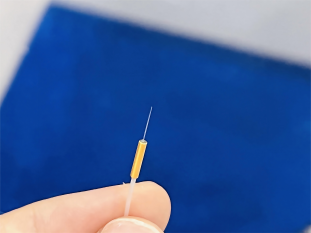
In the fields of fiber optic communications and specialty fiber processing, the standard diameter of uncoated optical fibers (bare fibers) is typically in the millimeter range. For the inspection of such minute geometric dimensions, the absolute accuracy of the measurement system must be consistently maintained within 1 μm to ensure that the data is reliable.
However, conventional industrial vision methods face a twofold challenge: first, standard industrial lenses suffer from severe edge diffraction and blurry imaging at the 0.1 mm scale, making it difficult to extract accurate edges; second, specialized measuring instruments with sub-micron repeatability are extremely costly to purchase and maintain, resulting in an unfavorable cost-benefit ratio for non-mass production R&D or spot-check scenarios.
System Architecture: Building a Compact Optical Imaging System

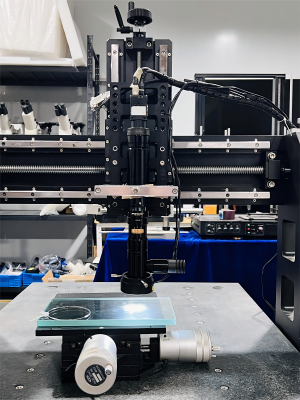
To address these challenges, this validation project developed a highly simplified optical imaging solution. The core concept is to leverage the resolution of a high-performance ZOOM LENS to replace complex and expensive mechanical translation stages.
The hardware configuration is as follows:

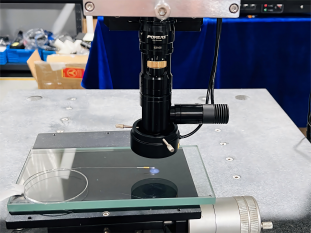
1. Core optical component: 6.5X series continuous ZOOM LENS. This lens features a zoom range of 0.7X to 4.5X; by adjusting the magnification, it can enlarge a 0.1mm target object to a scale clearly distinguishable on the detector’s image plane.
2. Illumination Method: High-intensity annular light source (vertical illumination). The annular light illuminates the fiber end face or outer edge via low-angle diffuse reflection, enhancing the grayscale contrast between the glass edge and the background.
3. Image Acquisition: A high-definition industrial camera captures images directly via the lens interface.
A key feature of this solution is its simple structure, which eliminates the need for precision guide rails. The vision system consists solely of a three-part connection comprising the lens, light source, and camera, making it well-suited for production lines with limited installation space.
Actual Imaging Results and Data Analysis

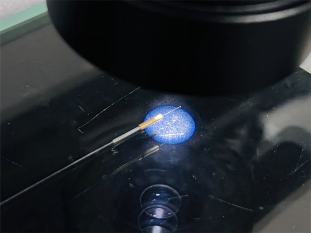
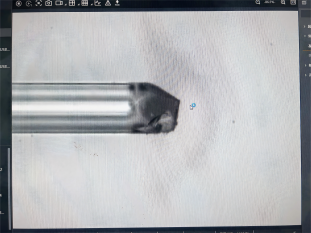
A bare fiber sample with a nominal diameter of 0.1 mm was tested in a laboratory setting. After image acquisition, the edges were extracted using software, with the following results:

1. Sharpness and Distortion Control
Thanks to the optical correction design within the 6.5X series lenses, the edges of the fiber profiles observed within the field of view are sharp, and the black-and-white transition zone is extremely narrow. No noticeable pincushion or barrel distortion was observed at the edges of the image field, indicating that the fiber’s straightness and circularity are faithfully preserved during imaging without geometric distortion.
2. Edge Contrast
With the aid of a ring light, the boundary between the high-refractive-index core and the outer cladding inside the optical fiber becomes clearly visible, providing a clear basis for boundary determination in subsequent measurement algorithms.
3. Repeatability
Under conditions where environmental vibration and temperature were kept relatively constant, multiple consecutive grip measurements were taken at the same location. The data showed that the positional variation of the edge grip was minimal, with a single-pixel accuracy of 0.53 μm/pixel and an overall measurement accuracy of 1 μm.
This validation demonstrates that for the detection of sub-micrometer-scale targets, selecting the optically superior 6.5X series ZOOM LENS enables the development of a cost-effective micrometer-scale measurement solution without relying on expensive measurement instruments.
This solution is particularly suitable for cost-sensitive applications where imaging quality must not be compromised. It proves that relying solely on improvements in the lens’s optical quality is an efficient and cost-effective technical approach to achieving high-precision edge detection.
Product recommendation
TECHNICAL SOLUTION
MORE+You may also be interested in the following information
FREE CONSULTING SERVICE
Let’s help you to find the right solution for your project!
 ASK POMEAS
  PRICE INQUIRY
  REQUEST DEMO/TEST
  FREE TRIAL UNIT
  ACCURATE SELECTION
- APPICATION CASE
- RESOURCE CENTER
- DOWNLOAD CENTER
SOLUTIONS SUPPORT
- ZOOM LENS SELECTION TOOL
- TELECENTRIC LENS SELECTION TOOL
- FA LENS SELECTION TOOL
- ZOOM RATIO TABLE
- CERTIFIED MODEL
SELECTION TOOL
- WHY POMEAS
- FAQ
- PRIVACY POLICY
- TERMS OF USE
- DELIVERY & RETURN POLICY
CUSTOMER CARE
 ADDRESS
Add.:No.68, Yongwei Road, Baizhoubian, Dongcheng District, Dongguan, China,523000
CONTACT
 Tel:+ 86-0769-2266 0867
 Fax:+ 86-0769-2266 0867
 E-mail:marketing@pomeas.com

Wechat QR code

Software Copyright :2021SR0176001 抄袭必究, 技术支持:誉新源科技