


Industrial Vision Inspection Lenses: Combining Large Sensor Size and High Resolution
As smart manufacturing continues to evolve toward higher precision and efficiency, the demands placed on imaging components by machine vision systems are also constantly increasing. Whether it’s inspecting the circuitry on large-format PCBs or screening for pixel-level defects on high-end displays, standard lenses often struggle to balance “seeing the whole picture” with “seeing clearly”—a large sensor area requires a wider field of view, while high resolution is critical for capturing fine details. Striking this balance has become a central challenge in selecting the right equipment for vision inspection projects.

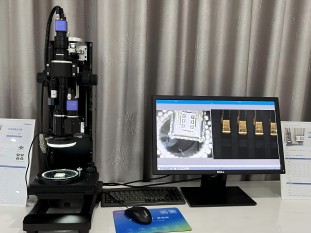
This new generation of industrial vision inspection lenses achieves a synergistic improvement in both large sensor size and high resolution through optimized optical designs and coating processes, providing reliable support for vision applications in the precision manufacturing sector.
I. Supports Large-Area Sensors, Enabling Wider Coverage in a Single Exposure


When inspecting large workpieces or multi-panel materials, if the lens’s image circle is too small, multiple shots are often required to stitch the images together. This is not only inefficient but also prone to errors at the stitching points. The new generation of industrial lenses generally supports industrial cameras with 1.1-inch or even larger sensor sizes. Combined with optimized optical designs, they can cover a wider field of view in a single exposure. This means that in applications such as inspecting smartphone glass covers, photovoltaic silicon wafers, and large-area stamped parts, the number of shots required can be effectively reduced, thereby increasing inspection throughput.
II. High Resolution and Low Distortion Ensure Measurement and Positioning Accuracy

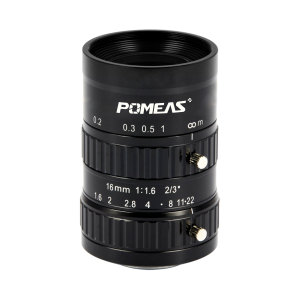
Resolution is a key indicator of a lens’s imaging quality. These industrial lenses are compatible with cameras ranging from 5 to 20 megapixels, with strict control over both center and edge resolution to ensure consistent image clarity across the entire field of view. In precision dimensional measurement and vision-based positioning applications, optical distortion is typically controlled to less than 0.1%, effectively preventing coordinate deviations caused by image distortion. Combined with a low-chromatic-aberration design, these lenses effectively suppress chromatic aberrations such as purple and green fringing even when inspecting high-contrast edges (such as the interface between metal and plastic), thereby enhancing the stability of algorithmic processing.
III. Multi-layer Coating and Compact Design, Suitable for Industrial Environments

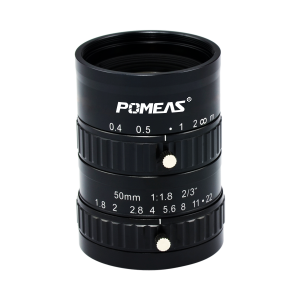
Industrial vision inspection lenses are typically equipped with multi-layer broadband anti-reflective coatings, offering high transmittance in the 400–700 nm visible light spectrum while effectively suppressing glare and ghosting. Even in bright or highly reflective environments (such as when inspecting mirror-like workpieces or coated surfaces), they still deliver clear, high-contrast images. In terms of mechanical design, these lenses feature a compact, lightweight construction that facilitates integration into automated equipment. Both the focus and aperture rings are equipped with locking screws to prevent parameter drift caused by equipment vibration.
Key Insights on Application Scenarios:
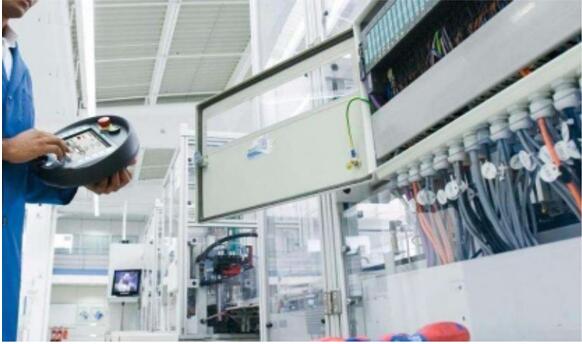
From semiconductor wafer inspection and FPD panel backlight testing to defect detection in lithium-ion electrode coating, industrial vision inspection lenses—with their large sensor area, high resolution, and low distortion—provide reliable optical solutions for precision manufacturing and serve as critical optical components in the upgrading of smart equipment.
Product recommendation
TECHNICAL SOLUTION
MORE+You may also be interested in the following information
FREE CONSULTING SERVICE
Let’s help you to find the right solution for your project!
 ASK POMEAS
  PRICE INQUIRY
  REQUEST DEMO/TEST
  FREE TRIAL UNIT
  ACCURATE SELECTION
- APPICATION CASE
- RESOURCE CENTER
- DOWNLOAD CENTER
SOLUTIONS SUPPORT
- ZOOM LENS SELECTION TOOL
- TELECENTRIC LENS SELECTION TOOL
- FA LENS SELECTION TOOL
- ZOOM RATIO TABLE
- CERTIFIED MODEL
SELECTION TOOL
- WHY POMEAS
- FAQ
- PRIVACY POLICY
- TERMS OF USE
- DELIVERY & RETURN POLICY
CUSTOMER CARE
 ADDRESS
Add.:No.68, Yongwei Road, Baizhoubian, Dongcheng District, Dongguan, China,523000
CONTACT
 Tel:+ 86-0769-2266 0867
 Fax:+ 86-0769-2266 0867
 E-mail:marketing@pomeas.com

Wechat QR code

Software Copyright :2021SR0176001 抄袭必究, 技术支持:誉新源科技