


Real-time Focusing + High-Definition Imaging, Autofocus Video Microscope
In the field of industrial microscopic inspection, efficiency and accuracy are often the two key criteria for evaluating the value of equipment. While traditional video microscopes have addressed the issue of eye strain associated with eyepiece observation, they still require frequent manual adjustment of the focus ring when dealing with samples of varying heights, making it difficult to achieve truly “streamlined” inspection operations. The advent of autofocus video microscopes combines “real-time focusing” with “high-definition imaging,” bringing a whole new experience to quality inspection work.

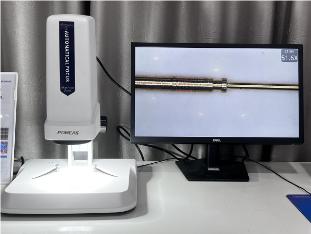
I. Real-Time Focus: The Viewing Area Remains Sharp at All Times
The core advantage of an autofocus video microscope lies in the fact that the viewing area remains in real-time focus at all times, eliminating the need for manual focusing. When the operator moves the sample or changes the viewing area, the system automatically detects and adjusts the focal plane, ensuring that the image on the monitor remains sharp at all times.
This feature delivers significant efficiency gains in practical applications. Take the inspection of screw holes in phone cases as an example: since the heights of multiple screw holes vary, using a traditional microscope requires constant adjustment of the working distance. With an autofocus video microscope, however, the operator simply needs to move the sample to inspect all screw holes continuously, without pausing to refocus. The 6.5:1 continuous zoom range facilitates quick changes in magnification, accommodating the observation needs of samples of varying sizes.
II. 2-Megapixel HD Camera: Every Detail Clearly Visible
Image quality is fundamental to microscopic inspection. The autofocus video microscope is equipped with a 2-megapixel high-resolution camera that outputs 1920×1080 HD images. It utilizes HDMI pure digital HD output to display real-time images at 60 frames per second, eliminating motion blur and lag.
Its unique multi-level High Dynamic Range (HDR) function, featuring an edge enhancement mode, significantly improves image quality. When observing highly reflective or low-contrast samples, the HDR function effectively suppresses overexposure and enhances shadow details, ensuring that even the smallest defects are clearly visible. With a digital magnification of up to 277x, everything from the finest details to the entire image is clearly visible.
III. User-Friendly Operation and Data Storage: Streamlining Quality Inspection Workflows
The autofocus video microscope features an integrated body design with a fully in-house developed optical system, ensuring a compact and stable structure. The intuitive user interface makes operation effortless, allowing operators to get up to speed quickly without complex training.
For data management, the device includes a USB drive capable of storing both still images and video footage. If an abnormal sample is detected during inspection, a single click saves the image, facilitating subsequent traceability and analysis. Depending on the characteristics of the customer’s samples, multiple light source matching modes are available to meet the illumination needs of samples with different materials and morphologies.
Key Insights on Application Scenarios:

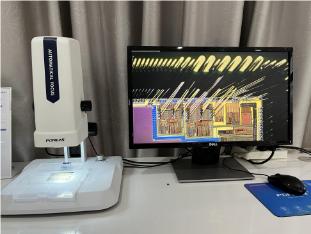
Autofocus video microscopes are widely used in quality inspection processes across industries such as electronic components, mobile phone parts, precision watch components, and hardware and machinery. By freeing operators from the tedious task of manual focusing, these microscopes allow them to focus their attention entirely on assessing sample quality, making them a valuable tool for improving the efficiency and accuracy of quality inspection.
Product recommendation
TECHNICAL SOLUTION
MORE+You may also be interested in the following information
FREE CONSULTING SERVICE
Let’s help you to find the right solution for your project!
 ASK POMEAS
  PRICE INQUIRY
  REQUEST DEMO/TEST
  FREE TRIAL UNIT
  ACCURATE SELECTION
- APPICATION CASE
- RESOURCE CENTER
- DOWNLOAD CENTER
SOLUTIONS SUPPORT
- ZOOM LENS SELECTION TOOL
- TELECENTRIC LENS SELECTION TOOL
- FA LENS SELECTION TOOL
- ZOOM RATIO TABLE
- CERTIFIED MODEL
SELECTION TOOL
- WHY POMEAS
- FAQ
- PRIVACY POLICY
- TERMS OF USE
- DELIVERY & RETURN POLICY
CUSTOMER CARE
 ADDRESS
Add.:No.68, Yongwei Road, Baizhoubian, Dongcheng District, Dongguan, China,523000
CONTACT
 Tel:+ 86-0769-2266 0867
 Fax:+ 86-0769-2266 0867
 E-mail:marketing@pomeas.com

Wechat QR code

Software Copyright :2021SR0176001 抄袭必究, 技术支持:誉新源科技