


How can the diameter of PVC flexible tubing be measured accurately?
Testing Background

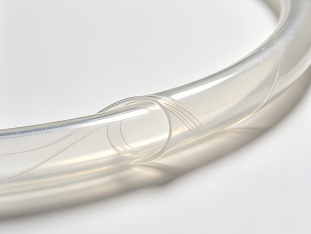
PVC flexible hoses are soft, resistant to acids and alkalis, and offer excellent value for money, making them one of the most widely used types of plastic piping in both industrial and domestic applications. In the domestic sector, they are commonly used for electrical conduit in home renovations, water supply for garden irrigation, and plumbing for water supply and drainage in bathrooms; in industrial settings, they are used for oil lines in machinery, the conveyance of chemical liquids, and oxygen and acetylene supply lines for gas welding; the food and aquarium industries utilise transparent PVC flexible tubing to allow visual monitoring of the flow of substances; medical-grade PVC flexible tubing is used for small-scale drainage lines and consumables for medical instruments, with applications spanning dozens of sub-sectors.
Testing Requirements for PVC Hoses
The inner diameter, outer diameter and wall thickness of a hose directly affect its sealing performance, pressure-bearing capacity and fit during assembly. National standards and industry-specific standards set strict limits on dimensional tolerances. For standard PVC hoses, the outer diameter tolerance is typically controlled within ±0.1 mm, whilst for high-end medical and precision equipment hoses, the outer diameter tolerance is required to be ≤0.01 mm. Traditional manual caliper spot checks and offline sampling measurements are susceptible to issues such as batch dimensional non-conformities, assembly leaks and pressure-induced ruptures, due to hose deformation, human reading errors and insufficient sampling coverage. Mass production lines are therefore in urgent need of a comprehensive, in-line diameter measurement solution.
PVC Flexible Hose Testing Solutions

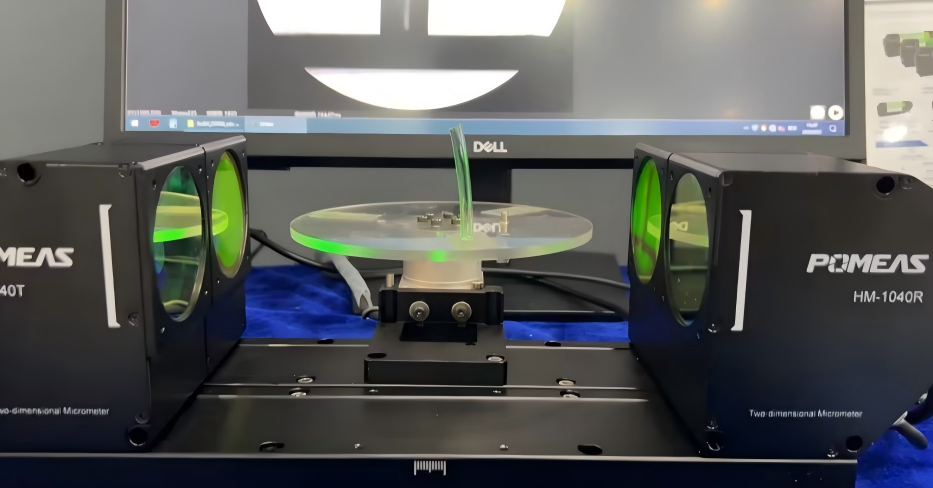
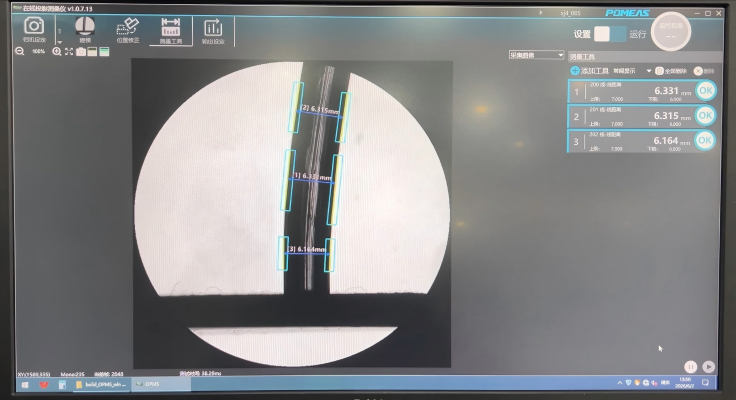
To address the challenge of outer diameter inspection on PVC hose extrusion production lines, the HM-1040 Telecentric Measurement System has been selected as the in-line 100% inspection equipment. The system achieves a measurement accuracy of up to 0.001 mm and utilises the principle of telecentric optical imaging; its non-contact measurement method prevents deformation of the flexible PVC hose caused by compression, thereby avoiding dimensional distortion due to pressure on the tubing. The equipment is simple to operate and, once commissioned, requires no dedicated operator; outer diameter data is automatically captured as the hose passes through the inspection zone at a constant speed. With its high measurement speed, which matches the cycle time of high-speed extrusion production lines, the system synchronises data in real time and triggers automatic alerts for out-of-tolerance measurements, thereby achieving 100% online full inspection. This controls diameter non-conformities at source and significantly reduces the scrap rate.
Test Results

Product recommendation
TECHNICAL SOLUTION
MORE+You may also be interested in the following information
FREE CONSULTING SERVICE
Let’s help you to find the right solution for your project!
 ASK POMEAS
  PRICE INQUIRY
  REQUEST DEMO/TEST
  FREE TRIAL UNIT
  ACCURATE SELECTION
- APPICATION CASE
- RESOURCE CENTER
- DOWNLOAD CENTER
SOLUTIONS SUPPORT
- ZOOM LENS SELECTION TOOL
- TELECENTRIC LENS SELECTION TOOL
- FA LENS SELECTION TOOL
- ZOOM RATIO TABLE
- CERTIFIED MODEL
SELECTION TOOL
- WHY POMEAS
- FAQ
- PRIVACY POLICY
- TERMS OF USE
- DELIVERY & RETURN POLICY
CUSTOMER CARE
 ADDRESS
Add.:No.68, Yongwei Road, Baizhoubian, Dongcheng District, Dongguan, China,523000
CONTACT
 Tel:+ 86-0769-2266 0867
 Fax:+ 86-0769-2266 0867
 E-mail:marketing@pomeas.com

Wechat QR code

Software Copyright :2021SR0176001 抄袭必究, 技术支持:誉新源科技