


How do you choose between telephoto, Vari-focal and fixed-focal-length lenses?
When it comes to visual inspection solutions, how exactly should you choose a lens? When selecting from the three types—telecentric, zoom and fixed-focus lenses—there is no need to get bogged down in the technical specifications. Simply answer four practical questions, and the answer will become clear.


First, check whether the object has any thickness.

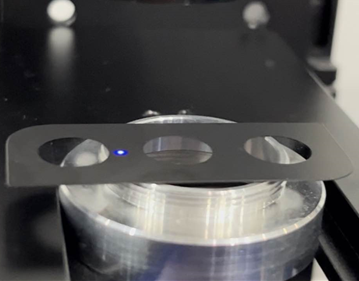
If the object under inspection is a flat, thin sheet (such as a glass cover plate or a PCB), a fixed-focus lens is the most suitable choice—it offers sufficient depth of field, has no moving parts, provides high stability, and is well-suited to high-speed production lines. If the object has significant variations in height (such as pin coplanarity or screw depth), a telecentric lens is essential; it eliminates perspective distortion, ensures consistent dimensional proportions at different heights, and enables repeatable measurements to within 0.01 mm. Vari-focal lenses are ill-suited to such fixed workstations, as recalibration is required every time the zoom is adjusted, making them unsuitable for in-line inspection.
Second, consider whether the task involves measuring dimensions or identifying defects.

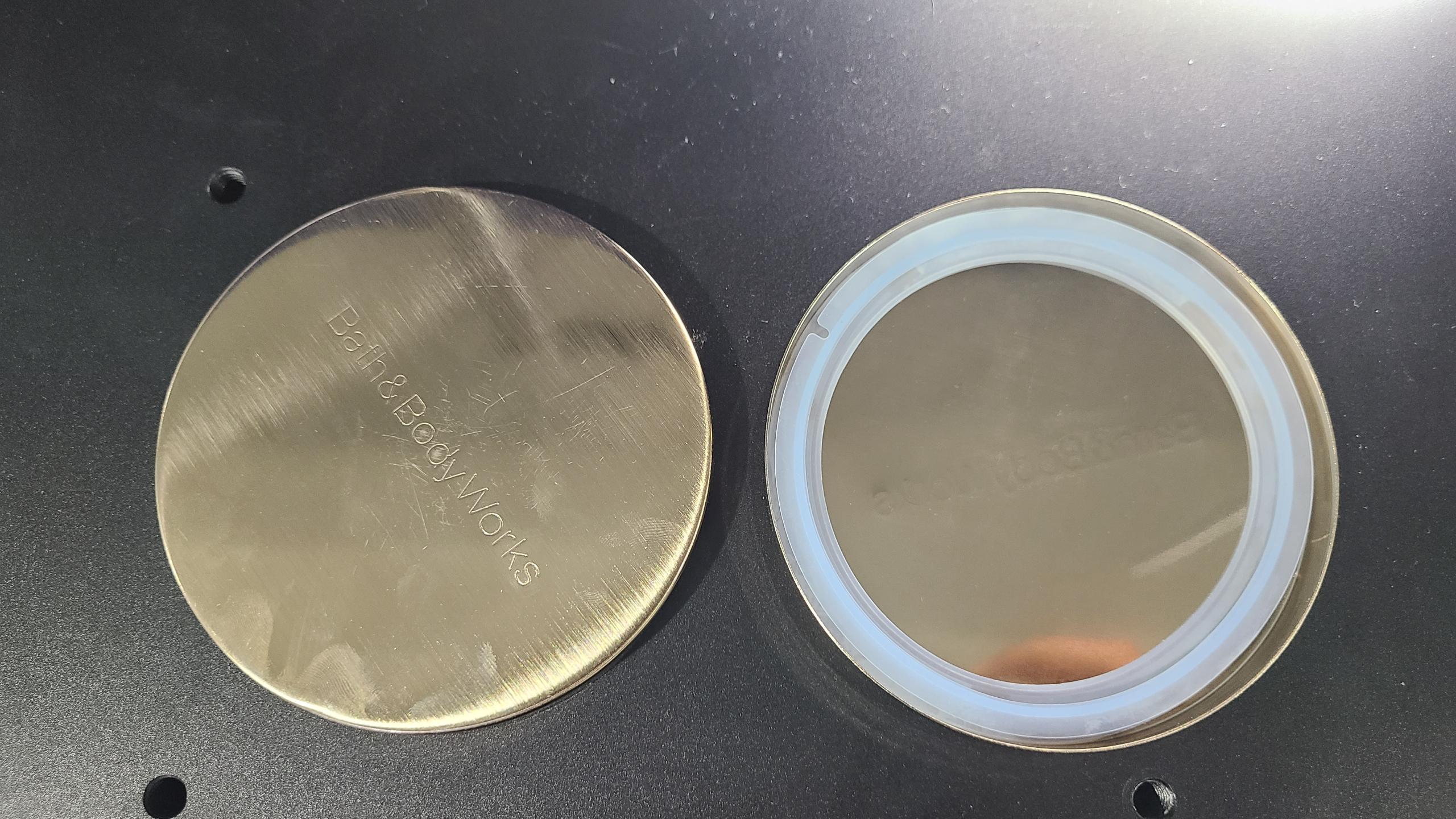
Defect detection (scratches, dirt) relies on greyscale contrast; fixed-focus lenses, with their large apertures and ample light intake, make it easier to highlight defects when used with annular illumination, offering excellent value for money. For dimensional measurement, if numerical output is required and the system must pass GR&R testing, a telecentric lens is virtually the only option; if the system is only used for pass/fail judgement, a fixed-focus lens combined with a calibration algorithm can sometimes suffice. Zoom lenses are rarely used in defect detection, as changes in aperture caused by zooming affect grey-scale consistency; they are used only in offline workstations handling multiple product varieties in small batches.
Third, consider the installation space.

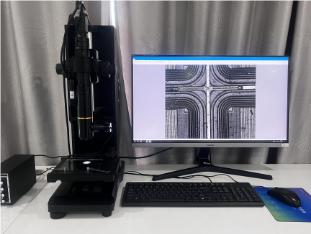
Telecentric lenses are bulky and have a long working distance; where they cannot fit into confined workspaces, a fixed-focus lens with a telecentric aperture can be used instead. Fixed-focus lenses offer the greatest flexibility and can be mounted close to the subject when using a short focal length, but edge distortion must be corrected. With zoom lenses, space for the motor and controller must be taken into account, and the load capacity of the motion platform must also be calculated.
Fourth, check the coordination of the light sources and the focusing time.

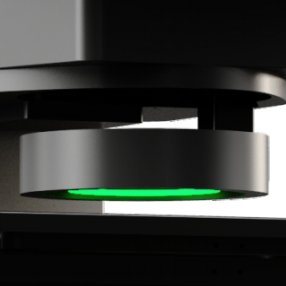
Telecentric lenses perform best with coaxial lighting, but may exhibit haloing under backlighting; fixed-focus lenses are well-suited to annular lighting and diffuse backlighting; zoom lenses require high consistency in the light source. In terms of focusing time, fixed-focus lenses are maintenance-free, whilst telecentric lenses have a large depth of field and are tolerant of drift; zoom lenses require refocusing each time the focal length is changed and are only suitable for offline applications or scenarios with a relaxed cycle time.
Summary of selection principles: prioritise fixed-focus lenses where the plane is stable; choose telecentric lenses where there is sufficient height, precise measurements are required, and space is adequate; only consider zoom lenses for mixed-product lines with a relaxed production cycle. However, it is essential to conduct on-site tests of working distance and lighting effects—lens selection is an art of compromise, and finding the right balance between precision, space, speed and cost is more meaningful than simply pursuing the ‘best’ option.
Product recommendation
TECHNICAL SOLUTION
MORE+You may also be interested in the following information
FREE CONSULTING SERVICE
Let’s help you to find the right solution for your project!
 ASK POMEAS
  PRICE INQUIRY
  REQUEST DEMO/TEST
  FREE TRIAL UNIT
  ACCURATE SELECTION
- APPICATION CASE
- RESOURCE CENTER
- DOWNLOAD CENTER
SOLUTIONS SUPPORT
- ZOOM LENS SELECTION TOOL
- TELECENTRIC LENS SELECTION TOOL
- FA LENS SELECTION TOOL
- ZOOM RATIO TABLE
- CERTIFIED MODEL
SELECTION TOOL
- WHY POMEAS
- FAQ
- PRIVACY POLICY
- TERMS OF USE
- DELIVERY & RETURN POLICY
CUSTOMER CARE
 ADDRESS
Add.:No.68, Yongwei Road, Baizhoubian, Dongcheng District, Dongguan, China,523000
CONTACT
 Tel:+ 86-0769-2266 0867
 Fax:+ 86-0769-2266 0867
 E-mail:marketing@pomeas.com

Wechat QR code

Software Copyright :2021SR0176001 抄袭必究, 技术支持:誉新源科技