


What is the main difference between a telecentric ZOOM LENS and a conventional ZOOM LENS?
The key differences between telecentric ZOOM LENSES and conventional ZOOM LENSES lie in imaging stability and measurement accuracy: telecentric ZOOM LENSES are unaffected by slight fluctuations in working distance, offering a constant magnification and extremely high accuracy, making them suitable for precision measurement applications; conventional ZOOM LENSES are susceptible to interference from changes in object distance, resulting in significant magnification shifts, and are therefore only suitable for general observation applications.

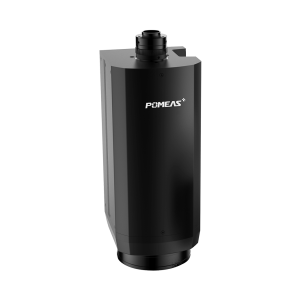
The fundamental reason for this difference lies in the distinct optical designs. Telecentric ZOOM LENSes employ a parallel optical axis design, whereby the principal rays remain parallel to the lens’s optical axis at all times, thereby eliminating optical perspective errors at source. Whether the workpiece being inspected is slightly misaligned, placed at varying heights, or the equipment exhibits minor focusing deviations, the image size and magnification remain stable, and there is no visual distortion where objects appear larger when closer and smaller when further away.
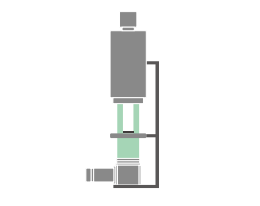
Example diagram of the solution
Conventional ZOOM LENSes, however, feature a traditional optical path structure, with the main light rays entering at a divergent angle. In practical use, even the slightest change in the working distance between the workpiece and the lens causes the image size to change, leading directly to a drift in the magnification ratio and resulting in a fixed measurement error. This characteristic means that such lenses can only meet low-precision requirements, such as visual inspection and wide-angle photography, and cannot be used for precision tasks such as dimensional inspection and error calibration.
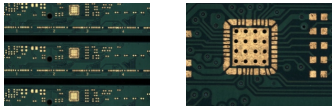
0.2X-PCB observation VS 2X-PCB observation
1. Standard ZOOM LENSES offer the advantages of a wide zoom range, high versatility and excellent value for money, and are commonly used in applications such as general machine vision inspection and preliminary sample screening.
2. Telecentric ZOOM LENSES, on the other hand, are designed for high-precision applications and are widely used in demanding scenarios such as dimensional measurement, defect detection and positioning calibration for semiconductor components, precision metal parts and micro-components.
Combining these figures with actual test data provides a clearer picture of the differences:
1. With conventional ZOOM LENSES, when the working distance shifts by ±5 mm, the magnification error can reach 1.5%–3%, resulting in measurement deviations that are visible to the naked eye;
2. Under the same conditions of object distance shift, the magnification error of telecentric ZOOM LENSES can be controlled to within 0.1%, with a telecentricity deviation of less than 0.05°, enabling measurement accuracy at the sub-micrometre level.
3. The field-of-view magnification uniformity deviation of telecentric ZOOM LENSes does not exceed 0.05 per cent, ensuring highly consistent imaging accuracy across the entire field of view—a key advantage that conventional ZOOM LENSes are unable to achieve.
Product recommendation
TECHNICAL SOLUTION
MORE+You may also be interested in the following information
FREE CONSULTING SERVICE
Let’s help you to find the right solution for your project!
 ASK POMEAS
  PRICE INQUIRY
  REQUEST DEMO/TEST
  FREE TRIAL UNIT
  ACCURATE SELECTION
- APPICATION CASE
- RESOURCE CENTER
- DOWNLOAD CENTER
SOLUTIONS SUPPORT
- ZOOM LENS SELECTION TOOL
- TELECENTRIC LENS SELECTION TOOL
- FA LENS SELECTION TOOL
- ZOOM RATIO TABLE
- CERTIFIED MODEL
SELECTION TOOL
- WHY POMEAS
- FAQ
- PRIVACY POLICY
- TERMS OF USE
- DELIVERY & RETURN POLICY
CUSTOMER CARE
 ADDRESS
Add.:No.68, Yongwei Road, Baizhoubian, Dongcheng District, Dongguan, China,523000
CONTACT
 Tel:+ 86-0769-2266 0867
 Fax:+ 86-0769-2266 0867
 E-mail:marketing@pomeas.com

Wechat QR code

Software Copyright :2021SR0176001 抄袭必究, 技术支持:誉新源科技