


Question: What tests are typically included in the standard inspection of ZOOM LENSES within the industry? What is the purpose of carrying out these tests?


Answer: Common testing scenarios for ZOOM LENSes include optical performance testing, magnification accuracy testing, image quality assessment and lens durability testing. These testing scenarios help users gain a comprehensive understanding of the lens’s actual performance, assisting them in selecting products that are better suited to their operating conditions and offer greater reliability.

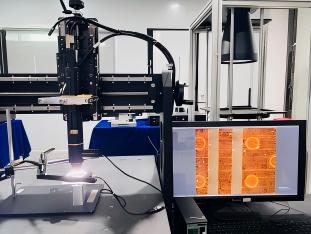
Question: What do the four tests check for? Do they have a significant impact on actual use?
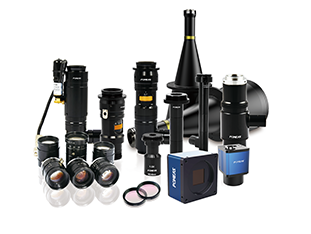
Answer: The four criteria are optical performance, magnification accuracy, image quality and durability.
1. Optical performance testing is a fundamental inspection process that primarily verifies core optical parameters such as light transmittance, distortion, chromatic aberration and focal length, ensuring that the lens’s basic imaging capabilities meet the required standards and preventing issues such as colour distortion, image distortion and insufficient light transmittance at source.
2. Magnification accuracy testing is a core specialised test for ZOOM LENSES. Through actual measurements across the full range of magnification settings, the discrepancy between the specified magnification and the actual magnification effect is verified, ensuring precise zoom adjustment and preventing data deviations or inaccurate measurements in industrial measurement and precision observation.
3. Imaging quality assessment is conducted entirely in line with real-world usage scenarios. The focus is on testing image clarity, uniformity and detail reproduction under varying lighting conditions and at different magnification levels, identifying issues such as blurring, ghosting and edge softness to provide an intuitive representation of the lens’s actual imaging performance.
4. Durability testing: Through high-frequency zoom operations, prolonged continuous operation and simulated environmental temperature fluctuations, the stability of the lens’s mechanical structure and optical components is assessed to verify its durability over the long term, thereby reducing the risk of subsequent faults and performance degradation.

Industry statistics show that the pass rate for ZOOM LENSES that have undergone the full set of four tests exceeds 98 per cent; for lenses that have undergone magnification accuracy calibration, measurement errors can be kept within 0.01 mm; and for products that have completed durability testing, the overall service life is increased by an average of 40 per cent.
Product recommendation
TECHNICAL SOLUTION
MORE+You may also be interested in the following information
FREE CONSULTING SERVICE
Let’s help you to find the right solution for your project!

 ASK POMEAS
  PRICE INQUIRY
  REQUEST DEMO/TEST
  FREE TRIAL UNIT
  ACCURATE SELECTION
- APPICATION CASE
- RESOURCE CENTER
- DOWNLOAD CENTER
SOLUTIONS SUPPORT
- ZOOM LENS SELECTION TOOL
- TELECENTRIC LENS SELECTION TOOL
- FA LENS SELECTION TOOL
- ZOOM RATIO TABLE
- CERTIFIED MODEL
SELECTION TOOL
- WHY POMEAS
- FAQ
- PRIVACY POLICY
- TERMS OF USE
- DELIVERY & RETURN POLICY
CUSTOMER CARE
 ADDRESS
Add.:No.68, Yongwei Road, Baizhoubian, Dongcheng District, Dongguan, China,523000
CONTACT
 Tel:+ 86-0769-2266 0867
 Fax:+ 86-0769-2266 0867
 E-mail:marketing@pomeas.com

Wechat QR code

Software Copyright :2021SR0176001 抄袭必究, 技术支持:誉新源科技