


A Must-Read for Beginners! Key Tips for Selecting a Small SCARA Flexible Loading Robot
When selecting a compact SCARA flexible loading robot, the key principle is to align the choice with your specific production requirements, focusing on the robot’s working range, payload capacity, positioning accuracy, operating speed and compatibility with the loading module, whilst also taking into account the overall stability of the equipment and system compatibility. Only by doing so can you select a cost-effective solution that is well-suited to your production line.

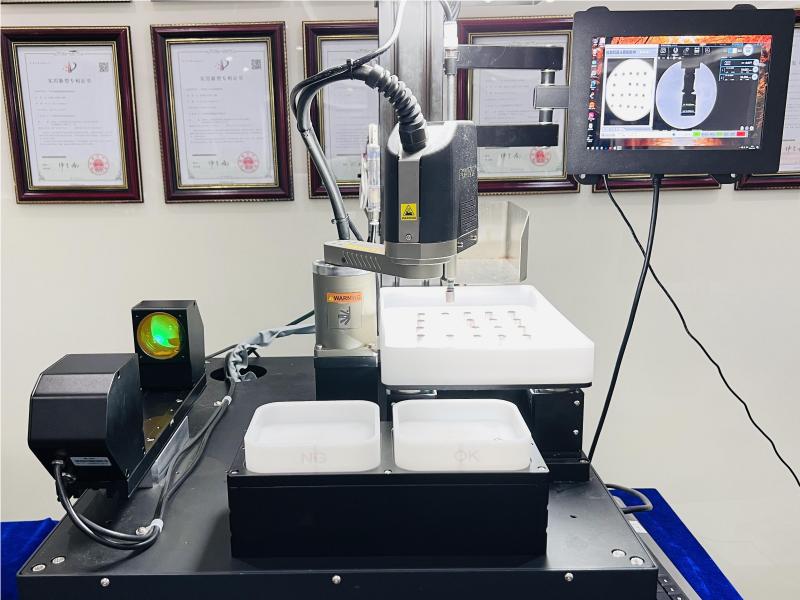
The scope of work forms the basis for model selection and directly determines the equipment’s operational coverage. For small-part feeding applications, models with an arm length of 300–600 mm are the preferred choice; these are well-suited to the pick-and-place requirements of small workpieces whilst avoiding issues such as operational vibration caused by excessive arm length or the occupation of unnecessary floor space, making them ideal for production scenarios involving precision small parts and compact production lines.
Payload capacity must be precisely matched; avoid selecting models indiscriminately. When selecting a model, calculate the total weight of the workpiece, fixtures, suction cups and other end-of-arm tooling, whilst allowing a safety margin of 15–20 per cent to prevent equipment wear caused by long-term operation at full load. For standard small electronic and metalwork components (weighing less than 1 kg), models with a payload capacity of 5 kg or less will suffice; for heavier small parts, the payload specification can be upgraded as required.
Positioning accuracy and operating speed directly impact production yield and efficiency. For precision assembly and the handling of micro-components, where accuracy requirements are extremely high, equipment with a repeatability of ±0.01–±0.05 mm should be selected; for batch sorting and routine handling scenarios, accuracy requirements may be moderately relaxed, with the focus shifted to cycle time to ensure the efficiency of the production line’s flow. At the same time, the speed of the equipment must be aligned with the rhythm of the entire production line to avoid mismatches in production capacity, as well as bottlenecks and backlogs.
Furthermore, the adaptability, stability and compatibility of flexible feeding modules are essential; they must support mainstream control system protocols to facilitate integration with existing production line equipment and reduce the costs of retrofitting and adaptation.

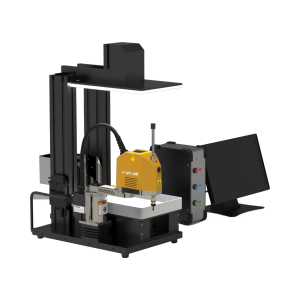
Authoritative industry test data shows that compliant, high-quality small-scale SCARA flexible loading systems can achieve an average mean time between failures (MTBF) of over 3,500 hours. Under high-speed operating conditions, the cycle time for a single pick-and-place operation is as low as 0.38 seconds, whilst models meeting precision standards can consistently achieve a repeatability of ±0.015 mm, making them suitable for over 90 per cent of flexible loading scenarios involving small, precision workpieces.
Product recommendation
TECHNICAL SOLUTION
MORE+You may also be interested in the following information
FREE CONSULTING SERVICE
Let’s help you to find the right solution for your project!
 ASK POMEAS
  PRICE INQUIRY
  REQUEST DEMO/TEST
  FREE TRIAL UNIT
  ACCURATE SELECTION
- APPICATION CASE
- RESOURCE CENTER
- DOWNLOAD CENTER
SOLUTIONS SUPPORT
- ZOOM LENS SELECTION TOOL
- TELECENTRIC LENS SELECTION TOOL
- FA LENS SELECTION TOOL
- ZOOM RATIO TABLE
- CERTIFIED MODEL
SELECTION TOOL
- WHY POMEAS
- FAQ
- PRIVACY POLICY
- TERMS OF USE
- DELIVERY & RETURN POLICY
CUSTOMER CARE
 ADDRESS
Add.:No.68, Yongwei Road, Baizhoubian, Dongcheng District, Dongguan, China,523000
CONTACT
 Tel:+ 86-0769-2266 0867
 Fax:+ 86-0769-2266 0867
 E-mail:marketing@pomeas.com

Wechat QR code

Software Copyright :2021SR0176001 抄袭必究, 技术支持:誉新源科技