


Differences between high-resolution telecentric lenses and standard lenses
The main difference between high-resolution telecentric lenses and standard lenses lies in their design, which maintains the stability of the projected image size and minimises distortion caused by changes in the angle of view, thereby ensuring measurement accuracy. Standard lenses, on the other hand, may cause image distortion when the projection distance or angle changes.

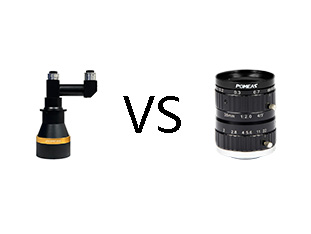
In machine vision dimensional inspection and precision component measurement applications, the imaging characteristics of the lens directly determine the reliability of the inspection results. Many people wonder why, when both are used for capturing images, high-resolution telecentric lenses are better suited to precision measurement tasks. The key difference lies in their fundamentally distinct optical design approaches.

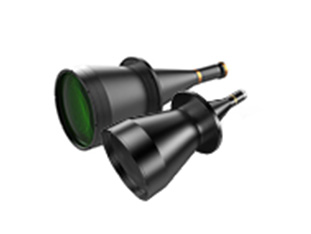
Standard industrial lenses utilise a conventional converging optical path, with light reaching the image sensor at an oblique angle. When the workpiece being measured has slight variations in height, is positioned with a forward or backward offset, or when there is a slight change in the shooting angle, perspective errors occur. This manifests as inconsistent image sizes for the same workpiece when captured from different distances, with perspective distortion appearing along the edge contours. Whilst such imaging defects have a limited impact on visual inspection, their use in dimensional measurement can directly result in numerical deviations.
High-resolution telecentric lenses rely on a specialised parallel optical path structure that allows only parallel light rays to enter the optical system. Regardless of slight variations in the object’s surface or minor displacements in its positioning, the projected size of the object in the image remains essentially constant, effectively eliminating the perspective effect. When combined with a high-resolution optical design, the lens can also clearly reproduce the workpiece’s fine edge contours, further reducing measurement errors caused by edge blurring.
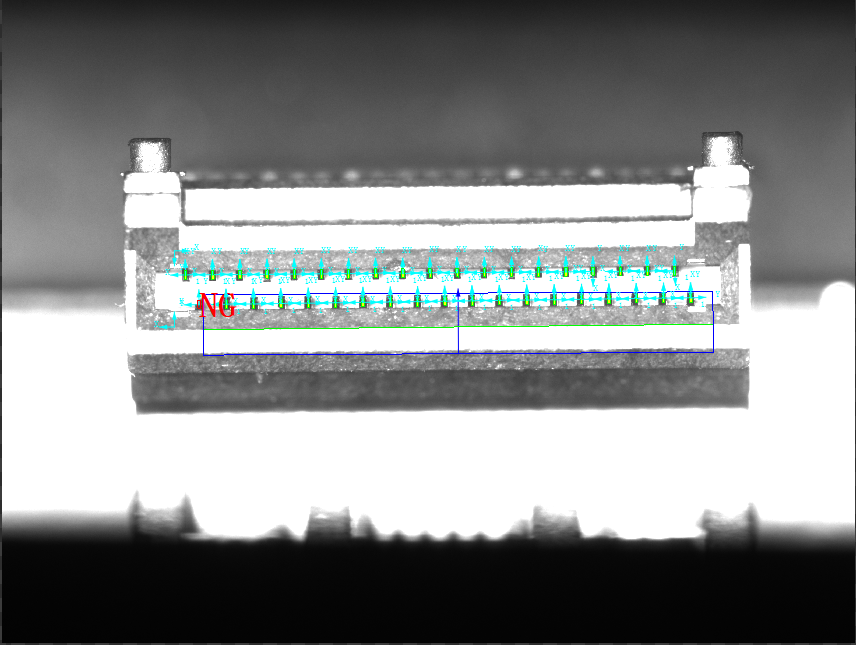
Furthermore, there is a marked difference between the two in terms of their ability to control distortion. Standard lenses generally suffer from pincushion and barrel distortion, resulting in inconsistent magnification between the centre and the edges of the image; telecentric lenses, however, are optically optimised to ensure uniform magnification across the entire field of view, with geometric distortion suppressed to an extremely low level. It should be noted that telecentric lenses are not suitable for all scenarios; they have a longer structure and a relatively narrow working distance range, and are primarily used for quantitative measurements. Standard lenses, on the other hand, offer the advantages of flexible working distances and moderate cost, making them more suitable for qualitative visual inspection.
Product recommendation
TECHNICAL SOLUTION
MORE+You may also be interested in the following information
FREE CONSULTING SERVICE
Let’s help you to find the right solution for your project!
 ASK POMEAS
  PRICE INQUIRY
  REQUEST DEMO/TEST
  FREE TRIAL UNIT
  ACCURATE SELECTION
- APPICATION CASE
- RESOURCE CENTER
- DOWNLOAD CENTER
SOLUTIONS SUPPORT
- ZOOM LENS SELECTION TOOL
- TELECENTRIC LENS SELECTION TOOL
- FA LENS SELECTION TOOL
- ZOOM RATIO TABLE
- CERTIFIED MODEL
SELECTION TOOL
- WHY POMEAS
- FAQ
- PRIVACY POLICY
- TERMS OF USE
- DELIVERY & RETURN POLICY
CUSTOMER CARE
 ADDRESS
Add.:No.68, Yongwei Road, Baizhoubian, Dongcheng District, Dongguan, China,523000
CONTACT
 Tel:+ 86-0769-2266 0867
 Fax:+ 86-0769-2266 0867
 E-mail:marketing@pomeas.com

Wechat QR code

Software Copyright :2021SR0176001 抄袭必究, 技术支持:誉新源科技