


Industrial vision lighting is primarily used in automated vision inspection applications such as product inspection, quality control, dimensional measurement, defect detection, barcode scanning, and character recognition.

Product Inspection: Highlighting Contours and Surface Features
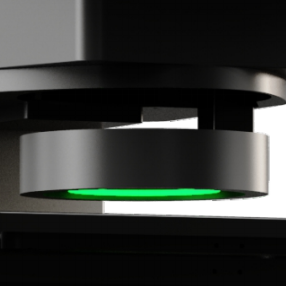
During the visual inspection of a certain electronic component, it is necessary to determine whether the product’s edges are intact and whether there are any indentations on the surface. When backlighting is used, the product’s outline forms a clear silhouette, making it easy to identify notches in the edges; then, by supplementing the surface illumination with ring lighting, the contrast between the indentations and the normal areas becomes apparent. If only front lighting is used, the boundaries of transparent or reflective products are often not clearly defined.
Quality Control: Focus on Batch Consistency
In a packaging seal inspection case, the sealing area must be checked for wrinkles, air bubbles, or foreign objects. The system uses a low-angle strip light, which casts shadows on the slight irregularities of the sealed surface, making abnormal areas more visible in the image. By fixing the light source angle and brightness, imaging conditions remain consistent across products in the same batch, facilitating subsequent evaluation.
Dimension Measurement: Emphasizing Clear Edges and Geometric Stability
In one case study involving the dimensional measurement of precision parts, a parallel backlight was used in conjunction with a telecentric lens. This resulted in sharp part contours, and the measurement results were less affected by surface reflections. In another case, standard front lighting was initially used, which caused halos around the edges and resulted in poor dimensional repeatability; after switching to backlighting, edge positioning became more stable.
Defect Detection: Selecting Lighting Methods by Defect Type
Dark-field illumination is used for detecting scratches on metal surfaces; a smooth surface appears as a dark background, while scratches produce scattered light and appear brighter. However, when dark-field illumination is used for surface character recognition, the characters become difficult to read; switching to coaxial or diffuse lighting to suppress reflections improves character contrast. There is no universal solution for defect detection; the light source must be selected based on the specific characteristics of the defects, such as scratches, stains, cracks, and dents.
Barcode Scanning: Reducing Reflective Interference
During barcode inspection on the surface of a certain product, reflections from the packaging film caused localized overexposure of the barcode. After using low-angle red lighting and adjusting the polarization settings, the reflections were suppressed, the contrast between the black and white modules of the barcode improved, and the scan success rate stabilized.
Character Recognition: Improving Contrast and Uniformity

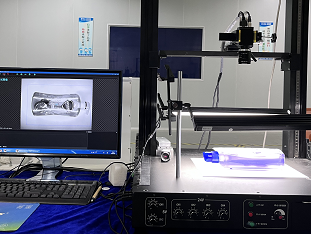
In a case study involving the recognition of characters engraved on a metal part, the surface exhibited strong reflections, and the characters had a grayscale value similar to that of the background. After using coaxial lighting, the specular reflections on the surface were evened out, and the edges of the characters became clearer; for curved or uneven surfaces, diffused dome lighting was used to reduce localized shadows and overexposure.
Although there are many application scenarios for industrial vision lighting, the selection logic is similar: first, determine whether the inspection target is a contour, surface defect, dimensional edge, or characters/barcodes; then select backlighting, dark-field, coaxial, low-angle, or diffuse lighting. Only when the light source is properly matched with the camera and lens can automated vision inspection operate reliably.
Product recommendation


TECHNICAL SOLUTION
MORE+You may also be interested in the following information
FREE CONSULTING SERVICE
Let’s help you to find the right solution for your project!
 ASK POMEAS
 PRICE INQUIRY
 REQUEST DEMO/TEST
 FREE TRIAL UNIT
 ACCURATE SELECTION

- APPICATION CASE
- RESOURCE CENTER
- DOWNLOAD CENTER
SOLUTIONS SUPPORT
- ZOOM LENS SELECTION TOOL
- TELECENTRIC LENS SELECTION TOOL
- FA LENS SELECTION TOOL
- ZOOM RATIO TABLE
- CERTIFIED MODEL
SELECTION TOOL
- WHY POMEAS
- FAQ
- PRIVACY POLICY
- TERMS OF USE
- DELIVERY & RETURN POLICY
CUSTOMER CARE
 ADDRESS
Add.:No.68, Yongwei Road, Baizhoubian, Dongcheng District, Dongguan, China,523000
CONTACT
 Tel:+ 86-0769-2266 0867
 Fax:+ 86-0769-2266 0867
 E-mail:marketing@pomeas.com

Wechat QR code

Software Copyright :2021SR0176001 抄袭必究, 技术支持:誉新源科技