


What factors should be considered when selecting lighting for industrial vision systems?
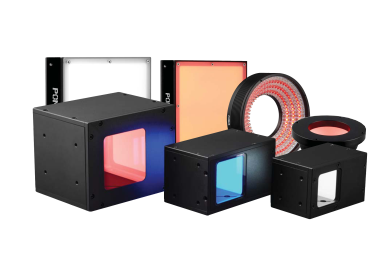
When selecting lighting for industrial vision systems, people often focus solely on “brightness,” only to end up with images that are either overexposed due to glare or have dark edges. In reality, the selection process requires a comprehensive evaluation of color temperature, brightness, beam angle, uniformity, suitability for the operating environment, light source size, and compatibility with the vision system.

Color Temperature and Brightness Should Be Determined Based on Image Contrast
In a character inspection application on the surface of an electronic component, warm white light was initially used, but the characters had a grayscale similar to the background, resulting in unstable threshold segmentation; after switching to cool white light, the contrast improved significantly. In another case involving the inspection of a high-speed moving part, insufficient brightness required a longer exposure time, resulting in motion blur in the images; only after increasing the brightness and using a shorter exposure time did the edges become sharp. This demonstrates that color temperature affects color reproduction and contrast, while brightness must balance exposure time and motion blur.
The Illumination Angle Determines How Defects Are Presented
In a metal surface scratch inspection project, using front-facing annular lighting caused the scratches to blend into the background; switching to low-angle dark-field illumination caused the scratches to scatter light, highlighting the defect contours. Conversely, in a flat-surface character recognition case, using low-angle lighting actually made the characters difficult to read, whereas switching to coaxial lighting suppressed surface reflections. If the angle is chosen incorrectly, stable imaging is difficult to achieve no matter how bright the light source is.
Uniformity Directly Affects Consistency in Defect Detection
In a large-area backlight inspection case, the light source was bright in the center and dim at the edges; as a result, the same defect appeared with lower grayscale values at the edge of the field of view, making it prone to misclassification. After selecting a more uniform area light source and adjusting the working distance, the grayscale distribution in the image became more consistent. Insufficient uniformity also makes it difficult to balance automatic exposure and threshold parameters across the entire field of view.
Adaptability to Working Environments Is Often Overlooked
On a certain production line with dust and slight vibrations, ordinary light sources quickly accumulated dust on their surfaces, causing a decline in brightness. After replacing them with light sources featuring protective housings and more efficient heat dissipation designs, maintenance intervals were extended. If the ambient temperature is high, attention must also be paid to the light source’s heat generation and dissipation to prevent brightness drift after prolonged operation.
Light Source Size and Compatibility with the Vision System Must Be Considered Together
In a wide-field-of-view inspection project, a small-sized light source was selected, resulting in insufficient illuminance at the edges of the field of view; while increasing the light source size improved coverage, installation space and cost had to be balanced. In another case, the light source trigger was out of sync with the camera’s exposure, causing fluctuations in image brightness; stability was achieved only after adjusting the trigger timing. The light source size must match the lens’s field of view and working distance, and the interface, power supply, and triggering methods must also be compatible with the camera, lens, and controller.
Product recommendation


TECHNICAL SOLUTION
MORE+You may also be interested in the following information
FREE CONSULTING SERVICE
Let’s help you to find the right solution for your project!
 ASK POMEAS
 PRICE INQUIRY
 REQUEST DEMO/TEST
 FREE TRIAL UNIT
 ACCURATE SELECTION

- APPICATION CASE
- RESOURCE CENTER
- DOWNLOAD CENTER
SOLUTIONS SUPPORT
- ZOOM LENS SELECTION TOOL
- TELECENTRIC LENS SELECTION TOOL
- FA LENS SELECTION TOOL
- ZOOM RATIO TABLE
- CERTIFIED MODEL
SELECTION TOOL
- WHY POMEAS
- FAQ
- PRIVACY POLICY
- TERMS OF USE
- DELIVERY & RETURN POLICY
CUSTOMER CARE
 ADDRESS
Add.:No.68, Yongwei Road, Baizhoubian, Dongcheng District, Dongguan, China,523000
CONTACT
 Tel:+ 86-0769-2266 0867
 Fax:+ 86-0769-2266 0867
 E-mail:marketing@pomeas.com

Wechat QR code

Software Copyright :2021SR0176001 抄袭必究, 技术支持:誉新源科技