


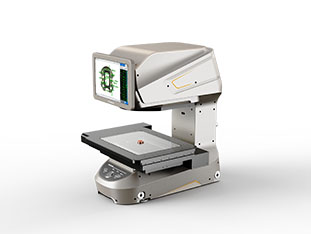
As a precision measuring instrument based on machine vision technology, the flash gauge operates through a process that involves optical imaging, image processing, and data analysis. At its core, the device captures images of objects using a camera and scans them for measurement using a light source and precision optical lenses; the measurement data is then processed and analyzed by software.

Optical Imaging

-
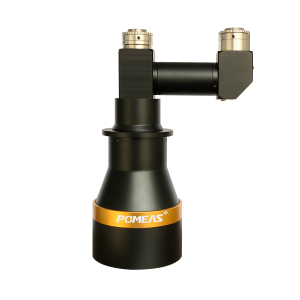
Core Components: The Flash Measuring Instrument utilizes dual telecentric high-resolution optical lenses. These lenses feature a large depth of field, wide field of view, and low distortion, ensuring that the size of the object’s image remains constant across the depth of field regardless of distance. This effectively eliminates Abbe error, providing the physical foundation for high-precision measurement.
-
Imaging Method: Unlike traditional mechanical scanning methods, the flash measurement system employs a “full-image capture” mode. By leveraging the characteristics of the dual telecentric lenses, it captures a complete image of the workpiece within the entire field of view in a single shot, enabling “photographic-style” measurement.
-
Lighting Configuration: The flash measurement system is equipped with a diverse range of illumination systems, such as contour lighting, surface lighting, and coaxial lighting, as well as independently adjustable and color-swappable surface lighting. This allows adaptation to workpieces of different colors, materials, and surface conditions, ensuring high-quality imaging.
Image Processing

-
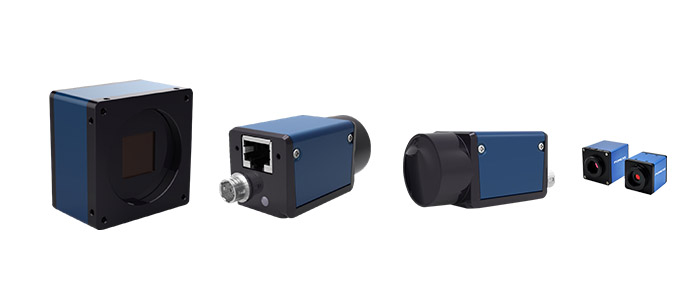
Image Capture: Images of the workpiece are captured using high-resolution area-scan cameras (such as CMOS or CCD), converting optical signals into digital signals.
-
Image Processing Algorithms: Dedicated vision measurement software processes the acquired images, utilizing algorithms such as sub-pixel edge detection, image contour matching, and optical distortion correction to automatically identify and extract the workpiece’s contour features. Sub-pixel image processing technology allows for the subdivision of individual pixels, enabling precise capture of features such as edge burrs and chamfers, thereby enhancing measurement accuracy and stability.
-
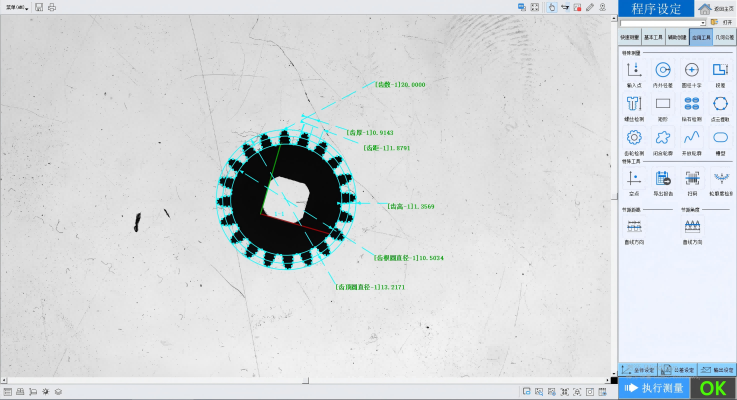
Feature Extraction and Comparison: The software compares the extracted features with the camera’s pixel scale to rapidly calculate the workpiece’s geometric dimensions, including points, lines, circles, angles, distances, and geometric tolerances.
Data Analysis and Results Output

-
Data Processing: The visual measurement software performs further processing and analysis of the calculated geometric dimensions, such as calculating statistical values including maximum, minimum, mean, standard deviation, and CPK, to evaluate the machining quality and consistency of the workpiece.
-
Result Output: The software automatically generates measurement reports and statistical analyses (such as SPC). Measurement results can be exported with a single click into various report formats, including Word, Excel, and CAD, facilitating subsequent data processing and analysis for users.
Automation and Smart Features

-
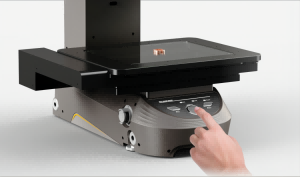
One-Click Operation: In CNC mode, users simply place the workpiece on the measuring table and press the start button. The instrument then automatically positions itself, aligns with the template, performs measurements and evaluations, and generates a report, delivering true “one-click” operation.
-
Automatic Image Matching and Positioning Technology: The software automatically identifies the workpiece’s position and orientation, eliminating human operational variations and ensuring highly automated and consistent measurements.
-
Artificial Intelligence Applications: Some high-end models integrate AI-powered automatic edge-finding technology, which uses deep learning algorithms to automatically identify complex, blurred, or low-contrast edges, significantly enhancing measurement adaptability and efficiency.
Product recommendation
TECHNICAL SOLUTION
MORE+You may also be interested in the following information
FREE CONSULTING SERVICE
Let’s help you to find the right solution for your project!
 ASK POMEAS
  PRICE INQUIRY
  REQUEST DEMO/TEST
  FREE TRIAL UNIT
  ACCURATE SELECTION
- APPICATION CASE
- RESOURCE CENTER
- DOWNLOAD CENTER
SOLUTIONS SUPPORT
- ZOOM LENS SELECTION TOOL
- TELECENTRIC LENS SELECTION TOOL
- FA LENS SELECTION TOOL
- ZOOM RATIO TABLE
- CERTIFIED MODEL
SELECTION TOOL
- WHY POMEAS
- FAQ
- PRIVACY POLICY
- TERMS OF USE
- DELIVERY & RETURN POLICY
CUSTOMER CARE
 ADDRESS
Add.:No.68, Yongwei Road, Baizhoubian, Dongcheng District, Dongguan, China,523000
CONTACT
 Tel:+ 86-0769-2266 0867
 Fax:+ 86-0769-2266 0867
 E-mail:marketing@pomeas.com

Wechat QR code

Software Copyright :2021SR0176001 抄袭必究, 技术支持:誉新源科技