


What is a telecenter lens?

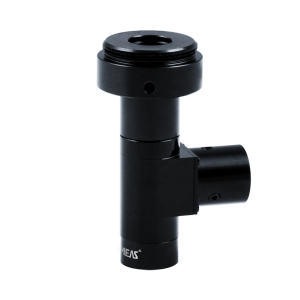
A telecentric lens is a specialized optical lens designed for precision measurement and industrial inspection. Its core function is to eliminate or significantly reduce perspective distortion through an optimized optical path design, thereby ensuring high precision and consistency during image capture. By utilizing a specialized lens structure—such as a parallel-incident light design—it ensures that the magnification remains unaffected by changes in object distance when the object is imaged within the focal plane. As such, it serves as a critical component in the fields of machine vision and industrial inspection.
Characteristics of Telephoto Lenses

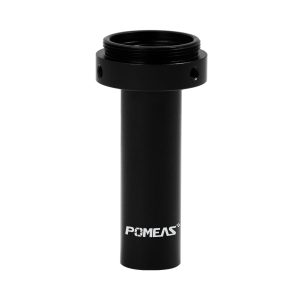
1. Low distortion: Thanks to their parallel optical path design, telecentric lenses virtually eliminate the distortion (such as barrel or pincushion distortion) caused by perspective effects in traditional lenses, ensuring that the geometric shapes at the edges and center of the image remain consistent.
2. High resolution: The optimized optical structure captures more detail, making it suitable for detecting minute defects or intricate structures.
3. Deep depth of field: Maintains clear imaging across a wide range of object distances (e.g., from a few millimeters to tens of millimeters), accommodating the inspection of objects at varying heights.
4. Stable magnification: The magnification remains constant within the focal plane regardless of the object’s distance from the lens, preventing measurement errors caused by changes in object distance.
Typical Applications of Telecentric Lenses

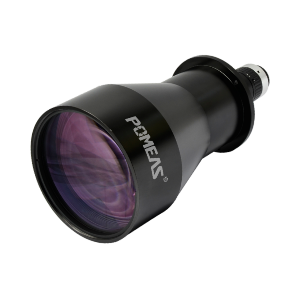
1. Industrial automation inspection: Such as screening for surface defects on products and verifying assembly positioning.
2. Dimensional measurement: Non-contact, high-precision measurement of parameters such as part length, diameter, and hole spacing.
3. Precision Assembly Verification: Ensuring alignment accuracy during the assembly of multiple components (e.g., electronic components, mechanical parts).
4. Electronic Product Quality Inspection: Inspecting the integrity of microstructures such as chip pins and PCB solder joints.
5. Medical and Research Applications: Scenarios requiring low-distortion imaging, such as microscopic imaging and cell analysis.
Advantages of Telecentric Lenses

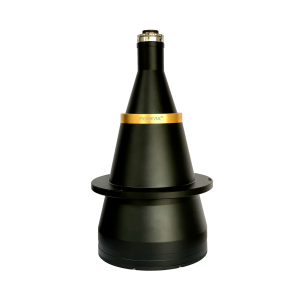
1. Distortion-free measurement images: Accurately reproduces geometric shapes, eliminating measurement data errors caused by lens distortion.
2. Stable magnification: Changes in object distance do not affect the imaging scale, simplifying the calibration process and improving inspection efficiency.
3. Adaptability to complex industrial environments: A deep depth of field and high resistance to interference make it suitable for fast, dynamic inspection on production lines.
4. Improved system accuracy and reliability: Reduces human error and the need for repeated calibration, lowering long-term operating costs.
Product recommendation
TECHNICAL SOLUTION
MORE+You may also be interested in the following information
FREE CONSULTING SERVICE
Let’s help you to find the right solution for your project!
 ASK POMEAS
  PRICE INQUIRY
  REQUEST DEMO/TEST
  FREE TRIAL UNIT
  ACCURATE SELECTION
- APPICATION CASE
- RESOURCE CENTER
- DOWNLOAD CENTER
SOLUTIONS SUPPORT
- ZOOM LENS SELECTION TOOL
- TELECENTRIC LENS SELECTION TOOL
- FA LENS SELECTION TOOL
- ZOOM RATIO TABLE
- CERTIFIED MODEL
SELECTION TOOL
- WHY POMEAS
- FAQ
- PRIVACY POLICY
- TERMS OF USE
- DELIVERY & RETURN POLICY
CUSTOMER CARE
 ADDRESS
Add.:No.68, Yongwei Road, Baizhoubian, Dongcheng District, Dongguan, China,523000
CONTACT
 Tel:+ 86-0769-2266 0867
 Fax:+ 86-0769-2266 0867
 E-mail:marketing@pomeas.com

Wechat QR code

Software Copyright :2021SR0176001 抄袭必究, 技术支持:誉新源科技