


A Must-Read for Visual Engineers: 3 Critical Mistakes to Avoid When Selecting ZOOM LENSES
Misconception 1: High magnification ≠ high performance; ignoring actual needs

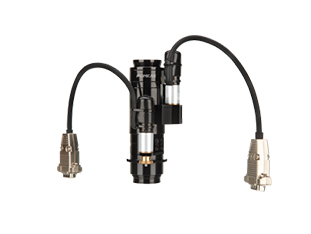
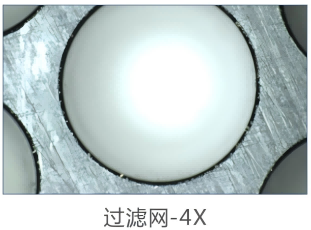

When selecting a lens, users often fall into the misconception that “higher magnification is always better,” blindly pursuing 20x or 30x lenses while overlooking the actual requirements of the application scenario regarding optical performance, such as resolution and distortion. If a high-magnification lens is paired with a low-resolution sensor, distant targets may appear blurry; at the telephoto end, pincushion or barrel distortion is likely to occur, causing image edge distortion; and defects such as chromatic aberration and spherical aberration are magnified at high magnifications, affecting image quality.
The correct way to do it:Based on the detection distance, target size, and accuracy requirements, calculate the required focal length range and prioritize lenses with minimal optical distortion and appropriate resolution. For example, when detecting 0.1 mm defects in machine vision, the lens resolution must be at least half the size of the sensor’s pixel.
Misconception 2: Mismatched interfaces and sensors pose a compatibility risk

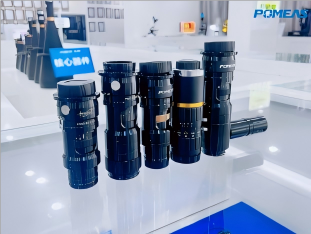
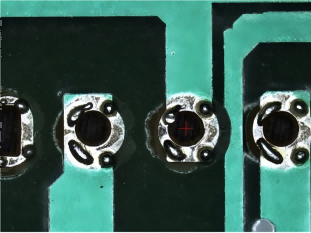

Incompatibility between lens mounts (such as C, CS, or M12) and camera sensor sizes (such as 1/2.3“ or 2/3”) can lead to installation difficulties, insufficient image circles, or working distance conflicts. For example, if the lens's image circle is smaller than the sensor size, vignetting will occur at the edges; if the back focal length does not match the camera's flange distance, the image will be out of focus.
The correct way to do it:Verify that the lens mount is compatible with the camera, select a lens with the appropriate image circle based on the sensor size, and check the MTF curve to ensure that the resolution meets the required standards.
Misconception 3: Neglecting environmental adaptability significantly shortens the equipment’s lifespan

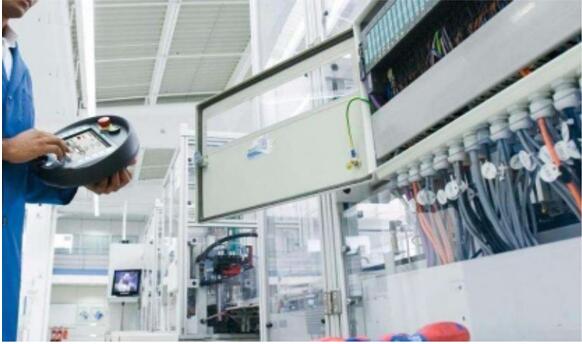
In harsh environments such as industrial and outdoor settings, failure to assess a lens’s protection rating, temperature tolerance, and vibration resistance can easily lead to the ingress of dust and moisture, focal length drift caused by extreme temperatures, or even damage to internal components due to vibration.
The correct way to do it:Select the appropriate protection rating (e.g., IP67) based on the application, confirm the operating temperature range, and prioritize lenses with vibration-resistant designs; if necessary, equip them with heating modules to prevent condensation.
Product recommendation
TECHNICAL SOLUTION
MORE+You may also be interested in the following information
FREE CONSULTING SERVICE
Let’s help you to find the right solution for your project!
 ASK POMEAS
  PRICE INQUIRY
  REQUEST DEMO/TEST
  FREE TRIAL UNIT
  ACCURATE SELECTION
- APPICATION CASE
- RESOURCE CENTER
- DOWNLOAD CENTER
SOLUTIONS SUPPORT
- ZOOM LENS SELECTION TOOL
- TELECENTRIC LENS SELECTION TOOL
- FA LENS SELECTION TOOL
- ZOOM RATIO TABLE
- CERTIFIED MODEL
SELECTION TOOL
- WHY POMEAS
- FAQ
- PRIVACY POLICY
- TERMS OF USE
- DELIVERY & RETURN POLICY
CUSTOMER CARE
 ADDRESS
Add.:No.68, Yongwei Road, Baizhoubian, Dongcheng District, Dongguan, China,523000
CONTACT
 Tel:+ 86-0769-2266 0867
 Fax:+ 86-0769-2266 0867
 E-mail:marketing@pomeas.com

Wechat QR code

Software Copyright :2021SR0176001 抄袭必究, 技术支持:誉新源科技