


Inspection of Samples with Large Height Differences: Autofocus Video Microscope
In the fields of precision manufacturing and electronic assembly, the microscopic inspection of samples with significant height differences—such as solder joints and stepped structures—has long been a major challenge for quality control personnel. Solder joints on PCBs exhibit significant height differences between their centers and edges, while stepped structures on mechanical components create sharp discontinuities. When observed with a traditional microscope, the limited depth of field restricts the operator to a clear image of only one height plane—focusing on the top of the solder joint blurs the bottom edge, while focusing on the base plane renders the top of the solder joint as a blurry image.

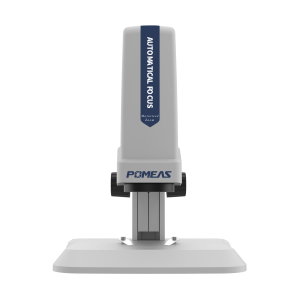
For batch inspection tasks, this repetitive cycle of “focusing, observing, and refocusing” significantly slows down the process and can lead to visual fatigue and judgment errors during prolonged use. So, how can this challenge be effectively addressed? Autofocus video microscopes offer a highly efficient and intelligent solution.
I. One-touch Auto Focus: Say Goodbye to Repeated Manual Adjustments
The new generation of autofocus video microscopes features a built-in high-speed image processing chip and a precision motor drive system. Operators simply need to place the sample within the field of view and click the mouse; the microscope will then automatically drive the lens to quickly locate the optimal focal plane within a preset travel range. The entire focusing process typically takes less than one second and requires no manual intervention, significantly improving inspection efficiency.
This feature is particularly useful in scenarios requiring batch inspection of samples with significant height variations. Whether inspecting components of varying heights on a PCB or observing the stepped structures of precision mechanical parts, the operator does not need to repeatedly turn the focus knob; simply moving the sample stage allows for the continuous acquisition of clear images.
II. Adjustable Multi-Angle Lighting for High-Quality Images to Support Autofocus
Samples with height differences often present issues such as glare, shadows, or uneven diffuse reflection—dark areas on stepped surfaces and highly reflective regions on the tops of solder joints can easily interfere with focusing accuracy. For this reason, autofocus video microscopes are typically equipped with adjustable multi-angle lighting systems.
Operators can flexibly adjust the illumination method based on the sample’s material and morphology: using low-angle side lighting to highlight the contour features of solder joint edges, or using coaxial lighting to eliminate specular reflections on stepped surfaces. Stable, high-contrast raw images can significantly improve the autofocus algorithm’s success rate and repeatability.
III. Eliminating Human Error for More Reliable Data Results
Different operators have varying manual focusing habits, which can lead to discrepancies in the measured heights of the same solder joints or in defect detection. The autofocus system consistently uses the same algorithm to lock focus, ensuring high data repeatability. This feature is particularly well-suited for scenarios requiring strict quantitative evaluation, such as solder joint height measurement and step flatness inspection.
Furthermore, new employees can get started without extensive training; simply placing the sample and clicking the mouse yields a clear image, effectively lowering the learning curve and reducing the workload.
Key Insights on Application Scenarios:

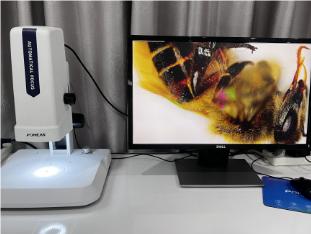
Autofocus video microscopes are widely used in fields such as PCB inspection, precision hardware measurement, and watch movement inspection. Whether dealing with uneven circuit board components or machined parts with varying depths, these microscopes handle them with ease, making microscopic inspection of samples with significant height differences simple and efficient.
Product recommendation
TECHNICAL SOLUTION
MORE+You may also be interested in the following information
FREE CONSULTING SERVICE
Let’s help you to find the right solution for your project!
 ASK POMEAS
  PRICE INQUIRY
  REQUEST DEMO/TEST
  FREE TRIAL UNIT
  ACCURATE SELECTION
- APPICATION CASE
- RESOURCE CENTER
- DOWNLOAD CENTER
SOLUTIONS SUPPORT
- ZOOM LENS SELECTION TOOL
- TELECENTRIC LENS SELECTION TOOL
- FA LENS SELECTION TOOL
- ZOOM RATIO TABLE
- CERTIFIED MODEL
SELECTION TOOL
- WHY POMEAS
- FAQ
- PRIVACY POLICY
- TERMS OF USE
- DELIVERY & RETURN POLICY
CUSTOMER CARE
 ADDRESS
Add.:No.68, Yongwei Road, Baizhoubian, Dongcheng District, Dongguan, China,523000
CONTACT
 Tel:+ 86-0769-2266 0867
 Fax:+ 86-0769-2266 0867
 E-mail:marketing@pomeas.com

Wechat QR code

Software Copyright :2021SR0176001 抄袭必究, 技术支持:誉新源科技