


On high-speed automated production lines, are you currently facing the following inspection challenges:

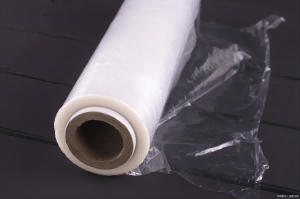
1. Surface defects on high-speed rolling stock flash by in an instant, and images captured by area-scan cameras are invariably marred by annoying motion blur;
2. Wide-format printed materials require repeated imaging and stitching, which is not only inefficient but also makes it extremely easy to miss minute defects at the seams;
3. When performing full-circumference inspection of cylindrical surfaces, edge distortion and out-of-focus blurring allow micro-cracks and scratches to slip through undetected…
These pain points of traditional vision solutions are precisely where line-scan lenses truly shine.

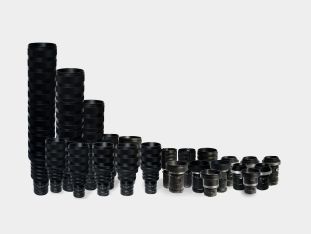
Line-scan lenses are optical lenses specifically designed for line-scan cameras. Rather than capturing a conventional rectangular image, they precisely project a ‘single line’ from the object’s surface onto the line-scan sensor. As the object moves relative to the camera, tens of millions of lines are continuously captured and seamlessly stitched together to ultimately form a complete, ultra-high-resolution, distortion-free image. This line-by-line scanning mechanism fundamentally redefines the capabilities of industrial vision inspection.
Challenge 1: Capturing Every Detail Even at High Speed
Line-scan lenses feature a large relative aperture and an exceptional optical transfer function; when combined with the microsecond-level exposure times of line-scan cameras, they are capable of instantly ‘freezing’ high-speed moving objects. On production lines for continuous materials such as thin films, aluminium foil and textiles, even at linear speeds of several hundred metres per minute, they can clearly capture scratches, crystal defects and contaminants down to the millimetre, completely eliminating motion blur and ensuring that high-speed inspection no longer comes at the expense of accuracy.
Challenge 2: Full-width Inspection – Eliminating the Risk of Seams in a Single Scan
For inspection applications such as PCBs, photovoltaic panels and large-format glass, high-resolution line-scan lenses are capable of covering the entire format in a single pass with extremely low distortion (typically less than 0.1 per cent). There is no need for multiple cameras to take repeated shots and stitch the images together, thereby eliminating at source misalignments at seams and misjudgements caused by differences in brightness. This truly achieves ‘single-lens coverage from start to finish’, not only multiplying inspection efficiency but also ensuring data integrity and measurement accuracy.
Pain Point 3: Surface Development – Leaving Cylindrical Defects Nowhere to Hide
When inspecting cylindrical, tubular or curved surfaces, the object is rotated whilst the line-scan camera unfolds the curved surface line by line into a distortion-free flat image. This ingeniously resolves the inherent issues faced by area-scan cameras—such as insufficient depth of field and image stretching and distortion when capturing edges—ensuring that even the slightest defects, such as dents, scratches and uneven coatings, are revealed across the entire circumference.
Challenge 4: Unfazed By Glare and Stray Light, Stable Imaging in Harsh Lighting Conditions
Highly reflective materials, such as metal and mirror surfaces, often result in defects being obscured by a blanket of white light due to glare. Line-scan lenses, featuring optimised broadband anti-reflective coatings and a precision internal anti-glare design, can significantly suppress stray light; when paired with narrow-band filters, they effectively block out ambient light interference. Even when faced with highly reflective surfaces, they deliver high-contrast images with sharp detail, making fingerprints, oil stains and minute indentations clearly distinguishable.
From high-speed production lines to precision curved surfaces, and from large-format full inspections to the suppression of strong reflections, line-scan lenses utilise the optical intelligence of progressive scanning to break through the bottlenecks of field of view, speed and accuracy in traditional vision inspection. It is not merely a lens, but a sharp eye that drives the advancement of ultimate quality control and smart manufacturing.
If you are facing complex challenges in vision inspection, we invite you to engage in in-depth discussions with our specialist optics team to find a line-scan lens solution precisely tailored to your production line.
Product recommendation
TECHNICAL SOLUTION
MORE+You may also be interested in the following information
FREE CONSULTING SERVICE
Let’s help you to find the right solution for your project!
 ASK POMEAS
  PRICE INQUIRY
  REQUEST DEMO/TEST
  FREE TRIAL UNIT
  ACCURATE SELECTION
- APPICATION CASE
- RESOURCE CENTER
- DOWNLOAD CENTER
SOLUTIONS SUPPORT
- ZOOM LENS SELECTION TOOL
- TELECENTRIC LENS SELECTION TOOL
- FA LENS SELECTION TOOL
- ZOOM RATIO TABLE
- CERTIFIED MODEL
SELECTION TOOL
- WHY POMEAS
- FAQ
- PRIVACY POLICY
- TERMS OF USE
- DELIVERY & RETURN POLICY
CUSTOMER CARE
 ADDRESS
Add.:No.68, Yongwei Road, Baizhoubian, Dongcheng District, Dongguan, China,523000
CONTACT
 Tel:+ 86-0769-2266 0867
 Fax:+ 86-0769-2266 0867
 E-mail:marketing@pomeas.com

Wechat QR code

Software Copyright :2021SR0176001 抄袭必究, 技术支持:誉新源科技