


When selecting microscopic inspection equipment, many users often find themselves torn between standard manual zoom microscopes and motorised zoom, auto-focus microscopes. Whilst the two appear to offer similar functionality, there are significant differences between them in terms of operating modes, inspection accuracy, operational efficiency and suitability for specific applications. Particularly in scenarios involving batch inspection, high-precision inspection and long-term, high-frequency use, choosing the wrong model can easily lead to problems such as low inspection efficiency, significant errors and high labour costs.

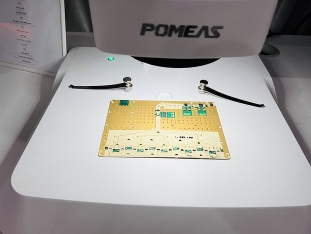
Operating Modes and Focusing Speed:

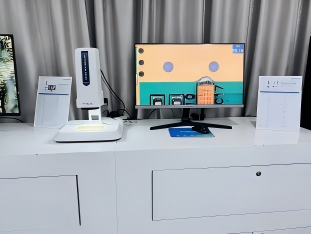
The difference between the two is most striking. Conventional zoom microscopes rely entirely on manual adjustment of the coarse and fine focusing knobs, requiring the operator to continuously assess image sharpness with the naked eye. This approach is heavily dependent on personal experience, making it difficult for novices to master quickly. Achieving a single precise focus takes 15–30 seconds; when observing at high magnifications, even the slightest deviation in manual adjustment can result in a blurred image and loss of detail. In contrast, motorised zoom and autofocus microscopes utilise fully electronic control, with motors driving both zoom and focus functions. They can achieve fully automatic, precise focusing in just 0.1–0.3 seconds via a single mouse click, requiring no manual intervention. This makes them accessible to novices with no learning curve, whilst boosting the efficiency of batch testing by a factor of several dozen.
Imaging Precision and Stability:
With traditional manual microscopes, frequent changes in magnification or repositioning of the specimen require manual refocusing, which makes them highly prone to issues such as focus drift, image shake and blurring. For uneven or large-area specimens, it is difficult to ensure clear focus throughout the entire process, leading to a high risk of missed or misidentified findings. Motorised zoom and autofocus microscopes are equipped with intelligent anti-shake and real-time focusing algorithms, which automatically track the focus as the specimen is moved or the magnification is changed. Combined with a high-definition CMOS imaging system and intelligent illumination, they deliver high-definition, distortion-free images with true-to-life colour reproduction, clearly revealing details at the micrometre level. This ensures stable and controllable inspection accuracy, eliminating human operational errors.
Functionality & Practicality:
Conventional microscopes only support basic observation functions; they lack data storage, measurement and image analysis capabilities, and are unable to meet the requirements of modern, standardised inspection processes. They are therefore only suitable for simple observations and experiments involving a small number of samples. In contrast, motorised zoom and autofocus microscopes integrate a range of functions, including dimensional measurement, image capture, video recording, depth-of-field fusion, image stitching and data export. They support software customisation and can be integrated with automated production lines and intelligent inspection systems, thereby achieving an integrated approach to inspection, analysis and archiving.
Product recommendation
TECHNICAL SOLUTION
MORE+You may also be interested in the following information
FREE CONSULTING SERVICE
Let’s help you to find the right solution for your project!
 ASK POMEAS
  PRICE INQUIRY
  REQUEST DEMO/TEST
  FREE TRIAL UNIT
  ACCURATE SELECTION
- APPICATION CASE
- RESOURCE CENTER
- DOWNLOAD CENTER
SOLUTIONS SUPPORT
- ZOOM LENS SELECTION TOOL
- TELECENTRIC LENS SELECTION TOOL
- FA LENS SELECTION TOOL
- ZOOM RATIO TABLE
- CERTIFIED MODEL
SELECTION TOOL
- WHY POMEAS
- FAQ
- PRIVACY POLICY
- TERMS OF USE
- DELIVERY & RETURN POLICY
CUSTOMER CARE
 ADDRESS
Add.:No.68, Yongwei Road, Baizhoubian, Dongcheng District, Dongguan, China,523000
CONTACT
 Tel:+ 86-0769-2266 0867
 Fax:+ 86-0769-2266 0867
 E-mail:marketing@pomeas.com

Wechat QR code

Software Copyright :2021SR0176001 抄袭必究, 技术支持:誉新源科技