


A Comparison of Laser Autofocus Microscopy Systems with Conventional Focusing Methods
Compared with traditional manual and passive microscopic focusing methods, laser-assisted autofocus microscopy systems offer faster focusing speeds and higher positioning accuracy; they minimise the impact of optical aberrations, are suitable for observing moving specimens, and are ideally suited to a wide range of complex microscopic experiments and precision manipulation scenarios.

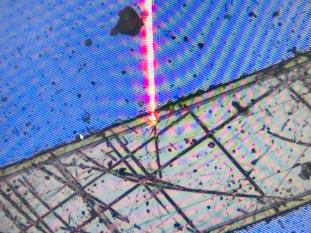
In microscopic observation experiments, traditional focusing methods largely rely on manual adjustment or conventional passive optical focusing. Not only is this cumbersome to operate, but it is also highly susceptible to environmental factors and the condition of the sample, leading to issues such as focusing lag, misalignment and blurring. The advent of laser autofocus microscopy systems has completely overcome the shortcomings of traditional technologies, becoming a key enabler of high-precision microscopic observation.
The advantage in focusing speed is its most obvious feature. Traditional manual focusing requires the operator to repeatedly fine-tune knobs and judge sharpness with the naked eye; a single focusing operation often takes several seconds or even tens of seconds, resulting in extremely low efficiency. Conventional autofocus also suffers from response delays. Laser focusing relies on an independent laser detection optical path, eliminating the need to judge focus based on the image; it can capture changes in the sample’s position in real time, achieving rapid focusing at the millisecond level and significantly reducing observation preparation time.
In terms of precision, the system represents a qualitative breakthrough. Traditional focusing is constrained by the limits of human visual acuity and optical path errors in the equipment, making it difficult to maintain consistent focusing accuracy and leading to subtle instances of defocusing. Laser autofocus utilises precise laser ranging and positioning to achieve a more accurate focal point, enabling stable locking onto microscopic observation areas at the micrometre and sub-micrometre levels, thereby ensuring the clarity and consistency of every observation image.
Furthermore, it possesses exceptional resistance to interference and is unaffected by optical aberrations. Conventional microscope focusing is prone to optical aberrations caused by light path refraction, lens wear and ambient light interference, leading to focus shift and image distortion. In contrast, the laser detection path operates independently and does not rely on the conventional imaging path, effectively avoiding all types of optical aberrations and maintaining focusing stability even in complex optical environments.

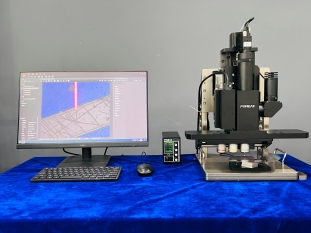
Furthermore, the system is capable of observing moving targets. Traditional focusing is only suitable for static, fixed samples; should the sample undergo even the slightest displacement or movement, the focus is immediately lost. For applications such as the observation of living organisms and microscopic dynamic manipulations, laser autofocus can track target movement in real time, maintaining continuous dynamic focus adjustment to ensure uninterrupted observation.
Data from multiple sources indicates that the laser autofocus microscopy system achieves a single-focus response time of 10–20 milliseconds, representing an efficiency improvement of over 90 per cent compared to traditional manual focusing; focusing repeatability accuracy reaches ±0.1 μm, representing a 5–10-fold improvement over conventional focusing accuracy; even in complex optical path environments where optical aberrations are present, the focusing success rate remains above 99.5 per cent, whilst the out-of-focus rate during continuous observation of dynamic targets is less than 0.3 per cent.
Product recommendation
TECHNICAL SOLUTION
MORE+You may also be interested in the following information
FREE CONSULTING SERVICE
Let’s help you to find the right solution for your project!
 ASK POMEAS
  PRICE INQUIRY
  REQUEST DEMO/TEST
  FREE TRIAL UNIT
  ACCURATE SELECTION
- APPICATION CASE
- RESOURCE CENTER
- DOWNLOAD CENTER
SOLUTIONS SUPPORT
- ZOOM LENS SELECTION TOOL
- TELECENTRIC LENS SELECTION TOOL
- FA LENS SELECTION TOOL
- ZOOM RATIO TABLE
- CERTIFIED MODEL
SELECTION TOOL
- WHY POMEAS
- FAQ
- PRIVACY POLICY
- TERMS OF USE
- DELIVERY & RETURN POLICY
CUSTOMER CARE
 ADDRESS
Add.:No.68, Yongwei Road, Baizhoubian, Dongcheng District, Dongguan, China,523000
CONTACT
 Tel:+ 86-0769-2266 0867
 Fax:+ 86-0769-2266 0867
 E-mail:marketing@pomeas.com

Wechat QR code

Software Copyright :2021SR0176001 抄袭必究, 技术支持:誉新源科技