


A spectral autofocus microscopy system is a microscopy technique that combines a spectral system with an optical system to achieve autofocus using spectral information; it is widely used in scientific research and industrial applications.

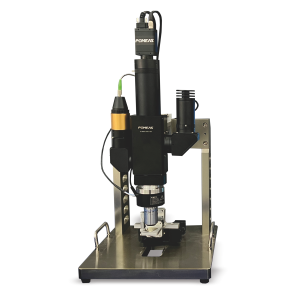
In everyday microscopic observation or industrial inspection, have you ever encountered the following problem: when observing transparent glass or a smooth mirror surface, the microscope either ‘hunts’ back and forth trying to find focus, or fails to focus altogether? This is because traditional autofocus systems rely primarily on image contrast to make decisions; when faced with samples that lack texture, are highly reflective or are transparent, the algorithms struggle to identify sufficient features, resulting in slow focusing or even failure.
The spectral autofocus system operates on a fundamentally different principle. It utilises a specially designed dispersive lens that focuses light of different wavelengths at different heights along the optical axis. When a beam of white light is directed at the sample surface, only the light of the precisely focused wavelength is efficiently reflected back into the optical system and analysed by a spectrometer. The system need only identify the wavelength with the highest intensity in the reflected light to directly calculate the precise distance to the sample surface, thereby driving the stage or lens to achieve focus in a single step. The entire process requires no repetitive up-and-down searching, truly realising ‘what you see is what you get’ real-time focusing.
This technology takes the adaptability of microscopic imaging to new heights. Whether dealing with transparent biological cover glasses, highly reflective semiconductor wafers, or materials with uneven surfaces, the system can focus accurately within a few milliseconds, with focusing precision unaffected by the colour or texture of the sample surface. As white light is used as the light source, the measurement spot is extremely small, and it also avoids the interference noise commonly associated with monochromatic lasers, resulting in cleaner imaging.
In practical applications, it has become an essential tool for high-precision inspection in both research and industry. In semiconductor packaging inspection, it can focus directly onto the chip surface through a glass cover slip; in new materials analysis, it can rapidly focus on both the upper and lower surfaces of transparent films to perform thickness measurements; and in the life sciences, it enables long-term, stable tracking of live cells on microfluidic chips or multi-well plates without the concern of focus drift.

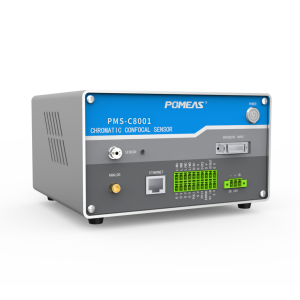
Currently, the axial focusing repeatability of such systems can reach ±0.05 micrometres—equivalent to one-fifteen-hundredth of the diameter of a human hair—and the focusing response time can be reduced to a few milliseconds. On high-speed industrial production lines, some inspection equipment utilising this technology has achieved continuous focusing measurements at a rate of over several thousand times per second, resulting in an overall improvement in inspection efficiency of more than 50 per cent compared with traditional image-search-based focusing.
Product recommendation
TECHNICAL SOLUTION
MORE+You may also be interested in the following information
FREE CONSULTING SERVICE
Let’s help you to find the right solution for your project!
 ASK POMEAS
  PRICE INQUIRY
  REQUEST DEMO/TEST
  FREE TRIAL UNIT
  ACCURATE SELECTION
- APPICATION CASE
- RESOURCE CENTER
- DOWNLOAD CENTER
SOLUTIONS SUPPORT
- ZOOM LENS SELECTION TOOL
- TELECENTRIC LENS SELECTION TOOL
- FA LENS SELECTION TOOL
- ZOOM RATIO TABLE
- CERTIFIED MODEL
SELECTION TOOL
- WHY POMEAS
- FAQ
- PRIVACY POLICY
- TERMS OF USE
- DELIVERY & RETURN POLICY
CUSTOMER CARE
 ADDRESS
Add.:No.68, Yongwei Road, Baizhoubian, Dongcheng District, Dongguan, China,523000
CONTACT
 Tel:+ 86-0769-2266 0867
 Fax:+ 86-0769-2266 0867
 E-mail:marketing@pomeas.com

Wechat QR code

Software Copyright :2021SR0176001 抄袭必究, 技术支持:誉新源科技